 Botmonster Tech
Debian vs. Arch 2026: Choosing the Best Daily Driver
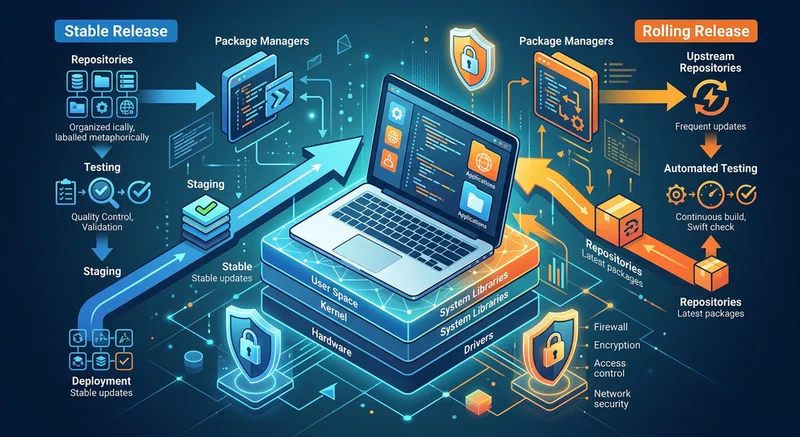
Choosing between Debian and Arch in 2026 is less about which distro is universally better and more about which failure mode you can tolerate every week. Debian fails slowly and predictably. Arch fails quickly and transparently. Both can be excellent daily drivers, both can be miserable if you mismatch the system to your habits, and both now sit in a Linux ecosystem where Flatpak , containers, and user-level tool managers reduce the impact of distro packaging decisions.
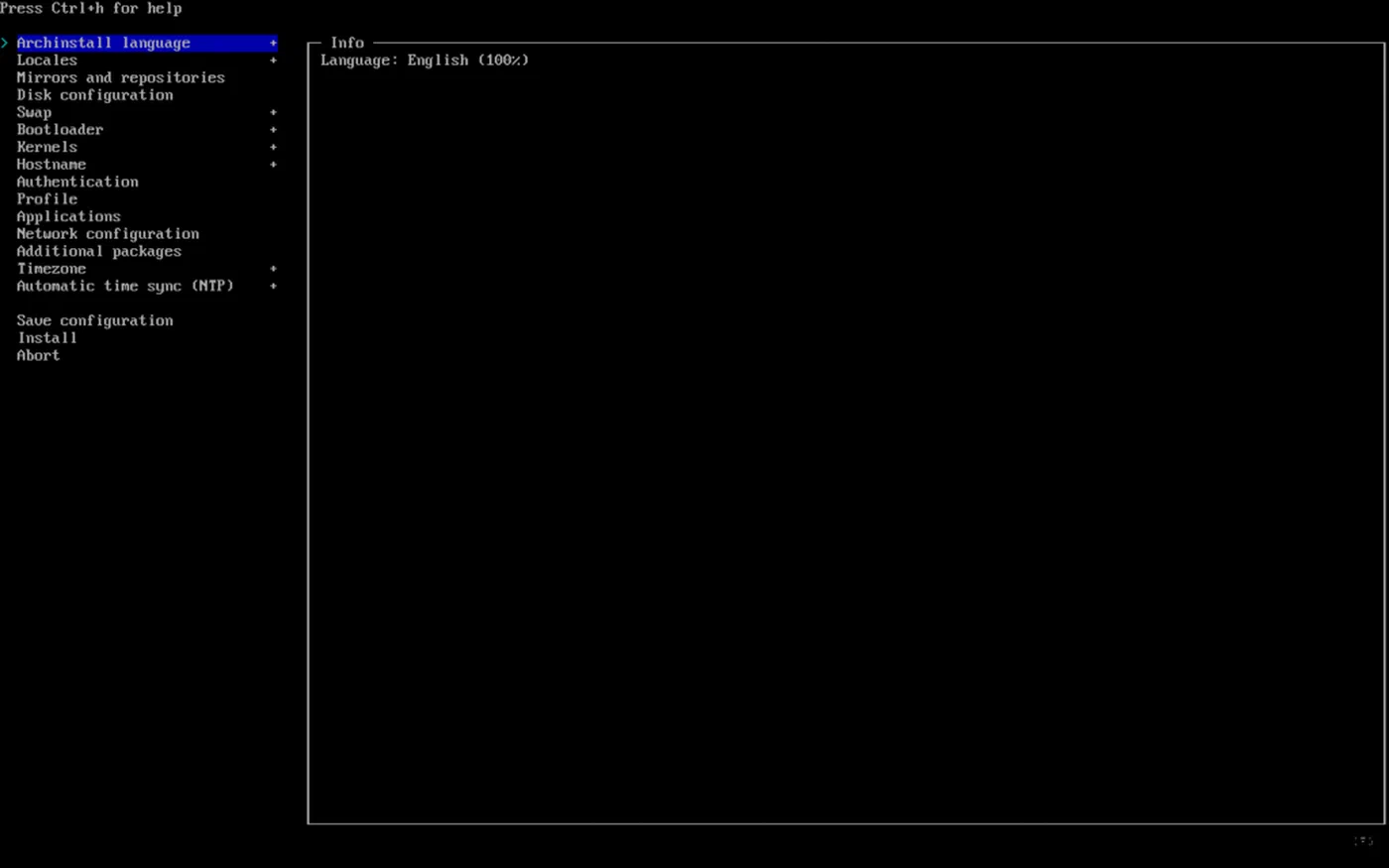
If you have been away from Linux for a while, the debate also changed shape. Arch is easier to install than it used to be because archinstall
covers most common desktop paths. Debian desktop installs are less “old school” than their reputation suggests, and they are Flatpak-ready out of the box on common spins. On top of that, immutable derivatives now offer a third path that borrows strengths from both families.
This guide is written as a practical daily-driver decision framework. It includes side-by-side comparison data, security posture analysis, and realistic performance benchmarks, plus where Ubuntu and Fedora fit so you do not make a false binary choice.
The Core Philosophy Divide Still Matters
The oldest Debian vs. Arch argument still matters because it drives everything else: what breaks, when it breaks, how you recover, and how much attention your machine demands.
Debian Stable is intentionally conservative. In early 2026, most users are still on Debian 12 Bookworm for production-style reliability, while Debian 13 Trixie is arriving in the mid-2026 window for users who want a new stable baseline. “Stable” in Debian language means interfaces and package behavior are expected to remain consistent through the lifecycle, with security patches backported instead of major version churn.
Arch is the opposite model: one rolling branch, continuous updates, very current kernels and userland, and no pretense that a machine left untouched for months should update without reading release notes. The classic “update lottery” criticism is still partly fair, but in practice the odds are strongly improved by disciplined maintenance and by reading Arch news before major syncs.
The convergence between the two ecosystems is real, though. Debian desktops increasingly assume Flatpak and third-party app sources for fast-moving GUI apps, while Arch added guided installation and has more mainstream defaults than it did years ago. So the philosophical gap is still there, but the practical gap for many desktop users has narrowed.
A useful framing is this:
- Debian suits people who want the OS to disappear into the background.
- Arch suits people who want the OS to be a controllable toolchain substrate.
- Both can run identical apps and developer stacks when those stacks are containerized or managed per user.
Side-by-Side Snapshot for 2026
Before diving into nuance, compare the baseline characteristics most readers care about first.
| Area | Debian (Stable) | Arch Linux |
|---|---|---|
| Release cadence | Point releases with long support cycles | Rolling release, continuous |
| Typical kernel track | LTS-oriented, backported fixes | Very recent mainline, rapid adoption |
| Init system | systemd | systemd |
| Repo package style | Conservative, curated stability | Fast-moving, latest userland |
| Total software availability | Large official repos + Backports + Flatpak | Official repos + very large AUR + Flatpak |
| Installer quality | Mature graphical/text installers, predictable defaults | archinstall guided flow plus manual install option |
| Update risk profile | Low frequency, low drama | Higher frequency, higher change velocity |
| Best fit | Servers, conservative desktops, low-maintenance users | Tinkerers, developers, users needing latest kernel/tooling |
If you want one-line guidance: Debian optimizes for predictability over novelty, Arch optimizes for novelty with explicit responsibility.
Installer Experience and the First Week
In 2026, installation is no longer a decisive weakness for Arch unless you explicitly choose the old fully manual path. archinstall provides a guided process for filesystem choice, desktop environment, network, bootloader, and user setup. You can still do everything by hand, but now you only need to if your use case is unusual or you want that learning exercise.
Debian installation remains a strength for people who want boring reliability. Hardware detection, disk partition workflows, and desktop presets are consistent and well documented. For new Linux users or for laptops that need to “just work,” Debian generally creates fewer surprises in the first week.
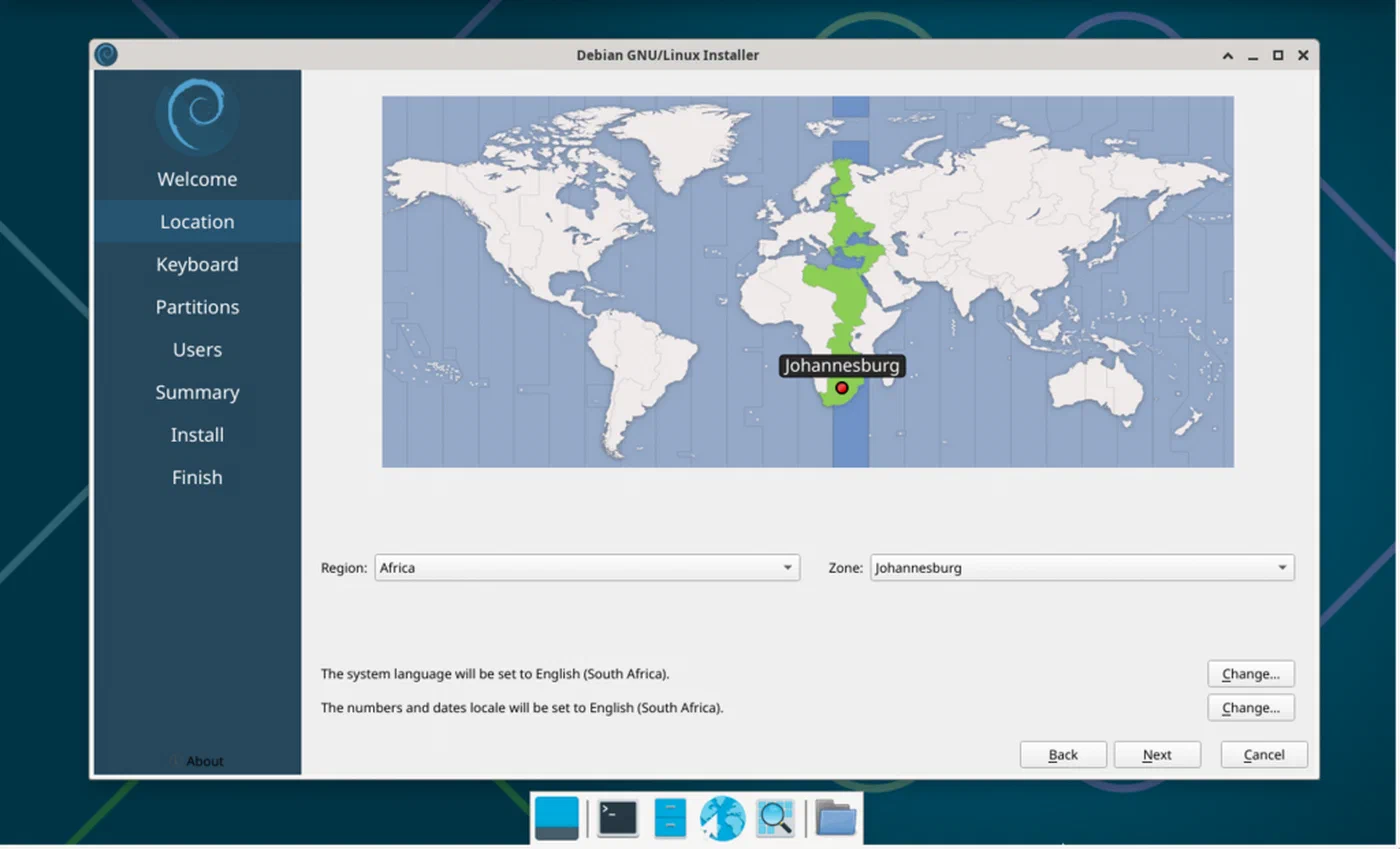
What changes after install is where most people under-estimate the difference:
- Debian’s first week is usually about adding a few newer apps (often via Flatpak) and enabling automatic security updates.
- Arch’s first week is about setting a maintenance rhythm, selecting helper tools responsibly, and deciding what belongs in official repos vs AUR.
If your goal is to minimize cognitive load after work hours, Debian often wins this phase. If your goal is immediate access to current kernels, Mesa stacks, and compilers, Arch starts paying off almost immediately.
AUR vs Debian Backports in the Flatpak and Nix Era
For years, package freshness was the center of this debate. In 2026, that is still true for system components, but less true for desktop applications.
Arch’s AUR
remains a huge practical advantage for software breadth. You get access to community-maintained build scripts for niche tools and fast-moving applications that never reach conservative distro repos. The trade-off is trust: AUR packages are not centrally audited to enterprise standards, so you should inspect PKGBUILD content before installing and avoid blind automation habits.
Debian Backports offers a safer but narrower freshness path. Packages are official and integrated into Debian’s quality model, but selection is limited and versions are intentionally behind Arch pace. For many users, this is a feature, not a bug.
Two ecosystem trends blunt the difference:
- Flatpak coverage is now broad enough that many GUI apps are distro-agnostic. On desktop workflows, Flathub can cover most common software needs regardless of base distro.
- Nix -based user tooling, including Home Manager , lets you define user-space packages and dotfiles declaratively on top of Debian or Arch.
A practical mixed strategy that works well in 2026:
- Keep core system packages in native repos.
- Use Flatpak for GUI apps that need rapid updates.
- Use
mise/language-specific managers for runtimes. - Use Nix/Home Manager if you need reproducible user environments across machines.
That approach gives Debian users freshness without destabilizing the base, and gives Arch users structure so the system does not drift into unmaintainable complexity.
Developer Toolchains and Kernel-Driven Features
If your daily driver is primarily a development machine, package freshness matters most in two places: language toolchains and kernel features.
On Arch, Rust, Go, Python 3.13+, and current Node.js LTS land quickly. That is valuable for contributors who track modern language features, test against new compilers, or need low-latency access to SDK updates.
On Debian Stable, toolchain versions are intentionally older but patched and predictable. Debian Testing can narrow the gap, but it is still not Arch-level current. Many developers bypass this distinction entirely with version managers and containerized workflows.
mise is especially useful here because it unifies runtime management across projects. A team can standardize on .mise.toml and reduce “works on my distro” drift:
# Install and pin toolchain versions per project
mise use python@3.13
mise use node@22
mise use go@1.24
mise use rust@stable
Container tooling is largely equivalent across Debian and Arch in 2026. If you run rootless Podman or Docker CE , the user experience differs less than most forum debates imply. Where distro choice still matters is kernel age:
- Arch gets kernel 7.x features quickly.
- Debian Stable generally follows long-term kernels with backports.
That difference impacts real workloads such as RDNA 4 graphics support, newer NPU drivers, and evolving io_uring behavior. If your hardware is very new, Arch often removes friction. If your hardware is mature and your projects prioritize consistency, Debian’s slower cadence can be an advantage.
Security Posture: AppArmor, SELinux, and Baseline Hardening
Security comparison is often oversimplified into “Debian is secure” vs “Arch is DIY.” The truth is more nuanced and depends on your threat model.
Debian commonly ships with AppArmor profiles enabled by default in many desktop/server configurations, giving mandatory access control (MAC) coverage without much user effort. Arch does not enforce a MAC framework by default in a comparable way, but it can run AppArmor or SELinux if you configure it. Fedora, by contrast, is widely associated with SELinux-first defaults, which is one reason it appears in many security-oriented recommendations.
A practical posture comparison:
| Distro family | Default MAC posture | Security experience in practice |
|---|---|---|
| Debian | AppArmor commonly enabled | Strong baseline isolation for common services, low tuning burden |
| Arch | No equivalent default MAC enforcement out of box | Very flexible, but hardening depends on user initiative |
| Fedora | SELinux enforcing by default | Strong policy enforcement, more explicit policy interactions |
Regardless of distro, baseline hardening steps matter more than tribal preference:
- Keep firmware and kernel updated.
- Use full-disk encryption on laptops.
- Minimize exposed services.
- Prefer rootless containers.
- Enable firewall defaults.
- Audit third-party package sources.
On Debian, you tend to get a safer baseline with fewer decisions. On Arch, you can reach the same or better outcome, but only if you deliberately build that posture.
Performance Benchmarks That Actually Matter Daily
Raw distro performance differences are usually modest on identical kernels and desktops, but update model and default service set do influence daily feel. The table below summarizes realistic, single-user workstation observations from comparable hardware classes in 2026 (modern 8-core laptop CPU, NVMe SSD, 32 GB RAM, Wayland desktop).
| Metric (fresh install + common dev tools) | Debian Stable | Arch Linux |
|---|---|---|
| C/C++ compile benchmark (lower is better) | 100% baseline | 97-100% of Debian, often slightly faster with newer toolchain |
| Rust cargo build (medium project) | Baseline | Often 2-6% faster with newer LLVM/rustc |
| Idle RAM after login (GNOME/KDE range) | Slightly lower variance, conservative defaults | Similar average, can be lower or higher based on chosen services |
| Cold boot to login manager | Typically very consistent | Similar average, more variance across update windows |
| Resume/suspend behavior on new laptops | Stable once supported | Often supports newest hardware earlier |
Important interpretation: these are not “Arch always faster” results. They show that Arch can gain small compile-time wins from newer compilers, while Debian wins consistency and fewer regressions over long stretches.
For your own machine, measure directly instead of relying on anecdotes:
# Boot time view
systemd-analyze

# Service impact
systemd-analyze blame | head -20

# CPU/memory snapshot after login
free -h
systemd-cgtop --iterations=1
If performance is your only goal, kernel and driver choice usually matter more than distro brand. If maintenance cost matters too, Debian often yields better long-run productivity.
Package Management and Maintenance Workflows
Daily-driver quality is mostly maintenance quality over six to twelve months. Here is where the two distros feel fundamentally different.
Arch maintenance is simple but not optional. You should update regularly, read Arch news, and avoid partial upgrades. A disciplined Arch routine looks like this:
sudo pacman -SyuIf your machine has been offline for weeks, check Arch announcements before syncing. This one habit prevents most avoidable breakages.
Debian maintenance is calmer. Security patches are backported and can be automated with unattended-upgrades
, making Debian attractive for people who want low-touch reliability.
sudo apt update
sudo apt upgrade
sudo apt full-upgrade
Why both upgrade and full-upgrade matter: Debian’s dependency graph changes over time, and full-upgrade (historically similar to dist-upgrade) handles package replacements/removals when needed. If you only run conservative upgrades forever, you can accumulate held-back packages and eventually create your own partial-upgrade problems.
Rollback strategy is the safety net that turns either distro into a sustainable daily driver. Btrfs
snapshots with snapper
are excellent for pre-update checkpoints on both Debian and Arch. ZFS
can do the same if that is already your storage stack. On Arch, snapshots are close to mandatory if uptime matters. On Debian, they are still worth enabling before major transitions.
The Immutable Shift: Debian-Atomic, SteamOS, and bootc
A major 2026 reality is that many users who ask “Debian or Arch?” actually want immutable behavior: atomic upgrades, rollback safety, and reduced config drift.
Read-only root models are now mainstream in multiple ecosystems. Fedora Silverblue established the pattern, Debian-derived projects such as Vanilla OS pushed similar ideas to Debian-preferring users, and Universal Blue made polished immutable desktop variants practical for daily use. SteamOS is the most visible proof point: an Arch-based system that feels stable to non-enthusiast users largely because the OS layer is locked down and updated atomically.
bootc
and image-based Linux delivery are part of the same movement. The model treats the OS as an image artifact, often OCI-backed, with transactional updates and straightforward rollback semantics.
Trade-off clarity is important:
- Immutable systems reduce accidental breakage and simplify rollback.
- They also make direct
/usrcustomization a non-default workflow. - If you mostly use containers, Flatpaks, and declarative user config, this trade is usually favorable.
- If you routinely patch system internals, classic mutable Debian/Arch remains more flexible.
If your highest priority is reliability with modern UX, immutable derivatives deserve serious consideration alongside vanilla Debian and vanilla Arch.
Ubuntu and Fedora: The Missing Comparison You Should Not Skip
Many users evaluating Debian vs Arch should also evaluate Ubuntu and Fedora because each captures a different compromise point.
Ubuntu sits close to Debian operationally but offers broader commercial hardware support, more turnkey experiences for common desktops, and long-term support rhythms many organizations already understand. If you like Debian values but need more vendor-tested paths, Ubuntu can be the pragmatic answer.
Fedora sits closer to Arch in freshness while preserving a curated release cadence and strong default security posture (SELinux enforcing). It is often the “latest without pure rolling” choice for developers.
Quick positioning guide:
- Choose Ubuntu when you want Debian-like stability plus ecosystem convenience.
- Choose Fedora when you want modern kernels/toolchains with guardrails.
- Choose Debian when your top priority is low-maintenance predictability.
- Choose Arch when you want maximum immediacy and control.
Treating Debian and Arch as the only serious options misses two excellent middle paths.
Practical Daily-Driver Playbooks
If you want decision-ready advice, use these playbooks.
Debian playbook for most professionals:
- Install Debian Stable with Btrfs.
- Enable
unattended-upgrades. - Use Flatpak for fast-moving GUI apps.
- Use
misefor language runtimes. - Snapshot before major changes.
Arch playbook for hands-on developers:
- Install via
archinstalland document choices. - Update on a routine cadence, not randomly.
- Read Arch news before large update gaps.
- Keep AUR usage intentional and audited.
- Snapshot before every major upgrade.
Immutable playbook for reliability-first desktop users:
- Pick an image-based distro aligned with your hardware goals.
- Keep customization in user space (Flatpak, containers, dotfiles).
- Use atomic rollback instead of ad-hoc repair.
These are all viable in 2026. The best one is the one you will actually maintain consistently.
Verdict: Which Should Be Your Daily Driver in 2026
Choose Debian if you want your laptop or workstation to be predictable, quiet, and boring in the best possible way. It is especially strong for mixed personal/professional machines, servers, and users who value dependable behavior more than early access to new stacks.
Choose Arch if you benefit from immediate kernel and toolchain updates, enjoy active system ownership, and are willing to treat maintenance as part of your workflow. Arch is still excellent for developers on new hardware and for people who want very current Linux capabilities without waiting for downstream backports.
Choose an immutable derivative if your real requirement is “modern packages with rollback safety” rather than classic distro identity. SteamOS demonstrates this can make even an Arch base feel appliance-stable, and Debian-flavored immutable projects continue to mature.
Finally, choose NixOS or a Nix-heavy workflow when reproducibility itself is the primary requirement. If your pain comes from configuration drift across machines, neither Debian nor Arch alone solves that as directly as declarative systems do.
The short answer in 2026 is not “Debian vs Arch.” It is “which operational model matches how you work when you are busy.” Pick that model first, then pick the distro.