 Botmonster Tech
Opus 4.8 First Look: How Reddit Reacts to the Car Wash Test

Claude Opus 4.8 launched on May 28, 2026, and r/ClaudeAI flipped its mood inside a day. The first verdict from people who actually ran it reversed the Opus 4.7 backlash. Most testers now call 4.8 “what 4.6 should have been.” The gripes that remain are token burn and a colder voice. The viral car wash test caught the whole story: 4.8 reasoned its way to the right answer most models miss, then spent 589,000 tokens to do it.
Key Takeaways
- Reddit flipped from the 4.7 backlash to liking 4.8 in one day.
- Most users call it faster and clearer, like the 4.6 they missed.
- Token burn is still the top gripe, now just expected.
- In the viral car wash test, 4.8 reasoned its way to the right answer most models miss.
- Reddit’s writers still find its voice cold and corporate.
What Anthropic Shipped in Opus 4.8
Claude Opus 4.8 went live on May 28, 2026. You can reach it on claude.ai , the Claude platform, and every major cloud. The official Introducing Claude Opus 4.8 thread also became the most-discussed post of launch day. So it doubles as both the spec sheet and the reaction hub.
Anthropic pitched the release as a point update. It “builds on Opus 4.7 with sharper judgment, more honesty about its own progress, and the ability to work independently for longer.” The price stayed the same as 4.7. 9to5Mac confirmed the price parity alongside the launch facts.
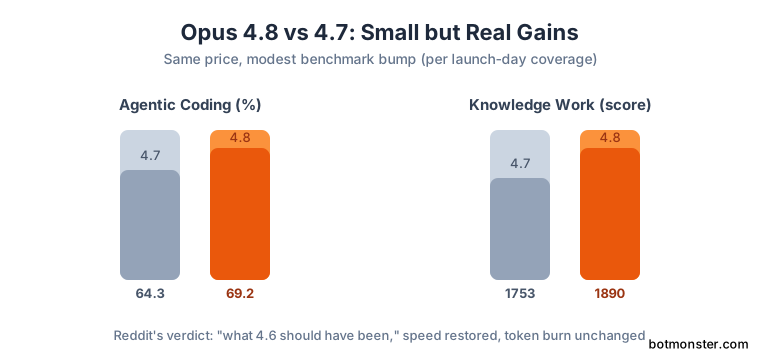
The benchmark gains were real but small. MacRumors reported the coding score rose from 64.3% to 69.2%. The knowledge-work score went from 1753 to 1890. A new fast mode, in research preview, also runs about 2.5 times quicker than before.
Two extra features shipped the same day:
- Dynamic workflows in Claude Code (research preview): the model runs many subagents at once in one session. It then checks its own work before it reports back.
- Effort control on claude.ai: a slider that sets how much Claude thinks before it answers. This one becomes a complaint magnet later.
Anthropic walked in with a goodwill problem. A point release built on the unpopular 4.7 met early skepticism. What changed the mood was not the announcement, but the first hands-on reports once people actually ran it.
Why is Reddit happier with Opus 4.8 than Opus 4.7?
The dominant take from people who used it is relief. Speed and directness are back, and the most common verdict across launch-day threads is some form of “this feels like 4.6 again.”
The fullest hands-on review came from a user who runs Claude as a planning layer for a real CRM build. After calling 4.7 the only model they could not find improvements in, they reported 4.8 as precise, fast, and free of hallucinations after two hours of use:
It feels like what 4.6 should have evolved into: the same reliability and clarity, but meaningfully improved rather than regressed.
Other testers in the same thread echoed it. The speed of 4.6 is back, the tone is warmer, and the model asks follow-up questions instead of guessing. One lawyer called 4.8 the most powerful model yet for legal reasoning. The contrast with the rough mood around the Opus 4.7 reception is the exact reversal the loudest 4.7 critics had asked for.
The Complaints That Carried Over: Token Burn, Effort Control, and Dry Prose
Speed got fixed. The deeper gripes did not, and the sharpest ones came from people who put 4.8 through real work.
The new effort slider, a flagship feature, drew the loudest tester complaint. One user ran all three levels and found no difference:
the effort toggles in claude.ai are basically ignored, and all three models seem to chose to reason way less … Huge downgrade so far.
Not everyone saw an upgrade at all. Rival launches leaned harder on published numbers, with Google’s Gemini 3.5 Flash topping Terminal-Bench on speed and cost the same season. One user ran 4.8 against a private benchmark suite and came away unimpressed:
Opus 4.8 is available for testing on openmark.ai so I ran it against other models in my existing evals. And unfortunately it did really poorly.
Two complaints carried straight over from 4.7. Token burn stayed at number one, though the tone shifted from shock to resignation, the same mood behind every “there goes my 5-hour limit” reply. For teams watching the bill, the prompt caching guide to cut LLM API costs covers the main lever that survives a model swap. Creative writers stayed the unhappiest cohort, reporting the same dry, corporate prose they disliked in 4.7. There is a fair counterpoint, though: a model that invents less may also play less, so the reliability coders love and the flatness writers hate may be two sides of one change.
The Car Wash Test: Reddit’s Accidental Reasoning Benchmark
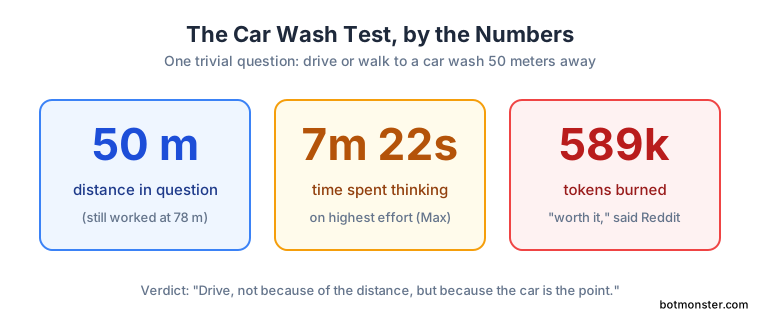
One thread became the launch’s defining meme. In Opus 4.8 (max) told me to Drive to the car wash , u/trpmanhiro set the model to maximum effort and asked a simple thing: drive or walk to a car wash about 50 meters away. After long deliberation, 4.8 gave a near-poetic answer. Drive, it said, not because of the distance, but because the car is the point.
Then came the cost punchline that turned a reasoning meme into a token-burn meme:
OP left out the ‘Worked for 7m 22s, 589k tokens.’
The top comment tied it straight to the rate-limit anxiety running through every thread:
You have no more message for the next 5 hours but it was worth it.
The interesting part is why anyone called this a “benchmark” at all. The community no longer trusts a clean answer. It might just be tuned to a viral prompt. The most-upvoted reply proposed the real probe:
The real test is to put in a different number than the benchmark 50 … At least, it did work on 78 meters.
So the car wash test became the unofficial vibe check for 4.8. In one screenshot, it shows the model can be clever. It also shows exactly why people fear the bill.
The Meme Layer: Caveman Mode and the Unusable Cycle
Reddit also processed the launch through humor, and the jokes carried signal because they came from people poking at the live model.
In the caveman comparison thread , someone asked 4.8 to explain the difference from 4.7 in caveman speak, and it produced lines like “Number bigger” and “You feel 4.7 go soft sometimes.” Commenters noticed the model kept the substance even while dumbing down the words:
I appreciate it’s still trying to convey a complex thought, not dumbing anything down really.
The standout line spoke for the whole subreddit, and the top reply just quoted it back:
“You feel 4.7 go soft sometimes” lol
A second thread, When will the ‘Opus 4.8 is unusable’ posts start? , mocked the nerf-complaint cycle before it could begin, with a fake rant about the model going “brain dead” four minutes after launch. The joke lands a real point. When a community is this quick to cry “nerfed,” genuine regression reports get harder to spot in the noise.
What This Reception Signals
Step back from the 14-hour window, and a few patterns stand out. Opus 4.8 reads as a course fix, not a redesign. The people using it describe roughly “4.6 with better reasoning,” which is what the loudest 4.7 critics asked for.
Token burn has been priced into expectations. The complaint matured from outrage into a budgeting assumption, then into a punchline. Nobody is surprised by a huge token count anymore. They just plan around it.
The split between coders and writers keeps widening with each release. Coders cheer the reliability and one-shot fixes. Writers mourn the lost “soul.” The same model now pulls a rave and an angry review from the same launch, depending on the job.
One caution if you gauge a model from Reddit: the early vote leaders are usually reactions to the announcement, not the model. Hands-on verdicts take a day to surface, and the crowd’s habit of joke-complaining buries the signal further. Read the testers, not the headlines.