 Botmonster Tech
Claude Code vs COBOL: The AI Migration Controversy That Crashed IBM's Stock 13%

On February 23, 2026, Anthropic published a blog post titled “How AI Helps Break the Cost Barrier to COBOL Modernization” alongside a Code Modernization Playbook. By market close that day, IBM’s stock had fallen 13.2% to $223.35 per share - its worst single-day performance since October 2000 - wiping more than $31 billion in market capitalization. Accenture fell 6.5%, Cognizant dropped 6%. The entire legacy modernization consulting sector was rattled by a single marketing document.
Claude Code cannot replace traditional COBOL modernization work in any comprehensive sense - and getting that wrong in either direction is where the real damage happens. The tool does something genuinely useful. Working out exactly what that useful thing is, and how far it extends, explains both why the hype was premature and why dismissing it entirely would also be wrong. A $31 billion market cap loss triggered by a blog post with no shipped enterprise customers and no validated production case studies deserves a clearer accounting.
What Anthropic Actually Announced
The Anthropic announcement was precise in its technical claims, even if Wall Street’s interpretation was not. Claude Code’s documented COBOL capabilities focus on the discovery phase: identifying program entry points, tracing execution paths across modules, mapping data flows and dependencies across hundreds of files, and generating documentation for undocumented business logic. These are the tasks that traditionally consume months of expensive consultant time before any actual migration work begins.
The Playbook outlined a compressed timeline: weeks 1-2 for discovery, weeks 3-4 for proof of concept, weeks 5-8 for the first migration, then month 3 onward for scaling. Anthropic framed this as compressing what has traditionally taken 5-7 years into quarters.
What Wall Street heard was different. Mainframe modernization is one of IBM’s highest-margin businesses. Global Systems Integrators charge enterprises hundreds of millions of dollars over multi-year engagements to migrate off mainframes. If an AI tool could compress that timeline by an order of magnitude, the consulting revenue attached to those engagements would collapse. Investors priced that scenario immediately, regardless of whether the evidence supported it.
The irony is significant: IBM’s worst stock day in a quarter-century was triggered by a blog post and a playbook, not by a single Fortune 500 company publicly completing a migration using Claude Code.
IBM’s Defense: Decades of Hardware-Software Integration
IBM’s response was direct: “Decades of hardware-software integration cannot be replicated by moving code.” Anyone who has worked on mainframe modernization recognizes this quickly - it is a real technical constraint, not corporate spin from a threatened incumbent.
COBOL programs running on IBM z/Architecture are embedded in an ecosystem of custom hardware, z/OS operating systems, CICS transaction processing middleware, DB2 databases, JCL job scheduling systems, and security models built over decades. Translating COBOL syntax into Java or Python does nothing about the runtime behavior of that ecosystem. The memory models, I/O channels, and transaction semantics that z/Architecture uses have no direct equivalent on commodity cloud infrastructure.
The scale of what runs on mainframes makes this concrete. IBM’s z16 and z17 mainframes process approximately 75% of global credit card transactions. Forty-four of the top 50 banks run critical workloads on them. The risk profile for migrating these systems goes far beyond code correctness - it includes regulatory compliance, real-time transaction guarantees, and five-nines availability requirements. A banking regulator does not care that your AI translation passed a test suite. They care that no transaction was lost, no edge case was mishandled, and the system behaves identically to what was running before.
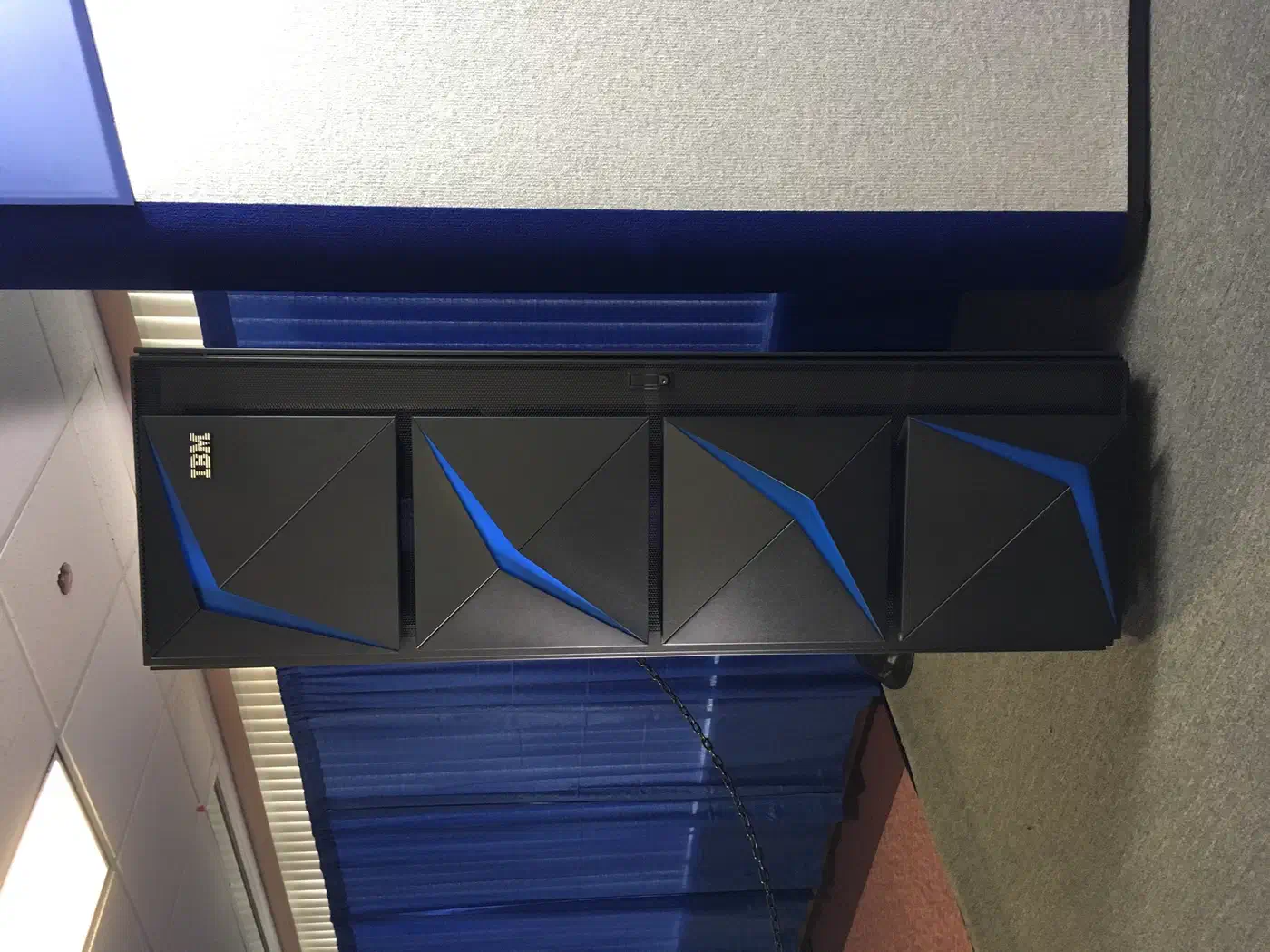
IBM’s counter-move was to position watsonx Code Assistant for Z as the safe modernization path. Rather than wholesale replacement, watsonx Code Assistant for Z keeps workloads on IBM infrastructure while using AI to incrementally improve COBOL applications - adding documentation, explaining legacy code, and assisting with refactoring within the existing mainframe environment. The Futurum Group’s analysis concluded that IBM’s actual moat is not COBOL itself but the integrated stack: hardware, middleware, database, security, and operational expertise that enterprises have optimized over decades.
Tool Comparison: Claude Code vs. Specialized Alternatives
The market framed this as Anthropic vs. IBM, but several other tools are competing for the same problem.
| Tool | Focus | Approach | Best For |
|---|---|---|---|
| Claude Code | Discovery, documentation, code analysis | General-purpose LLM with COBOL context | Understanding and documenting existing codebases |
| IBM watsonx Code Assistant for Z | Mainframe-native modernization | Keeps workloads on z/Architecture, AI-assisted refactoring | Incremental improvement within IBM ecosystem |
| PhaseChange COBOL Colleague | Deterministic analysis with AI narration | Hybrid: knowledge graphs for analysis, LLM for explanation | Zero-hallucination requirements in regulated environments |
| AWS Babelfish | PostgreSQL compatibility layer | Transpilation for database migration | Migrating SQL Server or Sybase workloads to PostgreSQL |
| Heirloom Computing | COBOL-to-cloud transpilation | Automated rehosting | Running COBOL natively in cloud environments |
IBM’s “Project Bob” - an AI-first IDE built on VS Code that runs a multi-model architecture routing Claude, Mistral, Meta’s Llama, and IBM’s own models depending on the task - is their answer to full-spectrum modernization assistance that can compete with general-purpose coding AI .
The Skeptics: What Thoughtworks, PhaseChange, and Gartner Found
Three independent analyses from organizations with deep COBOL experience pushed back on the Anthropic framing, each from a different angle.
Thoughtworks published on March 2, 2026 that while Anthropic’s post offers a useful overview, it “skips over details and nuances that anyone who’s been working on these challenges will be all too aware of.” Their core critique targets the framing of the problem itself. Anthropic presents COBOL modernization as primarily a readability challenge - the world is losing its ability to read COBOL as developers retire. Thoughtworks disagrees: “COBOL was deliberately designed to be readable. It’s really an issue of scale and cognitive load.”
Real modernization programs require preprocessing with static and dynamic analysis tools, call flow mapping, data lineage extraction, and integration seam identification before a single line gets translated. AI augments these existing tools but does not replace them. More critically, Thoughtworks warned against treating modernization as code translation at all: “A direct translation would reproduce existing architectural constraints, technical debt, and outdated design decisions without addressing weaknesses.” Genuine modernization requires architectural redesign, not syntactic conversion.
PhaseChange AI’s analysis reframed the question entirely: the issue is not whether Claude Code can read COBOL. It can. The question is whether you can stake a core banking system on a probabilistic reading. When a probabilistic model produces a subtly wrong translation - misreading edge cases in premium calculation logic, incompletely tracing copybook inheritance chains - the consequences are not a bad code review. They are regulatory violations, financial system failures , and remediation projects lasting years. PhaseChange proposed a hybrid model: use deterministic AI and knowledge graphs for the actual analysis work, and let the LLM serve as “the fluent voice of a deterministic mind” - handling documentation and explanation while deterministic systems own correctness.
Gartner’s First Take report described the Code Modernization Playbook as “useful but insufficient for enterprise-scale migration decisions” - a phrase that captures the nuance both camps often miss. The tools work. They just do not solve the whole problem.
What Enterprises Are Actually Doing
Actual organizations are deploying AI-assisted COBOL modernization in production, and their results track closely with what the skeptics predicted.
mgm technology partners, a European IT consultancy specializing in regulated industries, invested over 18 months in agentic coding workflows and trained 250 developers across more than 15 enterprise projects in insurance and finance. Their approach combines Claude Code with structured architectural guardrails, mandatory business department involvement at key decision points, and transparency requirements specific to regulated environments. Their finding: AI-assisted modernization works when it sits inside a delivery framework - used as an accelerator within existing migration methodologies that include human architectural oversight, regulatory review, and incremental cutover strategies, rather than a drop-in replacement for any of those steps.
The economics matter here. A traditional mainframe modernization engagement with a Global Systems Integrator costs hundreds of millions of dollars over 5-7 years. Most of that cost accumulates in the discovery phase - understanding what the existing COBOL programs actually do well enough to replicate the behavior correctly. Claude Code’s genuine value is making that first phase fast and cheap enough that more organizations can afford to start at all. Once organizations have completed discovery and documentation, they still face the architectural redesign, infrastructure migration, testing, regulatory validation, and operational cutover - none of which AI tools handle autonomously in 2026.
As of early April 2026, no Fortune 500 company has publicly documented completing a full COBOL-to-modern-language migration using Claude Code. The technology is in production use for discovery, documentation, and proof-of-concept phases.
The COBOL Workforce Problem That Makes This Urgent
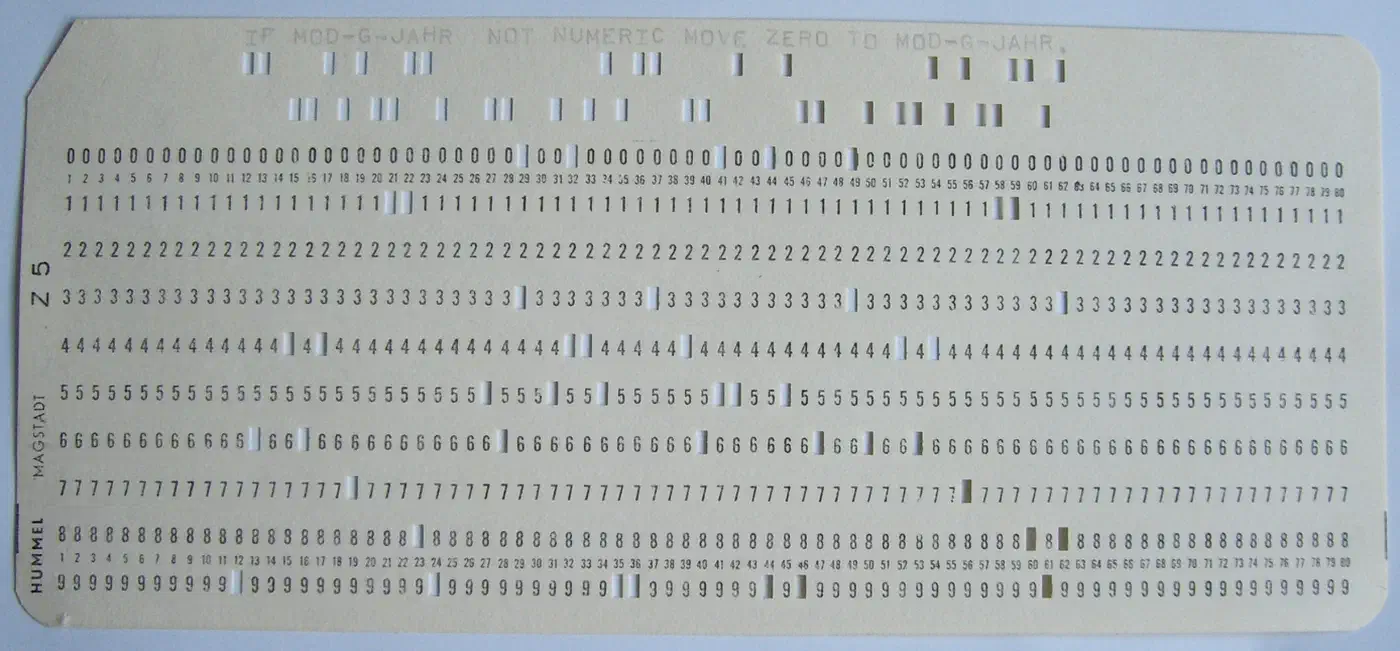
The workforce angle adds urgency that IBM’s stock defense tends to sidestep. The average COBOL developer in the United States is 55 years old. Roughly 10% of the existing COBOL workforce retires every year, and the pipeline of replacements is almost nonexistent - more than 85% of universities dropped COBOL from their computer science curricula in the 1990s. The mainframe knowledge walking out the door with retiring developers is not just code syntax; it is institutional knowledge about what the programs were designed to do and why specific edge cases were handled the way they were.
IBM’s mainframe revenue actually grew strongly through 2025, with z Systems hardware revenue up 67% year-over-year in Q4 2025. But the talent crisis underneath that hardware success is real. AI tools that can read undocumented COBOL programs and generate human-readable explanations of what they do have genuine value in this context - even if they cannot complete the migration autonomously. Capturing institutional knowledge before it retires is a compelling use case independent of the full migration question.
What the Stock Move Actually Means
Markets price binary outcomes well. They struggle with “yes, but only for 20-30% of the problem.” IBM’s 13.2% drop on February 23 priced the scenario where Claude Code captures a substantial portion of mainframe modernization revenue - not the scenario where it accelerates the discovery phase while leaving the architectural redesign, infrastructure migration, testing, regulatory compliance, and operational cutover largely unchanged.
By mid-March 2026, IBM had fallen 16% from pre-announcement levels. Whether that represents a fair reassessment or an overcorrection depends on how AI-assisted modernization adoption plays out over the next 24-36 months. For engineering leaders, AI-assisted legacy analysis tools are production-ready for inventory, documentation, and dependency mapping. They compress the most expensive phase of migration meaningfully. They do not turn a multi-year delivery program into a quarter-long sprint, and organizations that plan on that basis will run into the same failures that have plagued mainframe modernization for decades.
The COBOL controversy previews a pattern that will repeat across any domain where incumbents have built businesses on managing complexity. The market argument is never whether AI handles the visible 20-30% of the work. It is how fast everyone learns to distinguish that from handling all of it.
Looking Forward
Practical expectations for the next 12-18 months: AI-assisted modernization engagements will become standard at every major consultancy. Every Global Systems Integrator will add Claude Code, watsonx, or equivalent tools to their discovery and documentation workflows. Consultant headcount for the analysis phase will shrink. The overall engagement timelines will compress modestly - not from years to quarters, but perhaps from 5-7 years to 3-4 years on well-scoped programs. That compression represents real cost savings for enterprises and real revenue pressure on consulting margins, neither of which is zero.
For developers, the practical takeaway is that if you work anywhere near legacy modernization, fluency with AI-assisted code analysis tools is becoming table stakes. Claude Code’s COBOL capabilities are real, the use cases are documented, and the tool is being used in production - just not in the way the February 23 stock move implied.