 Botmonster Tech
Is a RISC-V Laptop Ready for Linux Daily Use in 2026?
RISC-V laptops are making rapid progress, but they are currently best suited for developers and enthusiasts rather than mainstream daily use in 2026. The hardware is capable of terminal work, web browsing, and compilation. The bottleneck is software: many applications that x86 and ARM users take for granted - Zoom, VS Code pre-built binaries, most commercial software - don’t have native RISC-V builds yet. Whether this matters depends entirely on what you need the laptop to do.
What Is RISC-V and Why Does It Matter?
RISC-V is an open, royalty-free Instruction Set Architecture (ISA). An ISA defines the instruction vocabulary that a CPU understands - the fundamental commands a processor can execute. Dominant ISAs like x86-64 (Intel/AMD) and ARM (Apple, Qualcomm, most mobile processors) require licensing fees paid to the IP owner for every chip manufactured. RISC-V removes this requirement entirely: anyone can design a RISC-V processor without paying royalties, using a specification that is publicly documented and governed by a non-profit foundation.
The implications are significant for the computing industry. Hardware competition is currently constrained by licensing costs and IP restrictions - a startup building a novel processor has to either license ARM (costly and with restrictions) or invest in clean-room x86 development (prohibitively expensive). RISC-V removes this barrier. A university research group, a startup, or a government with chip ambitions can all build RISC-V silicon on equal legal footing.
In 2026, SiFive , StarFive , Alibaba’s T-Head division, and Milk-V are all shipping RISC-V silicon in products ranging from IoT microcontrollers to servers.
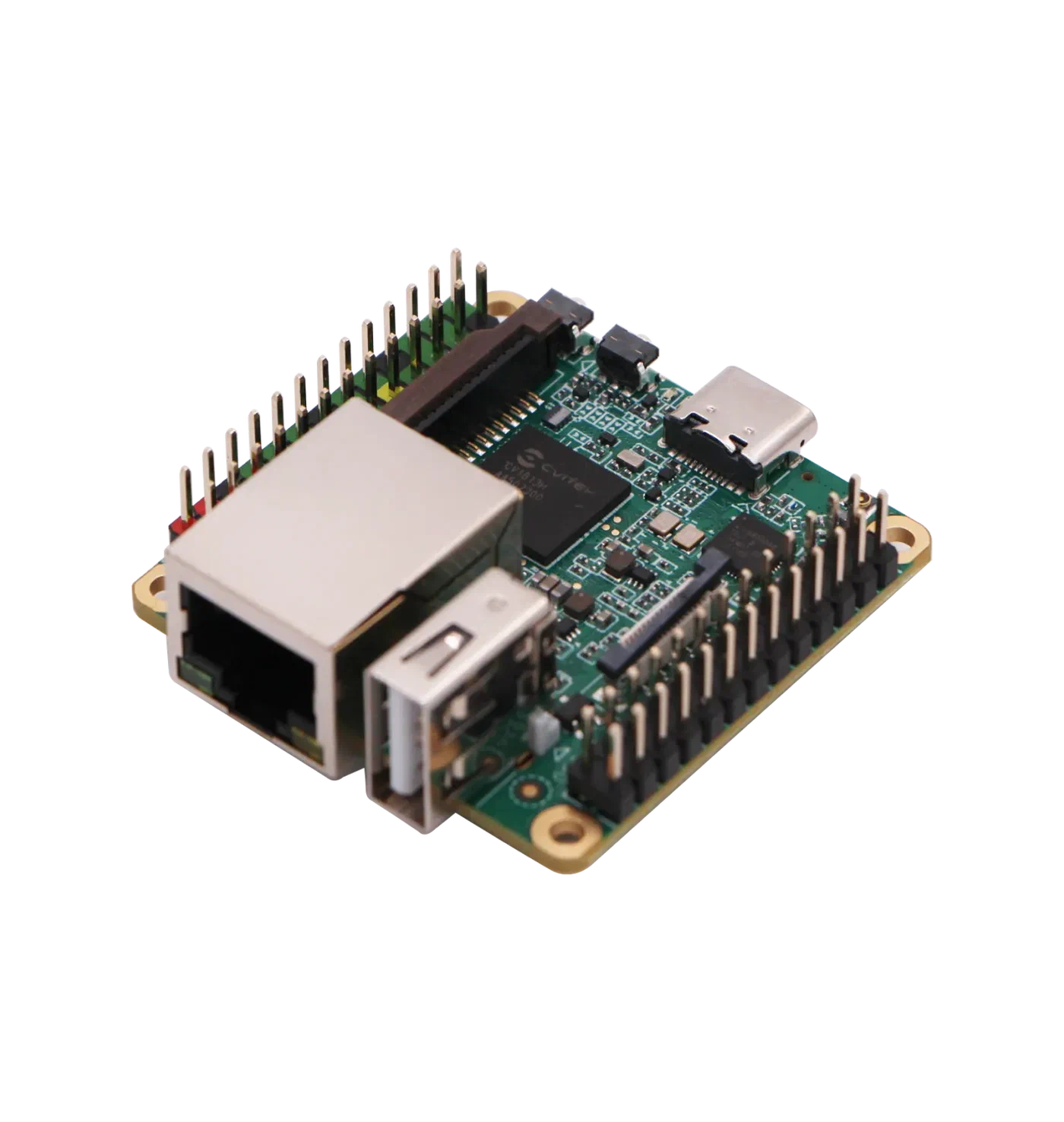
The RISC-V ecosystem has already captured the embedded and IoT market where ARM’s licensing costs are most burdensome. Server adoption is growing, driven by data center operators who want vendor-independent silicon. The laptop market is the hardest challenge: consumer laptops need mature GPU drivers, wireless connectivity, and a broad software ecosystem that takes years to build.
RISC-V is not positioned to replace x86 quickly. The transition from CISC-era computing to RISC happened over decades, and RISC-V adoption is following a similar arc - establishing in embedded and server markets first, with consumer devices following once the ecosystem matures. What makes 2026 interesting is that consumer RISC-V laptops now actually exist and are usable.
The Framework RISC-V Mainboard
The most significant development for the RISC-V laptop ecosystem is Framework’s modular laptop platform with a RISC-V mainboard. Framework’s design philosophy - a laptop where the mainboard, display, ports, and battery are all user-replaceable - makes it uniquely suited to serving the open-hardware community. You can put a RISC-V mainboard into the same Framework 13 chassis that otherwise accepts AMD and Intel mainboards.
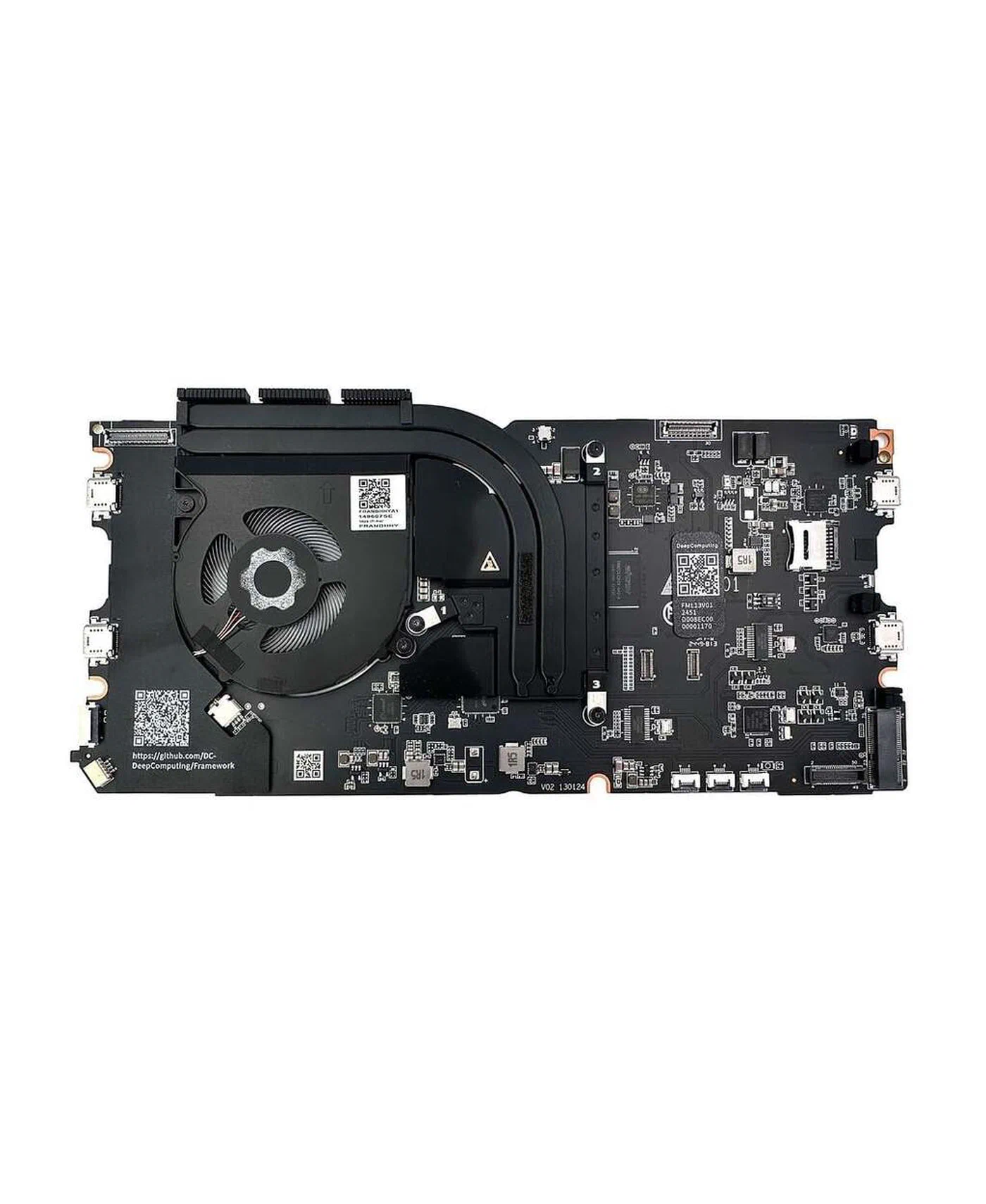
The RISC-V mainboard uses a SoC in the StarFive JH7110 class - a 4-core RISC-V64 processor with an integrated GPU (currently using an IMG BXE series or equivalent). This is not a high-performance chip by 2026 laptop standards. Single-threaded performance is comparable to a mid-tier ARM Cortex-A55 - similar to what you’d find in a 2019-era budget Android phone. It handles text editing, terminal work, light web browsing, and code compilation adequately. It cannot handle video editing, modern gaming, or running multiple heavy applications simultaneously without noticeable delay.
What works on the Framework RISC-V in 2026:
- Web browsing in Firefox (official RISC-V build)
- Terminal workflows: tmux, Neovim, git, make, cargo
- Compiling code: GCC, Clang, Rust, Go - all native
- Document editing: LibreOffice compiles and runs
- Email and calendar via web or Thunderbird
What doesn’t work without workarounds:
- VS Code (official binaries are x86/ARM only; VSCodium can be compiled from source)
- Zoom, Slack, Discord (no native RISC-V builds; web versions work partially)
- Any Steam game using the Linux Steam client
- Hardware-accelerated video playback in most browsers
Upstreaming the Kernel - Linux Support Status
RISC-V has been in the mainline Linux kernel since version 4.15, making it one of the better-supported non-x86 architectures at the kernel level. But peripheral driver support varies significantly by SoC, and the situation in 2026 is best described as “capable but still patchy.”
GPU acceleration is the single largest limitation. The IMG BXE GPU in JH7110-class SoCs has an open-source kernel driver in the works (following the PowerVR driver upstreaming effort that started around 2023), but full Vulkan/OpenGL support via mesa is not yet complete. In practice, this means desktop environments run in software-rendered mode, which makes GNOME and KDE noticeably sluggish. Lighter window managers (i3, Sway, XFCE4 without compositing) perform much better because they don’t rely on GPU compositing.
Wireless driver status: Intel WiFi cards (AX200/AX210/BE200) have upstreamed drivers and work correctly on RISC-V. Realtek and Broadcom maintain their poor track record here - the same firmware-loading and driver quality issues that affect those cards on x86 apply equally to RISC-V. For the Framework RISC-V mainboard specifically, use an Intel WiFi card for the best experience.
Distribution support for RISC-V64: Debian , Fedora , openSUSE , and Alpine Linux all offer official RISC-V64 images in 2026. Ubuntu’s RISC-V support is in the “preview” tier - functional but not receiving the same testing and support as x86-64 and ARM64. For the most practical experience, Debian or Fedora on RISC-V provides the widest native package availability.
Software Ecosystem - What Runs Natively?
The critical question for daily use: which applications have native RISC-V64 compiled builds available through distribution package managers?
Fully native from distribution repositories:
- All GNU/POSIX tools: bash, gcc, clang, make, cmake, binutils
- Python (CPython), Ruby, Node.js, Go, Rust
- Neovim, Helix, Vim, Emacs - all compile cleanly
- Git, tmux, htop, curl, wget - complete POSIX toolchain
- LibreOffice (with some limitations on rendering)
- Firefox (official RISC-V build since Firefox 114)
- GIMP, Inkscape, Blender (software render only)
Available but requires compilation or alternative source:
- Chromium (no official binary; compiles from source in 4–8 hours; Ungoogled Chromium maintains RISC-V builds)
- VSCodium (open-source VS Code alternative with RISC-V builds)
- Signal (Electron-based; unofficial RISC-V builds available from community)
Not available without emulation:
- VS Code official binaries
- Zoom, Slack, Discord native apps
- Any x86-only binary without RISC-V port
- Steam and most commercial games
x86 emulation layers: The FEX-Emu project (similar to Rosetta 2 for RISC-V) is actively developing RISC-V support as of 2026. The RISC-V roadmap for FEX is progressing, but it’s not yet at the stability level that would make it practical for daily use. When FEX-Emu achieves reliable x86 emulation on RISC-V, it will dramatically change what’s possible on these machines - but it’s not there yet.
Performance Reality - Benchmarks Against ARM and x86
Current RISC-V laptop silicon is not competitive with modern processor designs from Apple, Intel, or AMD. Calibrating expectations correctly is essential for anyone considering the purchase.
Single-core performance: JH7110-class processors score roughly equivalent to a 2016-era Intel Core i5-6200U or a Cortex-A55 (the “efficiency” cores in modern ARM chips). Web browsing with JavaScript-heavy pages is noticeably slower than on any modern mainstream laptop. Compilation workloads that take 30 seconds on a modern x86 laptop can take 3–5 minutes on the RISC-V equivalent.
Compilation benchmark comparison (Linux kernel compilation, make -j4):
| Platform | Time | Notes |
|---|---|---|
| Apple M3 (8-core) | ~2 min | Reference point |
| Intel Core i7-1265U | ~5 min | Modern mainstream laptop |
| RISC-V JH7110 (4-core) | ~25–35 min | Current RISC-V laptop class |
| Raspberry Pi 5 (ARM) | ~18 min | For context |
For a developer who compiles code frequently, the compilation performance gap is the most practically impactful limitation. A 25-minute kernel compile versus a 5-minute compile changes how you work - it discourages rapid iteration and encourages off-device build systems.
What is fast enough: Writing code in a terminal editor, running Python scripts, browsing text-heavy documentation sites, managing git repositories, and running small-to-medium web apps locally are all comfortable on current RISC-V hardware. The limitation is consistent single-thread compute speed, not raw throughput - tasks that scale across cores perform relatively better.
Who Should Buy a RISC-V Laptop Today?
The ideal buyer profile for a 2026 RISC-V laptop:
- Embedded and firmware developers who are writing or porting code for RISC-V microcontrollers - having native RISC-V hardware eliminates cross-compilation guesswork
- Kernel and driver developers working on RISC-V upstream support - daily driving the platform finds bugs that CI systems miss
- Open hardware advocates for whom the philosophical value of a fully open-ISA machine is worth the practical limitations
- Architecture researchers and students studying processor design and ISA semantics
Not suitable for anyone who needs their laptop to be their primary productivity machine in 2026: the commercial software gaps (Zoom, Slack, VS Code), the performance limitations on heavy workloads, and the incomplete GPU acceleration stack add up to real friction for anyone not specifically interested in RISC-V as a platform.
The “second laptop” model: Most early adopters are using RISC-V laptops as an experimental secondary machine alongside a primary x86 or Apple Silicon device. This is the realistic approach - you get to participate in the platform’s development and ecosystem maturation without depending on it for deadline-sensitive work.
Looking ahead: The RISC-V laptop trajectory is genuinely promising. The compiler toolchains are mature, the kernel support is strong, and the software ecosystem is actively expanding. The hardware needs more powerful SoCs - the gap from JH7110-class to something competitive with a modern ARM Cortex-A78 is large but being actively worked on. Industry observers who follow RISC-V developments estimate competitive laptop-class performance around 2028–2030, when multi-vendor silicon competition on the RISC-V ISA should yield meaningful performance and efficiency gains.
In 2026, buying a RISC-V laptop means buying into a platform’s future, accepting its current limitations as the price of participation. For the right person, that’s an excellent trade.