 Botmonster Tech
Is Claude Max worth $200/month? One developer's real cost analysis

I’ve run every Claude tier through my own workflow for months, and Claude Max 20x at $200/month is the best AI coding deal I’ve found for heavy users. It cuts the per-message cost in half versus Pro and gives me about 900 Opus 4.7 messages per 5-hour window on a 1M token context. I tracked one power user who burned 10 billion tokens in eight months for around $800 on Max; the same usage at API rates would top $15,000. Yet Anthropic’s own data shows the average Claude Code user runs about $6/day in API-equivalent spend, with 90% under $12/day. So I think Max 5x at $100/month is the sweet spot for most devs. Max 20x only pays off if you push past 225 messages per 5-hour window on a regular basis. Before paying for a higher tier, check whether the right plugins get you more out of the one you have.
The Three Tiers: What You Get for $20, $100, and $200
The Claude pricing tiers confused me at first because the 5x and 20x labels don’t map to cost in a straight line. So before I could run the math, I had to pin down what each tier gives you.
Pro at $20/month is the baseline I started from: about 45 Opus messages or 225 Sonnet messages per 5-hour rolling window. It includes Claude Code, web search, file uploads, and projects. The 5-hour window resets on a rolling basis, not once per day.
Max 5x at $100/month gives you 5x Pro’s limits: about 225 Opus messages per 5-hour window. You also get priority during peak hours, higher rate caps, and the full 1M token context with Opus 4.7. The cost per message is the same as Pro. $100 is just 5x $20 for 5x the usage. You pay for capacity and priority.
Max 20x at $200/month gives you 20x Pro’s limits, or about 900 Opus messages per 5-hour window. Here the math shifts. You pay only 10x Pro’s price for 20x the usage, so the per-message cost drops in half: about $0.22 per Opus message versus $0.44 on Pro. The volume discount only kicks in at the 20x tier.
| Plan | Price | Opus Messages/5hr | Per-Message Cost | Context Window |
|---|---|---|---|---|
| Pro | $20/mo | ~45 | ~$0.44 | 200K (effectively) |
| Max 5x | $100/mo | ~225 | ~$0.44 | 1M |
| Max 20x | $200/mo | ~900 | ~$0.22 | 1M |
| API (Sonnet 4.6) | Pay-per-use | Unlimited | $3/$15/MTok | 1M |
| API (Opus 4.7) | Pay-per-use | Unlimited | $5/$25/MTok | 1M |
Every Max plan ships Opus 4.7 with the 1M token context (now standard, no beta header needed), adaptive thinking mode, context compaction for near-endless chats, and up to 128K output tokens.
Pro can also reach 1M context with Opus 4.7. But only Max gives you the rate limits to run long-context work without hitting throttling in minutes.
From June 15, 2026, Anthropic routes Agent SDK and claude -p programmatic usage onto a separate monthly credit, so it no longer counts against the interactive 5-hour windows priced here. The numbers in this analysis apply to interactive Claude Code, Cowork, and chat. If you script agents against the SDK, that usage draws from its own budget ($20 on Pro, $100 on Max 5x, $200 on Max 20x).
Anthropic’s Own Data: What Developers Actually Spend
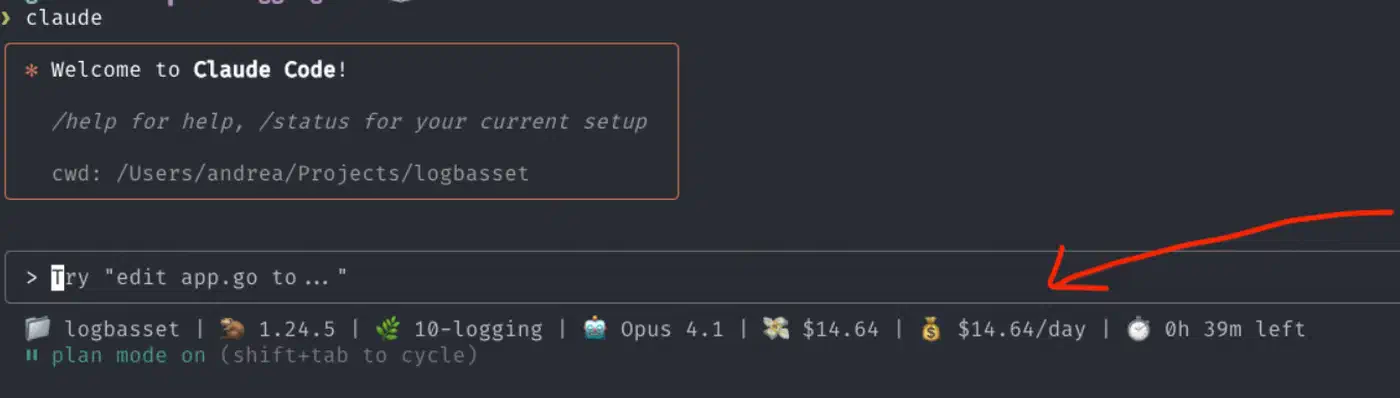
Anthropic released usage data that pokes holes in the case for upgrading, and it changed how I think about my own bill. The /cost command inside Claude Code shows a running tally of your API-equivalent spend, and when I checked the totals, most devs use far less than they think.
The average Claude Code dev spends about $6/day in API-equivalent terms, with 90% of users under $12/day. In monthly terms, that’s about $180/month at the mean and $360/month at the 90th percentile.
At $6/day (or $180/month), Max 5x at $100/month already saves you about 44% versus the API. Max 20x at $200/month roughly matches the average API bill, but you also get much higher burst capacity and the halved per-message rate when you need it.
The curve is skewed toward light users. The median dev likely spends well under $6/day, so Pro at $20/month covers the bulk of the userbase. The data Anthropic shares props up the tier structure, and it convinced me most people should not pay $200/month.
The sharpest data point I found comes from one tracked power user. Over eight months from June 2025 to February 2026, the dev burned about 10 billion tokens across dozens of projects. At API rates, that would have topped $15,000. Their Max bill came to about $800. That’s a 93% saving.
The same user’s peak day on January 22, 2026 hit 8,930 messages across 9 sessions, with 2,169 tool calls. That kind of sustained output only works on Max 20x. Anywhere else, rate limits grind the work to a halt.
Prompt caching is the hidden subsidy under all of this, and it took me a while to notice. Over 90% of tokens in typical Claude Code sessions are cache reads, not fresh input or output tokens. If those reads were billed at fresh Opus rates ($15/MTok), the power user’s bill would have been $67,500, not $6,750. So when /cost shows your “API-equivalent” spend, a big chunk of what looks pricey is dirt-cheap cache hits.
The Rate Limit Reality: Peak Hours and the March 2026 Crunch
The advertised message limits and what I got in peak hours split apart fast. That gap is important when you’re sizing up a $200/month bill.
The ~225 (Max 5x) and ~900 (Max 20x) limits per 5-hour window are rough ceilings. Real limits shift with message size, model choice (Opus eats more than Sonnet), thinking-token use, and server load.
In March 2026, this turned into a real problem for me and a lot of other users. Around March 23, users started filing GitHub reports (issue #38335 ) saying Max session limits were burning “abnormally fast.” Some Max 20x users hit 100% in 70 minutes after a reset, far short of the 5-hour window. One Reddit thread, “20x max usage gone in 19 minutes,” pulled in over 330 comments inside a day.
Anthropic confirmed the issue on March 26. During weekday peak hours (5am-11am PT and 1pm-7pm GMT), users were tearing through their 5-hour session caps faster than before. The cause: higher demand and a change in how thinking tokens count against limits. The Register reported Anthropic’s admission that Claude Code quotas were running out too fast.
The cause was a few overlapping things: a deliberate peak-hours tweak, counter-desync bugs tracked across many GitHub issues, and the end of the March 2x off-peak promo. Some users dug into the Claude Code binary and found bugs that broke prompt cache and drove costs up 10x to 20x.
Opus 5 reopened the argument in July 2026. Thinking runs by default on that model, where Opus 4.8 left it off, so bills moved without anyone touching a prompt. Token burn ran through Opus 5’s reception on Reddit from the first week.
A few workarounds came out of the community, and I now lean on all of them. Move heavy sessions to off-peak hours (evenings and weekends for US and European devs). Switch to Sonnet 4.6 for routine tasks; it eats fewer rate-limit units than Opus. Use /cost to watch your burn rate in real time and catch runaway sessions early. Watch the counter for odd jumps: a 10x to 20x spike on a single prompt points to the cache bug.
The same Sonnet-default, Opus-on-escalation playbook resurfaced as the dominant community advice during the Opus 4.7 launch reception, where power users blamed launch-week cap burns on single-model workflows rather than the new tokenizer alone.
The trust issue is real, and it’s the part that still bugs me. You pay $200/month for limits that can be cut back with no notice. That breeds doubt. Anthropic’s pricing page calls the limits approximate, and subscribers get no contract for any set message count. So is March 2026 a one-time growing pain or a preview of more changes? I don’t have a firm answer yet.
Rival $200/Month AI Subscriptions
At $200/month, Claude Max 20x competes with a handful of rival premium tiers. Before I committed, I wanted to know what else lives at this price point.
ChatGPT Pro at $200/month from OpenAI bills itself as unlimited access to GPT-5.4 with dedicated GPU capacity. The “unlimited” claim is the main hook, though OpenAI’s fair-use policy can still soft-throttle extreme patterns. In practice, most Pro users say it is unlimited, even on heavy days. GPT-5.4 has a 256K context window, about 4x smaller than Claude Opus 4.7’s 1M. That ChatGPT subscription also covers Codex, OpenAI’s terminal coding tool, so heavy terminal users get a Claude Code rival with no separate API bill.
Google AI Ultra at $249.99/month opens the top access limits across every Google AI product. That includes Veo 3.1 with audio, Project Mariner for agentic tasks, and 30 TB of cloud storage. It also bundles YouTube Premium. Ultra is priced for filmmakers and creative pros as much as for devs. To me it reads as a broader bundle. On the coding side, the fast Flash tier that scored 76% on Terminal-Bench shows Google chasing agentic devs with a cheap option underneath the Pro model in this plan. New users get 50% off for the first three months.
Cursor Ultra at $200/month runs on credits. The monthly fee turns into $200 of credits that drain based on which model you pick. You get subagents, cloud agents with computer use, plan mode, a plugin marketplace, and BugBot code review. Annual billing drops the price to $160/month. Cursor Ultra is a dev environment, so you pay for the IDE as much as for the model capacity.
GitHub Copilot Pro+ at $39/month gives you 1,500 premium requests per month with access to Claude Opus 4.7, GPT-4.5, and others. For devs who don’t need a Claude-only plan, this covers a lot of ground for a fraction of the price. For a full breakdown of how the three tools stack up on features and workflow fit , see my deep dive.
| Service | Price | Highlights | Context Window |
|---|---|---|---|
| Claude Max 20x | $200/mo | 900 Opus msgs/5hr, 1M context, Claude Code | 1M tokens |
| ChatGPT Pro | $200/mo | “Unlimited” GPT-5.4, dedicated capacity | 256K tokens |
| Google AI Ultra | $249.99/mo | Gemini 3.1 Pro, Veo 3.1, 30TB storage | Varies |
| Cursor Ultra | $200/mo | $200 credit pool, IDE + agents, subagents | Model-dependent |
| GitHub Copilot Pro+ | $39/mo | 1,500 premium requests, multi-model | Model-dependent |
The Claude for Open Source Program: A $1,200 Signal
Anthropic’s Claude for Open Source program , launched in late February 2026, hands qualifying open source maintainers 6 months of free Max 20x. That’s a $1,200 value, with up to 10,000 slots open through June 30, 2026.
There are two ways in. The main path needs you to be a maintainer or core team member on a public repo with 5,000+ GitHub stars or 1M+ monthly NPM downloads, with commits, releases, or PR reviews in the last 3 months. The ecosystem track covers projects that miss those bars but still carry real weight as infra libraries or core tooling. You apply with a short writeup, and Anthropic looks at downstream dependents and how critical the project is.
Simon Willison covered the program favorably when it launched, noting it targets “large project” maintainers. The Hacker News thread was mostly positive but flagged worries about open source infra building a dependency on a paid service.
The strategy here told me a lot about Max’s true cost base. If Anthropic can hand out $1,200 per maintainer (up to $12 million if all 10,000 slots fill), the real cost to serve a Max user is well under $200/month. I’d bet the same is true for anyone below the 90th percentile. The program seeds Claude Code use among the devs whose tooling picks ripple out across the whole ecosystem.
Who Should Pay What: A Decision Framework
Here is how I’d map the tiers to real use.
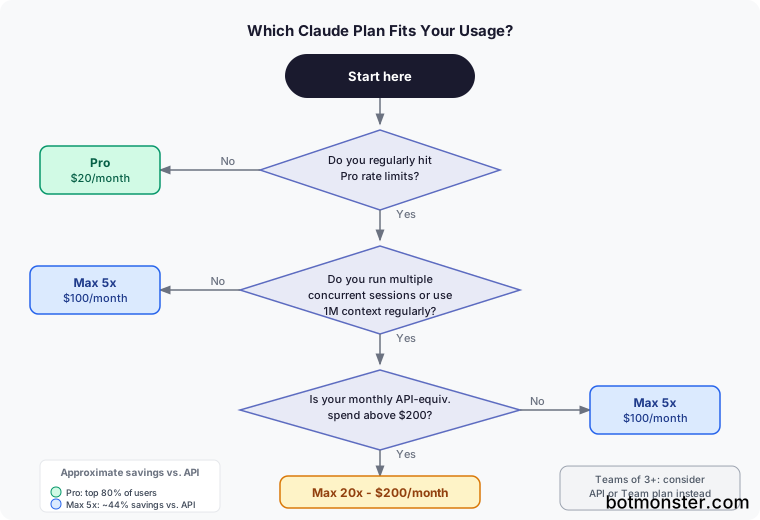
If you use Claude Code fewer than 45 times per 5-hour window and rarely hit rate limits, stay on Pro at $20/month. Most users are here, and the math does not back an upgrade.
If you hit Pro’s rate limits during work sessions and lose 15 to 30 minutes a day waiting for resets, Max 5x at $100/month pays for itself. At $25/hour, the lost time alone tops the price gap inside a single work month.
If you run multiple concurrent Claude Code sessions , lean on Opus 4.7 for complex multi-file work, or live in 1M context windows, Max 20x at $200/month is the only tier with enough headroom. The halved per-message rate makes it the right call for anyone above 225 messages per 5-hour window on a regular basis.
For teams of 3 or more devs with mixed usage, I’d model the API pay-as-you-go path before buying a stack of Max subs. Sonnet 4.6 at $3/$15 per MTok with prompt caching can come out cheaper based on your model mix. Run /cost for a week to get real token numbers first. Open-weight options are worth pricing too. MiniMax M2.7 is an Opus-class 230B MoE at $0.30/$1.20 per million tokens, about a tenth of Opus. Alibaba’s Qwen3.6-35B-A3B for zero-cost self-hosting goes further still, running a 20.9GB quantization on a single laptop with no per-token bill.
Orgs that need admin controls, SSO, usage management, or compliance should look at Team at $25/user/month ($20 billed annually) or Enterprise. Those often beat per-seat Max plans for groups, and you also get governance on top.
Max 20x pays for itself against the API when your monthly API-equivalent spend tops $200. By Anthropic’s own numbers, that’s the top 10% of users. For the other 90%, Pro or Max 5x covers real needs without burning cash.
One red flag I watch for: if you bought Max and keep ending every 5-hour window with unused capacity, you are overpaying. Downgrade and pocket the difference. The March 2026 rate-limit mess showed that if Anthropic keeps tweaking limits on the fly, the real value of Max subs swings in ways the sticker price won’t show. The check I trust most is the /cost command: it tells you, in real time, whether you’re getting what you paid for.