 Botmonster Tech
1,000 OpenClaw Deploys Later
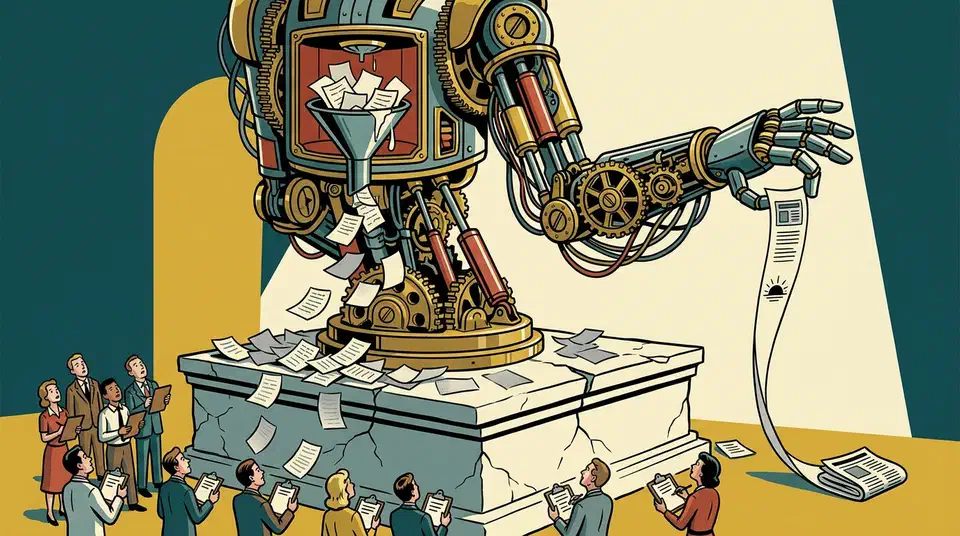
After publishing a 7-minute OpenClaw deploy video and watching roughly 1,000 isolated VMs spin up afterward, one r/LocalLLaMA cloud-infra operator concluded the only OpenClaw workflow that survives unsupervised execution is a daily news digest. Memory is the load-bearing failure mode, not a fixable bug. OpenClaw sits at 370K+ GitHub stars, but the working-workflow count has barely moved.
Key Takeaways
- A cloud-infra operator watched roughly 1,000 OpenClaw deploys and found one reliable use case.
- Memory unreliability is built into how the agent works, not a bug a patch can fix.
- Daily news digests are the exception because they keep no state between runs.
- The same digest can be built with a cron job and any LLM API in about ten lines.
- OpenClaw’s founder admitted that recent releases were a “rough week”.
The 1,000-Deploy Post That Broke the Consensus
The contrarian thesis is anchored to one specific source: an r/LocalLLaMA post titled “OpenClaw has 250K GitHub stars. The only reliable use case I’ve found is daily news digests” , with 335 comments and 891 votes. The OP is not a casual skeptic. He runs cloud infrastructure where strangers spin up Linux VMs, published a deploy walkthrough that took off, and now has a dataset most reviewers do not have access to.
His credentials:
So I run cloud infra where people spin up Linux VMs. We made a video a while back showing how to deploy OpenClaw on an isolated VM in like 7 minutes, and it kind of took off. We’ve had roughly a thousand OpenClaw deploys since then.
u/Sad_Bandicoot_6925 (OP, r/LocalLLaMA)
The thesis sentence is one line: “Here’s what I found: there are zero legitimate use cases.” That is unusual phrasing for a critique of a project with nine-figure-equivalent attention. Kilo.ai’s count puts the current GitHub star figure at 370K+, up from the 250K cited in the original post title. The sharper number makes the underlying point sharper too: the gap between attention and working unsupervised workloads keeps widening.
Why Memory Is the Architectural Failure Mode
The OP’s diagnosis is precise enough to be testable. OpenClaw runs as a persistent agent that carries context across long-running sessions. Context windows fill up. Older facts age out. The agent does not advertise which facts it has dropped. So you only learn a memory eviction happened when an output is wrong, and the whole reason you set up an unsupervised agent is to avoid reading every output.
His killer line:
An autonomous agent that you have to verify every time is just a chatbot with extra steps. This isn’t a bug that gets fixed in the next release. It’s a fundamental constraint of how OpenClaw manages context. The agent runs, the context fills up, things get forgotten. Sometimes the important things. You’ll never know which things until after the damage is done.
u/Sad_Bandicoot_6925 (same OP, on the architectural failure mode)
His failure scenario is concrete. You’re planning a birthday party. Three friends said yes, one said no. You ask OpenClaw to draft and send a status email. The agent has been following the whole thread, so it knows the headcount. Except, somewhere between the original message and the send action, it forgot the no. Everyone gets the wrong invite. You don’t catch it because the entire point of running the agent unsupervised was that you weren’t going to read every output.
The counter-evidence here strengthens the diagnosis. Hermes, the memory-first competitor , handles the same workload because it treats memory as the primary architectural concern rather than a side effect of context window management. The r/openclaw vs-Hermes comparison thread and the Kilo.ai 1,300-comment synthesis both document migration patterns from one to the other. Different design choice, different reliability profile.
The One Use Case That Holds Up: Daily News Digests
The OP grants OpenClaw exactly one working pattern from his cross-section: daily news summaries. The agent searches the web for topics you care about, summarizes them, and ships the summary to WhatsApp every morning. The deflating part of his read is that the same workflow runs on a 10-line cron job with any LLM API, ChatGPT scheduled tasks, or Zapier; a full autonomous agent with root access on a dedicated server is overkill for it. That sentence sits inside a larger pattern about autonomous overnight agents being a separate tier from inline AI assistance, and digest jobs are the cheapest tier that still works without supervision.
The structural reason news digests work where everything else fails is mechanical. A digest run is stateless: each morning the agent gets a fresh prompt, fetches today’s URLs, summarizes, and ships output. There is no carry-over context to corrupt. The user reads the digest and discards it, so the user is the verification layer. The output is read-only prose, so the failure mode is a missed bullet point rather than an unsent invoice. Compare that to an inbox-management agent taking destructive actions on real email based on context that may or may not still be intact.
This is also why the ten-line cron substitute is not a snub. If your task fits the news-digest shape, you do not need a 100+ skill agent with shell access to do it. A scheduled API call to Claude or GPT, a webhook, and a WhatsApp send is the entire architecture.
The Astroturfing Accusations and What to Do With Them
The most uncomfortable part of the contrarian thread is in the top comments, not the OP. Two patterns get flagged. First, the upvote-to-comment ratios on early OpenClaw threads, where multiple top commenters read posts at 3 comments and 200 upvotes as obvious bot boosting and called the cadence subreddit astroturfing. A second comment cross-references thread cadence: a post asking “anyone actually using openclaw” pulled 800 comments, one of the biggest in r/LocalLLaMA history, with random comments still appearing weeks after the original. The linked companion thread is r/LocalLLaMA 1r5v1jb . The honest reading is that this is community sentiment, not finding. Nobody outside Reddit moderation has the data to confirm or deny coordinated upvoting. The architectural critique stands either way, because Hermes’ migration data is independently verifiable and the founder’s own admission corroborates the reliability picture.
Two non-Reddit sources echo the same failure profile. KDnuggets frames OpenClaw as the viral 2026 agent and notes the founder’s departure for OpenAI shortly after the project broke through. Carly AI calls it “the most-hyped open-source agent of 2026” while also noting it is the one “that’s deleted people’s inboxes, nuked their Macs, and quietly run up four-figure API bills while they slept.” That is the same memory-plus-permissions-plus-cost failure mode the OP is describing, framed by a third-party assistant tool blog rather than a contrarian Redditor. The pattern shows up outside the OpenClaw ecosystem too: the Claude Code terraform-destroy incident at DataTalks.Club is the same family of failure dressed in different tooling, where an unsupervised agent with shell access acted on a stale picture of the world.
The Founder’s Own “Rough Week” Admission
The strongest non-Reddit corroboration of the contrarian thesis comes from the founder. Peter Steinberger published “OpenClaw Had a Rough Week” acknowledging the recent release disasters. The opening:
OpenClaw had a rough week. 2026.4.29 made it obvious. Sorry. We are making core smaller, moving optional stuff to ClawHub, and announcing LTS separately later in May.
The diagnosis section names four concurrent failures rather than one isolated bug:
This was not one bug. Plugin dependency repair ran in startup and update paths, bundled and external plugins were half-split, ClawHub artifact metadata was still settling, and gateway cold paths did too much work.
Then the operating-model concession: through the OpenClaw Foundation, and with help from OpenAI, the project is building a real team rather than running founder-driven. Read against the contrarian thesis, the founder’s framing is gentler in tone but compatible in substance. OpenClaw is not yet infrastructure-grade. Releases shipped recently broke installs in ways that took the project a week to triage. Stewardship is moving from one founder to a foundation because the previous shape did not scale. None of that contradicts the r/LocalLLaMA OP’s reading. It just dresses it in the apology-post register rather than the skeptic-post register.
The practical takeaway is unchanged. If your workload looks like a daily news digest, OpenClaw is fine, and so is a cron job. If your workload requires an agent to remember what it decided yesterday and act on it tomorrow without supervision, the GitHub star count is not the signal you should be reading. The 1,000-deploy dataset is.