 Botmonster Tech
Dive into LLMs has 11 free chapters and no open license

The Dive into LLMs course gives you 11 free chapters from Shanghai Jiao Tong University. Each one ships a slide deck, a written walkthrough, and a runnable notebook. The topics include fine-tuning, jailbreaks, watermarking, GUI agents, and RLHF. Two catches: it’s all written in Chinese, and the repo carries no license file.
Key Takeaways
- Eleven chapters, each with slides, a written guide, and a notebook you can run.
- It teaches things most English courses skip, like watermarking and jailbreaks.
- The writing is all in Chinese, though the notebooks read fine without it.
- No license file means you can’t legally reuse it in your own teaching.
- Nothing new has landed since late 2025, so check versions before you run it.
What the Dive into LLMs course covers
Lordog/dive-into-llms started as lecture notes for two Shanghai Jiao Tong University classes. One covers natural language processing (NIS8021), the other AI security (NIS3353). Zhang Zhuosheng teaches both. The team then put the notes online as a free public-interest project.
The chapter list is the whole product. Here it is in English, with what you build in each one.
| Chapter | Topic | What you build |
|---|---|---|
| 1 | Fine-tuning and deployment | Fine-tune a pretrained model, then wrap it in a demo |
| 2 | Prompting and chain of thought | Call model APIs and coax better reasoning out of them |
| 3 | Knowledge editing | Rewrite one fact inside a model, then check the edit stuck |
| 4 | Mathematical reasoning | Train your own mini reasoning model |
| 5 | Watermarking | Hide a detectable signal in generated text |
| 6 | Jailbreak attacks | Run published attack methods against a target model |
| 7 | Steganography | Smuggle a message inside fluent model output |
| 8 | Multimodal models | Combine vision and language in one model |
| 9 | GUI agents | Train an agent to order food and reply to messages |
| 10 | Agent safety | Test whether an agent spots risk in an open environment |
| 11 | RLHF alignment | Walk through a PPO-based alignment run |
Every chapter ships three pieces: a PDF deck, a README walkthrough, and a Jupyter notebook. That level of completeness is rare in something given away for free.
What Dive into LLMs teaches that English courses skip
Five of the 11 chapters cover security: knowledge editing, watermarking, jailbreaks, steganography, and agent safety. That’s the reason to bother with a course in a language you can’t read.
Compare it with the most popular English equivalent. The README of mlabonne/llm-course runs to about 6,200 words and never once uses the words watermarking, steganography, or knowledge editing. Jailbreaking appears exactly once, inside a bullet about prompt hacking. That’s a good course, and it stops roughly where this one starts.
The gap is widest on watermarking. Chapter five hands you the X-SIR codebase. It ships three watermarking algorithms and two removal attacks, so you embed a watermark and then try to scrub it back out. Text watermarking has become a policy question, and hands-on teaching material for it is thin everywhere.
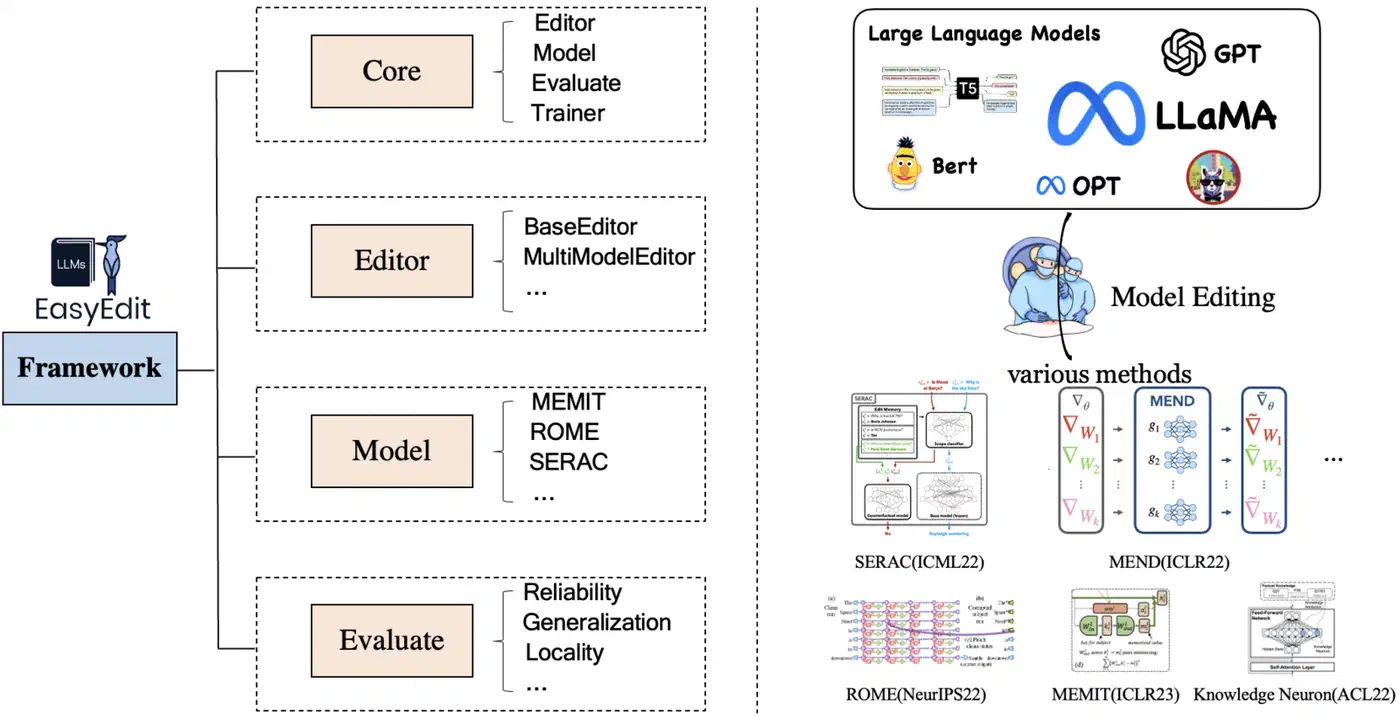
The jailbreak chapter takes a clear position: you learn defence by running the attack. It walks you through the EasyJailbreak toolkit and its 11 bundled attacks. Similarly, chapter three uses EasyEdit to run ROME, MEMIT, and MEND against a live model. Chapter ten reaches for R-Judge, a benchmark from the same lab, and asks whether an agent spots a dangerous task.
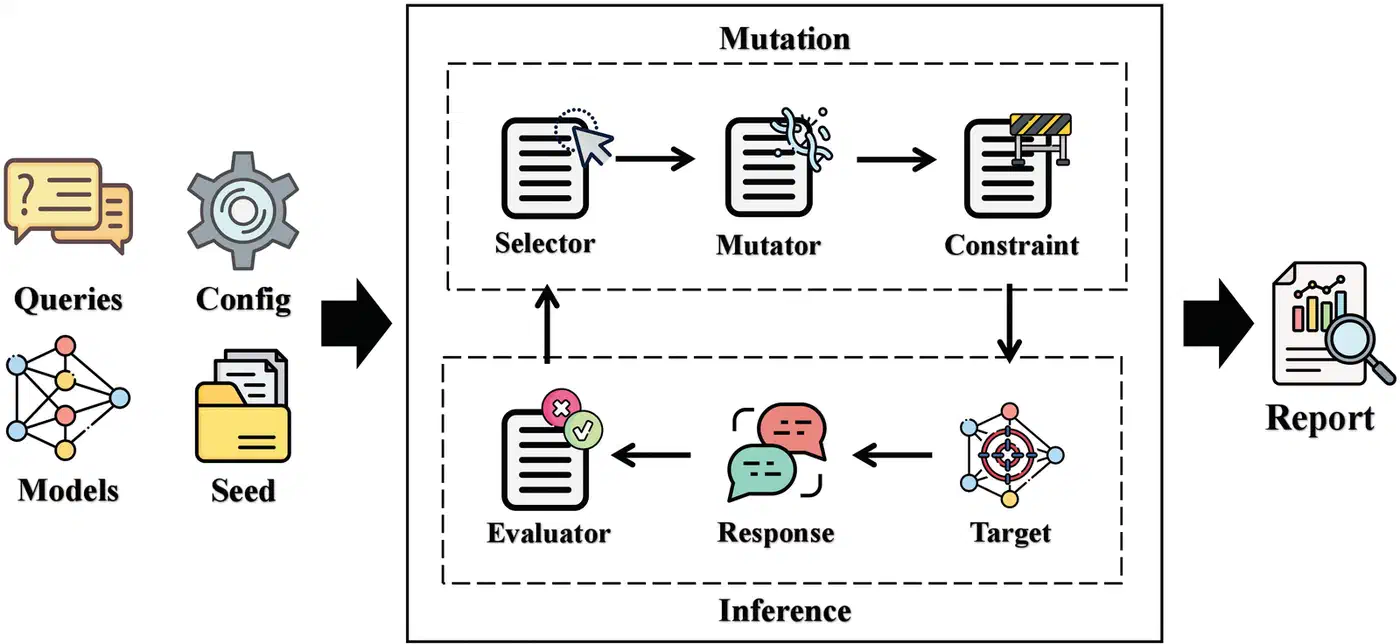
The chapters are starter exercises, though, built to get a student going on a course project. They won’t make anyone a security researcher.
The language barrier and how to get past it
Chinese covers the README, the chapter summaries, the slide decks, and the prose inside each walkthrough. The notebooks are the exception, because code, library names, function calls, model identifiers, and stack traces read the same in any language.
So work backwards. Open the notebook first, read the code, then translate the surrounding prose only where the code alone is ambiguous. Machine translation handles technical Chinese well, so a browser translate button carries you through most walkthroughs.
The slide decks are the hard part. A PDF full of dense Chinese text and diagrams doesn’t translate cleanly, and those decks carry most of the theory. You get the practice and very little of the framing around it.
There’s a GitBook mirror at sjtullm.gitbook.io, but it stalled early. It holds four finished chapters plus two marked TBD, against 11 in the repo. Read the GitHub version instead. The team also built a companion course on building a model end to end with the Huawei Ascend community. That one is in Chinese too, and it targets Chinese hardware.
Someone who already knows the basics and wants the security chapters will do fine here. A complete beginner should learn the fundamentals in their own language first, then come back for chapters five through ten.
The missing license and what it stops you doing
GitHub detects no license for this repo. There’s no LICENSE file at the root, and no LICENSE.md or LICENSE.txt either. Without one, standard copyright applies by default, and GitHub’s own licensing documentation spells out the consequence.
If you don’t include a license, the default copyright laws apply, meaning that you retain all rights to your source code and no one may reproduce, distribute, or create derivative works from your work.
So you can read the material and run it locally, but redistributing it is off the table. That blocks the people most likely to want it, such as a lecturer who wants to translate chapter five, or a bootcamp that wants to fork the notebooks and reuse a slide deck.
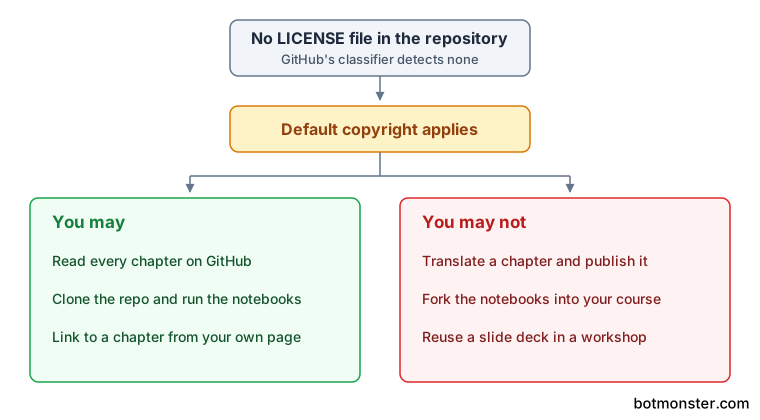
The explanation is probably mundane. Class notes get published as a public good, and nobody stops to pick a license. The project calls itself free and public-interest, and the missing file undercuts that in practice.
Nobody has asked, either. Search the repo’s issues for the word license and you get zero hits across all 25 threads, open and closed. Opening one is the most useful thing anyone could contribute here. Until that happens, link to the chapters rather than copying them.
How current the material is
The last commit landed in October 2025. The last real content drop came four months earlier, when the maths, GUI agent, alignment, and steganography chapters arrived. There are eight open issues against 17 closed, and six open pull requests against 15 closed, from 11 contributors. The repo gets light maintenance and not much new work.
Pinned versions age fastest. Chapter one’s requirements file asks for transformers==4.30.2 and torch==2.0.0, both from 2023. Chapter four builds on Qwen2.5-Math-1.5B, chapter nine on Qwen2-VL-7B. Expect to bump packages and swap in a newer model before anything runs.
The ideas hold up longest, and they carry most of the value. Watermarking, knowledge editing, and steganography haven’t changed shape since that last commit. The attack list in the jailbreak chapter is still current.
Treat the Dive into LLMs course as a syllabus plus a set of worked examples, and read each chapter alongside current docs for whatever library it names. Budget an afternoon per chapter for untangling dependencies. In return you get security material that nothing in English covers as well.