Practical guides on Linux, AI, self-hosting, and developer tools

Setting Up the Chipsailing CS9711 Fingerprint Reader on Linux Mint

If you’ve purchased a budget USB fingerprint reader (like the Chipsailing CS9711, USB ID 2541:0236) and found it undetected on Linux Mint, you aren’t alone. These “Match-on-Host” devices aren’t supported by default in libfprint, but they can be brought to life with a community driver.

Identifying the Hardware

First, verify your device ID by running lsusb in the terminal. Look for: Bus XXX Device XXX: ID 2541:0236 Chipsailing CS9711Fingprint

If the device is detected but fails to “enumerate” (doesn’t show a name), ensure it is plugged directly into a motherboard USB port rather than a hub to provide consistent power.

Stop Copy-Pasting: Interactive CLI Tools for Gitea Repositories

If you host your own code on a Gitea instance, you’ve likely felt the friction of cloning new projects. Opening the web UI, searching for a repo, clicking the “SSH/HTTP” button, and then jumping back to your terminal is a workflow that belongs in 2010.

If you want to “walk through” your repositories and pick what to clone directly from your terminal, here are the best tools for the job.

The Best Static Site Generators for Your Blog in 2026

In 2026, the web has returned to its roots: speed, simplicity, and security. Static Site Generators (SSGs) have become the gold standard for bloggers who want to focus on content without worrying about database vulnerabilities or slow load times. By transforming simple Markdown (.md) files into optimized static HTML, these tools ensure your blog is fast, SEO-friendly, and easy to host.

Here is a breakdown of the most popular and effective tools available today.

Why Small Language Models (SLMs) are Better for Edge Devices

Small Language Models — sub-4B parameter models designed to run locally on constrained hardware — now provide 90% of the utility of large cloud-hosted models for the vast majority of real-world embedded and IoT tasks. In 2026, models like Phi-4 (3.8B), Gemma 3 (4B), and Llama 3.2-1B are the standard for privacy-preserving, offline AI on everything from Raspberry Pi boards to industrial PLCs. The era of sending every inference call to a remote API is ending, not because large models have become less capable, but because small models have become good enough — and “good enough with zero latency and zero privacy risk” beats “better but slow, expensive, and cloud-dependent” for nearly every edge use case.

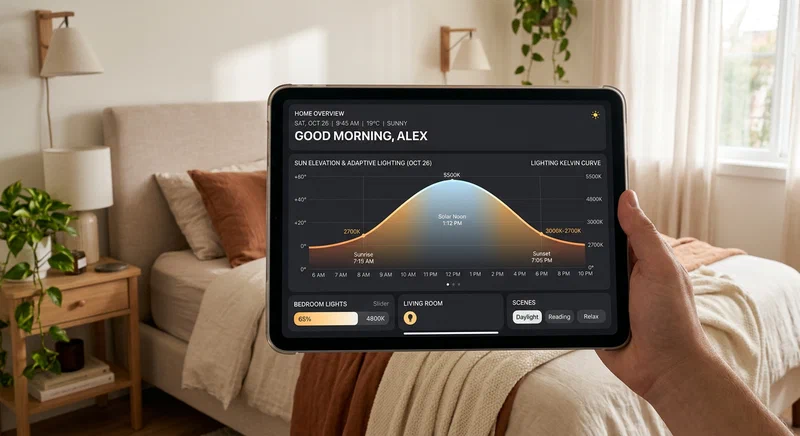
Setup Local Voice Control with Willow for Home Assistant

Willow provides sub-second local voice control for Home Assistant without sending your audio data to the cloud. By using an ESP32-S3 Box, you can build a private smart speaker that matches the responsiveness of commercial assistants while keeping every spoken word inside your own network. This guide walks through the full setup: hardware selection, server deployment, firmware flashing, pipeline configuration, and the fixes for the most common problems.

Cursor vs. VS Code Copilot: Best AI Coding Editor 2026

Cursor wins. If you write code for a living in 2026 and you are not already using Cursor, you are leaving a significant productivity advantage on the table. That is the direct verdict, and everything that follows explains exactly why — and under what specific circumstances GitHub Copilot inside VS Code is still the smarter choice for your workflow. Both tools have matured enormously over the past two years, and the gap is narrower than the hype suggests in some areas, far wider than expected in others. The deciding factor is almost never the underlying AI model — it is the depth of codebase understanding and the quality of the agentic loop that surrounds it.

Moving from VirtualBox to Docker Desktop on Linux

If your Linux development workflow still depends on one or more VirtualBox VMs, you are not doing anything wrong. VirtualBox has been the default answer for isolated dev environments for years: predictable snapshots, clear network modes, and a full guest OS that behaves exactly like a separate machine.

But in 2026, most application development tasks do not need full hardware emulation. They need fast startup, easy sharing, consistent dependencies, and low resource overhead. That is exactly where Docker Desktop and docker compose shine.

Local AI Security Cameras: Frigate with Google Coral TPU

Cloud-based security camera subscriptions have quietly become one of the most expensive recurring costs in the smart home. When you multiply $10–30 per camera per month across a full installation, you are easily spending $500–1,000 a year for the privilege of having your own footage processed on someone else’s servers. Frigate NVR changes that equation entirely. Paired with a Google Coral TPU , it delivers real-time AI-powered person and object detection across multiple 4K camera streams with inference times measured in single-digit milliseconds — all running on hardware you already own, on a network that never phones home.