Radon is a colorless, odorless radioactive gas that seeps from soil and rock. It is the second-leading cause of lung cancer after smoking. The only way to know your exposure is to measure it over months, not minutes. Indoor levels swing by ten times between calm winter nights and breezy summer afternoons. The cleanest build I have found in 2026 pairs the FTLab RD200M sensor with an ESP32 running ESPHome . The RD200M is a pulsed ion chamber with a simple UART output. The node sends live and rolling-average readings to Home Assistant . It also fires alerts when your annual average creeps toward the EPA action level of 4 pCi/L (148 Bq/m3) . Total parts cost is about 150 USD, roughly half the price of an Airthings View Plus, and you own every byte of the data.
Iot
Sync Your EV Charging With Solar Production in Home Assistant
Why PV Self-Consumption Matters Right Now
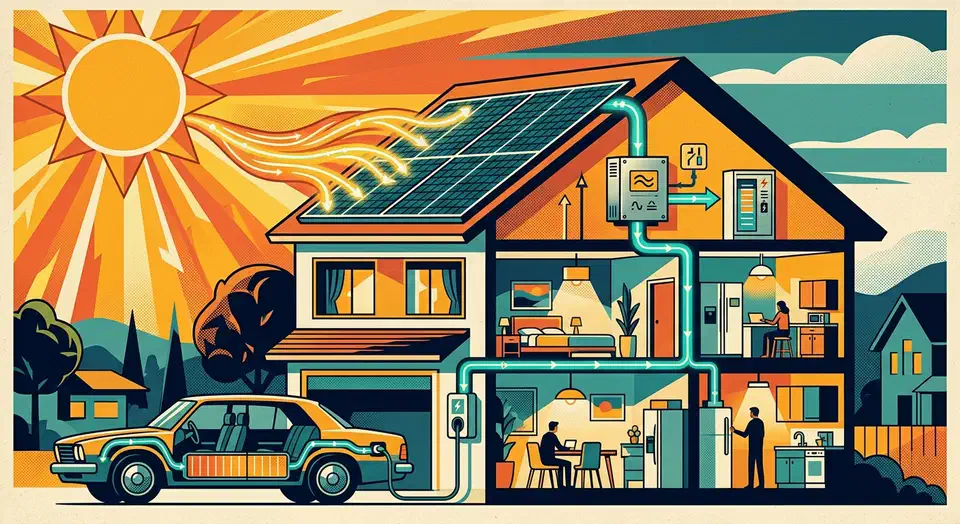
A 7.4 kW wall box pulling a flat 32A through a sunny afternoon is the worst load profile for a house with rooftop solar. It ignores what the panels do. It drags power from the grid during the cheapest hours of the day. It forces the inverter to dump the surplus at whatever feed-in rate your utility feels like paying that month. Since the post-2023 collapse of feed-in tariffs across Europe, that rate is painful. Export rates in Germany, the Netherlands, and the UK now sit around 6-8 cents per kWh. Retail import hovers between 28 and 35 cents. Every exported watt is a 20-cent loss. Every imported watt while the sun is up costs the same.
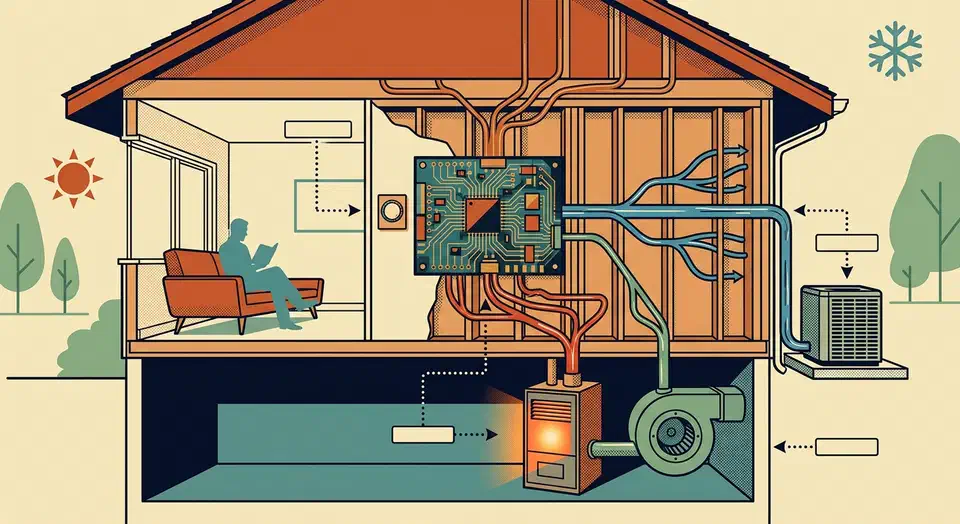
Smart Thermostat Under $30: DIY with ESP32, No Subscription
A fully local smart thermostat can be built from a 5 dollar ESP32
, a BME280 temperature sensor, and a small relay module. ESPHome
’s built-in thermostat climate component runs the control loop directly on the microcontroller, while Home Assistant
handles schedules, presence detection, and the dashboard. Total parts cost is under 30 dollars, nothing talks to a cloud, and because the heating logic lives on the ESP32 itself, the thermostat keeps working even if your Home Assistant server is rebooting or your internet is down.
ESP32 Boards for ESPHome: Radio-First Picks, Deep-Sleep Tested
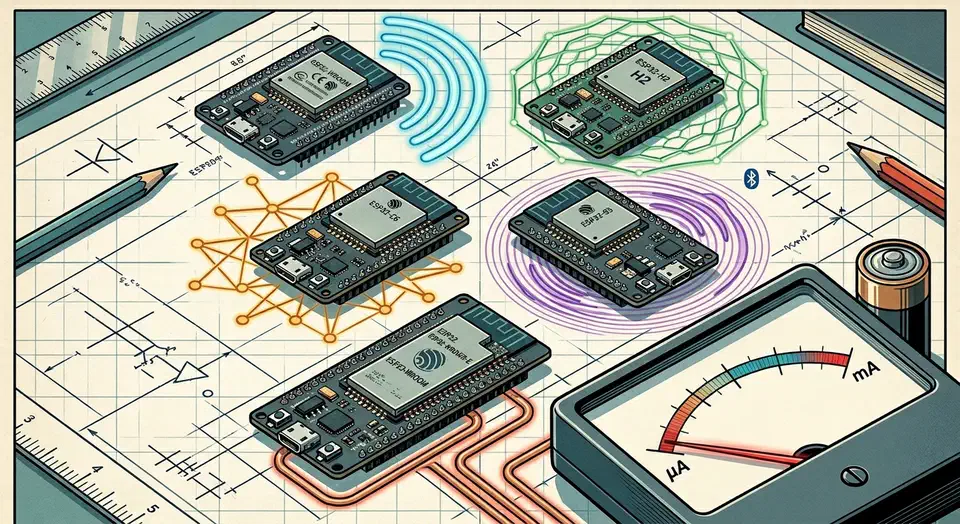
The best ESP32 board for ESPHome in 2026 is the one whose radio matches the job, then the one whose deep-sleep current matches your power source. Pick the ESP32-C6 for Matter-over-Thread, the ESP32-H2 for battery Zigbee, and the classic ESP32 or S3 for mains BLE proxies. Bare modules sip 7-10 microamps asleep, but stock dev boards waste 5-15 mA.
Key Takeaways
- Match the chip to the radio first: C6 for Thread, H2 for Zigbee, S3 for BLE proxies.
- Bare ESP32 modules sip 7-10 microamps asleep; stock dev boards waste 5-15 mA.
- The C6 is the only ESP32 with Wi-Fi 6 plus a Thread radio, great for Matter.
- The H2 has no Wi-Fi, so it lives or dies on a Zigbee or Thread mesh.
- All five chips work in ESPHome, but C6 and H2 need the ESP-IDF framework.
What is the best ESP32 board for ESPHome in 2026?
There is no single winner, because the right board depends on the radio your project needs. So start from the radio, then filter by power source, then by GPIO and flash headroom. That order saves you from buying a powerful chip that lacks the one radio your sensor actually requires.
Sub-$20 Zigbee Sensors That Stay on the Home Assistant Mesh
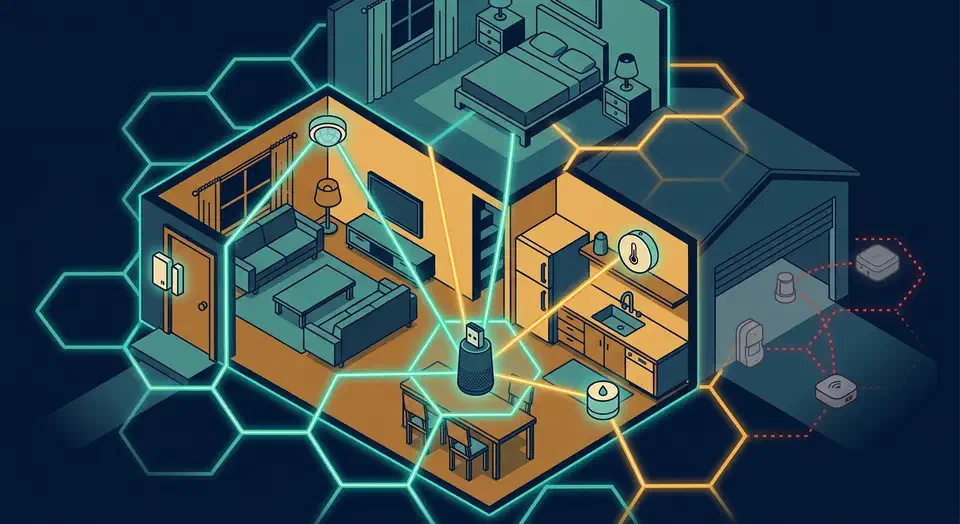
For Home Assistant in 2026, the best sub-$20 Zigbee sensors are Sonoff’s SNZB line and Third Reality. Both pair cleanly with Zigbee2MQTT and ZHA, need no vendor hub, and stay on the mesh. Older Aqara and Xiaomi units cost less but drop off through cheap routers and lock settings you cannot change.
Key Takeaways
- Sonoff SNZB sensors pair with Zigbee2MQTT and ZHA, no Sonoff hub needed.
- Older Aqara and Xiaomi sensors often fall off the mesh through cheap routers.
- The Aqara RTCGQ11LM motion sensor locks re-trigger at 60 seconds you cannot lower.
- Coin-cell Sonoff sensors last 3 to 5 years; AAA sensors closer to one year.
- The cheapest sticker price is rarely cheapest once you count battery swaps.
What are the best Zigbee sensors under $20 for Home Assistant?
Here is the curated shortlist by sensor type, with rough street prices and the battery each one uses. Every pick below pairs to Zigbee2MQTT or ZHA directly, so you do not need the maker’s own bridge.
Zigbee vs Z-Wave vs Matter vs Thread: What Reddit Says in 2026
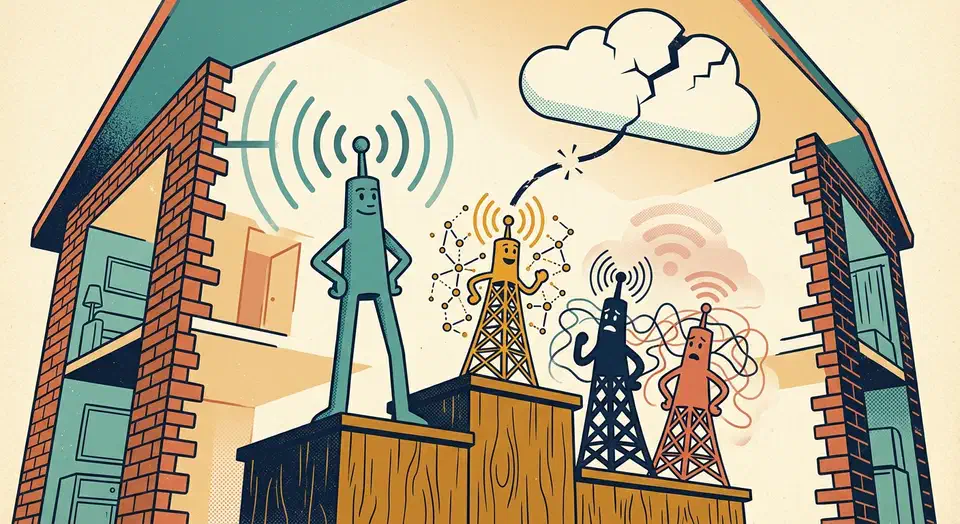
Reddit’s hands-on 2026 verdict on Zigbee, Z-Wave, Matter, and Thread diverges sharply from the spec-sheet consensus. The highest-upvoted owners rate Z-Wave the most reliable, call Zigbee 4.0’s new sub-GHz band a revival rather than a death, and report Matter-over-Thread as the least stable protocol they run. Here is each axis matched to the cohort that lives with it.
Key Takeaways
- Reddit’s hands-on crowd rates Z-Wave the most reliable of the four in 2026.
- Zigbee 4.0’s new sub-GHz band revived the “Z-Wave is dead” meme, but it needs a new controller.
- Matter-over-Thread draws the most complaints, often fixed by moving to Thread channel 25.
- Zigbee wins on price and device variety because it is an open standard.
- All four run locally, so the failure redditors fear is the cloud, not the radio.
The Spec-Sheet Consensus vs What Reddit Actually Runs
The published 2026 story is tidy. Matter is the cross-ecosystem future, Thread is its low-power mesh, Zigbee is the aging incumbent, and Z-Wave is the niche old-timer. That narrative got fresh backing when Matter 1.5 shipped in November 2025 , adding cameras, closures, and energy device types, with a 1.5.1 maintenance update following in March 2026.
Botmonster Tech