 Botmonster Tech
AI Code Review in 2026: Why Human Review Skills Matter More Than Ever
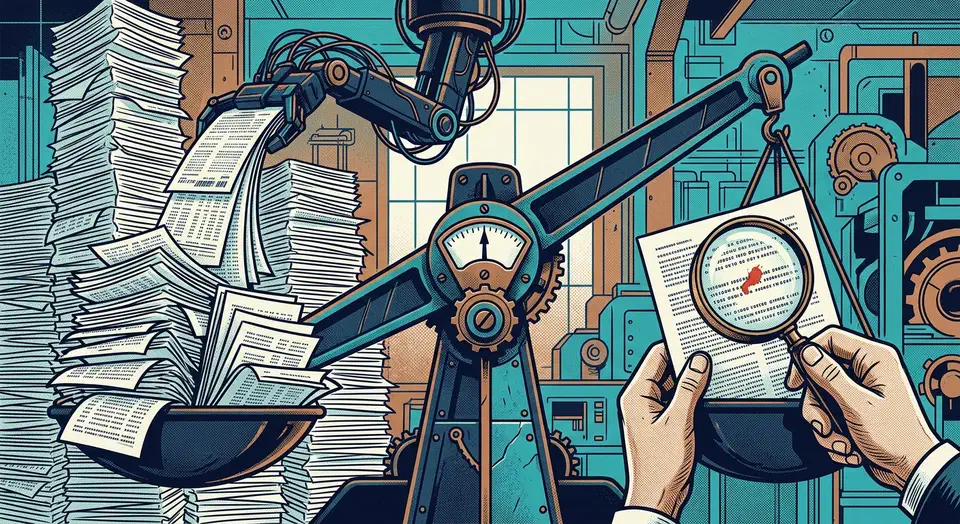
AI generates roughly 41% of all committed code in 2026, with some teams reporting well above 50%. AI-powered review tools have slashed PR cycle times by as much as 59%. And yet, when Sonar surveyed 1,149 developers for their 2026 State of Code report , 47% ranked “reviewing and validating AI-generated code for quality and security” as the single most important skill in the AI era - above prompting ability at 42%. This is the AI code review paradox: the more code AI writes, the more critical human review becomes.
Why? Because AI-generated PRs contain 1.7x more issues than human-written ones (10.83 vs 6.45 issues per PR), 1.4x more critical issues, and 1.75x more logic and correctness errors. AI-generated code ships with subtle hallucinations that compile and pass basic tests, introduces architectural drift that only experienced reviewers can detect, and creates security blind spots in auth and crypto code that look plausible but miss critical edge cases. The volume of AI-generated code has turned code review from a routine chore into the work that actually determines whether your product stays reliable. The same pressure applies to testing: AI-generated test suites can hit 90% line coverage while hiding the same logic flaws that make AI-written code risky in the first place.
A $400-600M Market That Barely Existed Two Years Ago
AI code review went from experimental GitHub Actions to a defined market category in under two years. The narrow AI code review market - tools like CodeRabbit , Greptile , Sourcery , Qodo (formerly CodiumAI), and PR-Agent - is valued at roughly $400-600M in ARR as of early 2026. The broader market including code quality and security tooling reaches $2-3B. Year-over-year growth runs 30-40% for the narrow category.
AI code review startups raised over $1.2B in combined funding between January 2024 and December 2025. More than 1.3 million repositories now use some form of AI-assisted code review. GitHub ’s 2025 Octoverse report found that repositories with AI-assisted review had 32% faster merge times and 28% fewer post-merge defects compared to human-only review.
The growth is driven by a simple economics argument: senior engineer time is the most expensive bottleneck in software delivery, and AI review handles the commodity work - style, formatting, basic bug patterns - so humans can focus on architecture and business logic.
The Tool Landscape: Who’s Winning and Why
The AI code review space has consolidated around a few major players with distinct positioning.
CodeRabbit leads in market share with over 2 million connected repositories and 13 million-plus PRs reviewed. It provides automated review comments, PR summaries, and multi-pass analysis. Pricing starts free for open source (rate-limited), with Pro at $24/user/month (annual) or $30/user/month (monthly). Enterprise pricing starts around $15,000/month for 500+ users.
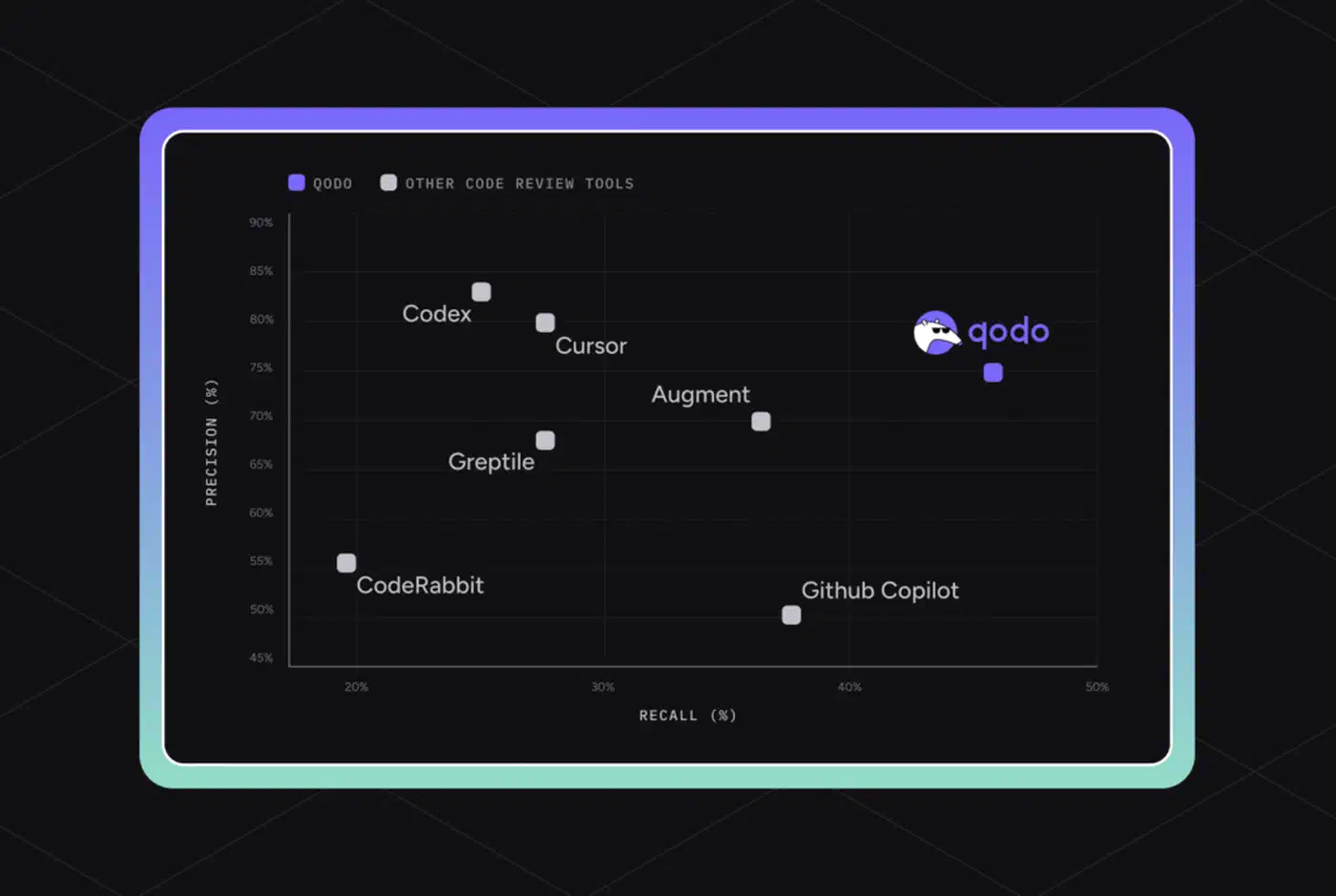
Greptile differentiates by indexing entire codebases before reviewing PRs, catching cross-file issues and enforcing project-specific conventions. In Greptile’s own benchmark of 50 real-world bugs across 5 open-source repos, it scored an 82% catch rate vs. Cursor at 58%, Copilot in the mid-50s, and CodeRabbit at 44%. But when Augment Code ran their own evaluation on the same repos, Greptile scored 45%, not 82% - a reminder that vendor-run benchmarks deserve healthy skepticism. Greptile’s Cloud Plan starts at $30/month plus $1 per review after 50 reviews per seat.
Qodo released Qodo 2.0 in February 2026 with a multi-agent code review architecture and expanded context engine. It combines review with test generation, suggesting tests for changed code alongside review comments. Pricing sits at $30/user/month. The free Developer plan includes 30 PR reviews per month per organization.
Sourcery offers the deepest language-specific analysis at $10/user/month, positioned for Python-heavy teams.
Anthropic Code Review, launched March 9, 2026 for Claude Teams and Enterprise customers, runs a multi-agent system that dispatches specialized agents per PR - each targeting different issue classes (logic errors, boundary conditions, API misuse, auth flaws, convention compliance). For large reviews of 1,000+ lines, agents surfaced findings in 84% of cases averaging 7.5 issues, with under 1% of comments rejected as incorrect. Typical cost: $15-25 per review with ~20 minute completion time.
Graphite, by contrast, scored just 6% in independent bug catch benchmarks, showing the wide quality variance across the category.
| Tool | Pricing | Bug Catch Rate | Best For |
|---|---|---|---|
| CodeRabbit | Free / $24-30/user/mo | 44% (Greptile benchmark) | Mid-market teams, high PR volume |
| Greptile | $30/mo + $1/review overage | 82% (own benchmark) / 45% (independent) | Large monorepos, codebase-aware review |
| Qodo | Free (30 reviews) / $30/user/mo | N/A | Teams wanting review + test generation |
| Sourcery | $10/user/mo | N/A | Python-focused teams |
| Anthropic | $15-25/review | <1% rejection rate | Enterprise, large PRs |
| Graphite | Varies | 6% (independent) | Stacking workflows (not review) |
The Paradox: More AI Code Means Human Review Is the Top Skill
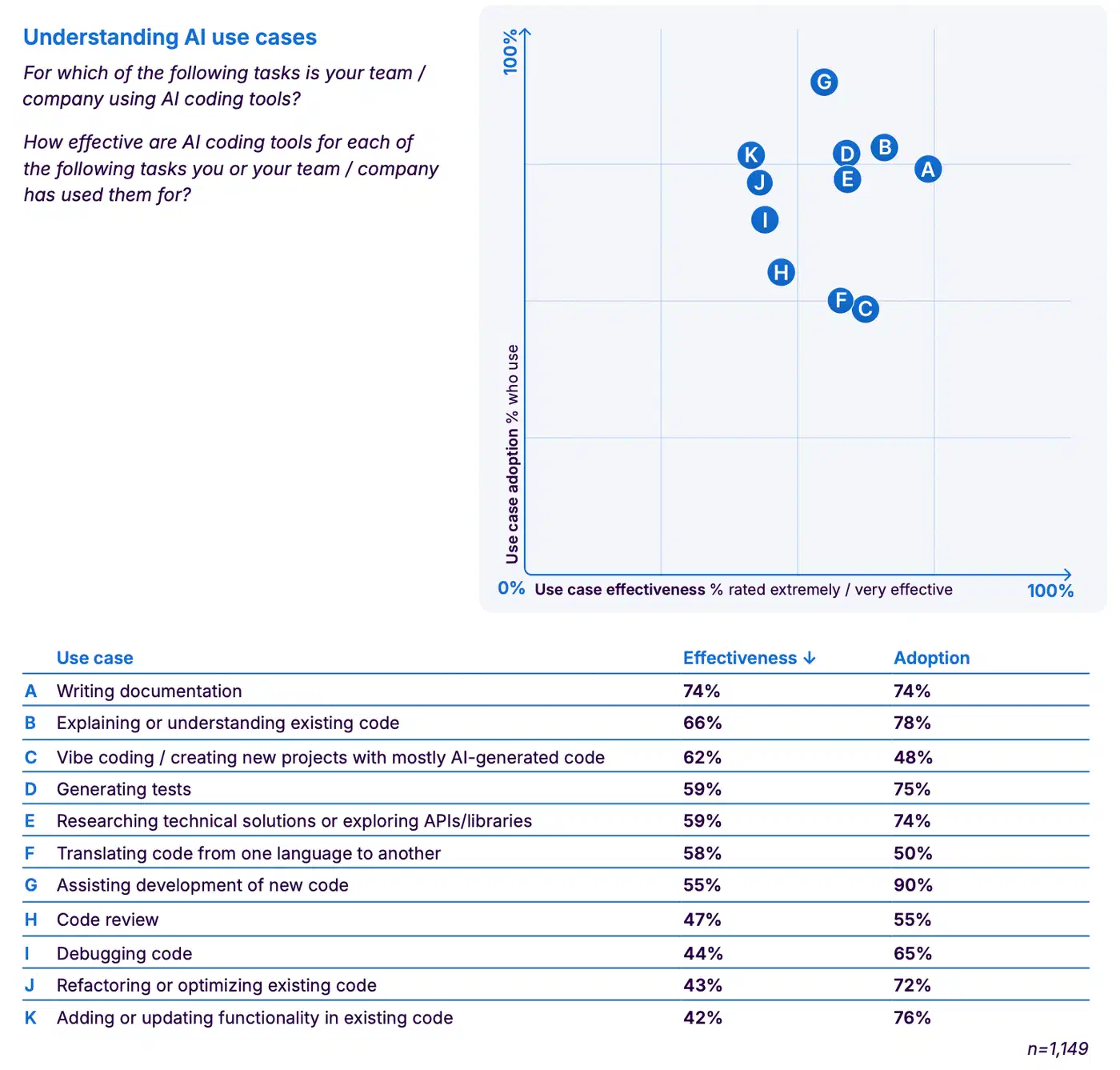
The Sonar survey results are not an outlier. 38% of respondents said reviewing AI-generated code requires more effort than reviewing human-generated code, compared to 27% who said the opposite - a net 11-point difficulty increase. Although 72% of developers who have tried AI coding tools use them daily, 96% do not fully trust the output, and only 48% always verify it before committing. This gap between usage and verification is what Sonar calls the “verification bottleneck.”
AI-generated code is harder to review for three specific reasons:
- Subtle hallucinations : code that compiles and passes basic unit tests but fails under edge cases, concurrency, or integration. These are not syntax errors a linter catches. They are logic bugs that require understanding the system to spot.
- Architectural drift: AI models optimize locally. Each individual PR might follow reasonable patterns, but across dozens of AI-generated PRs over weeks, the codebase accumulates inconsistencies, duplicated logic, and convention violations that no single diff reveals.
- Security blind spots : AI produces plausible-looking authentication, cryptographic, and data-handling code that misses critical edge cases. Static analysis tools catch some of these, but many require the kind of threat modeling that only a human reviewer with system context can perform.
What used to be routine “code review” has become “AI-assisted code validation at scale” - a discipline requiring deep system context, security awareness, and the ability to spot degradation patterns across multiple AI-generated PRs that individually look correct. Developers who can effectively review AI output command a talent premium precisely because AI made the writing itself cheaper.
The Optimal Workflow: AI First, Human Second, AI Never Last
Teams getting the best results in 2026 follow a specific three-phase pattern:
Phase 1 - AI triage (seconds). The AI review tool scans the PR within seconds of opening, flagging formatting issues, basic bug patterns, dependency problems, and style violations. The developer addresses these before requesting human review.
Phase 2 - Human review (focused). The reviewer sees a clean PR with commodity issues already resolved and focuses entirely on architecture decisions, business logic correctness, security implications, and system-level impact. This is where the 32% merge time improvement comes from - humans are not wasting time on semicolons and naming conventions.
Phase 3 - Human approval (mandatory). The human reviewer is always the final gate. AI can flag, suggest, and comment, but merge authority stays with a person who understands the system-level consequences.
The anti-pattern to avoid: “auto-merge if AI approves.” This is the fastest way to accumulate architectural debt, because AI review tools are strong on local correctness and weak on global coherence. A mid-size SaaS company case study showed AI code review reduced average PR cycle time from 27 hours to 11 hours - a 59% improvement - but only when humans retained final say.
The productivity gains are real but require measurement at the code level, not just PR throughput. Teams achieving 18% productivity lifts with 58% AI-assisted commits found that measuring what actually changed in the code, rather than counting merged PRs, was the difference between genuine improvement and metric theater.
What Comes Next: Agentic Reviewers and the Enterprise Trust Problem
The trajectory for AI code review points toward system-aware agentic reviewers that understand API contracts, dependency graphs, and production impact across microservices - not just the diff in isolation.
Anthropic’s multi-agent architecture, where specialized agents for security, performance, convention compliance, and logic correctness run in parallel on the same PR, is the template. Future tools will dispatch domain-specific agents with training tailored to each issue class - a security agent that understands OWASP patterns, a performance agent that knows database query costs, an accessibility agent that checks frontend changes.
Codebase-aware review - Greptile’s core approach of indexing the full repository before analyzing diffs - will become standard. Diff-only review misses too many cross-file issues, and teams maintaining large monorepos cannot afford reviewers (human or AI) that lack broader context.
But enterprise adoption faces real blockers. Who is accountable when an AI-approved PR causes an outage? Current tools disclaim liability, and most compliance frameworks (SOC 2, ISO 27001) require a named human approver. AI review does not satisfy this requirement today. The token cost problem is also unsolved: Anthropic’s $15-25 per review is manageable for large PRs, but expensive at scale for high-velocity teams producing dozens of PRs daily. Token costs need to drop 5-10x before universal enterprise adoption becomes realistic.
The convergence of AI code generation and AI code review creates a recursive loop: AI writes code, AI reviews code, and the human role narrows to the judgment calls that require business context, user empathy, and accountability. These are the skills that cannot be automated - and they are exactly the skills that the market now values most.