 Botmonster Tech
Best Lightweight Tactile Switches for Thocky Sound: Under 45g Mechanical Keyboard Guide

You don’t have to sacrifice a deep, thocky sound to get a light typing feel. The best lightweight tactile switches under 45g include the Input Club Hako Violet (28g), Akko V3 Creamy Purple Pro (30g), Chilkey Sprout Green (35g), HMX Valerian Light (48g actuation but exceptionally light feel), and TTC Bluish White (42g) - all of which deliver satisfying tactile feedback with a deep bottom-out sound when paired with the right housing materials and lubing technique.
The Myth of Heavy = Thocky: Why Light Switches Can Sound Great Too
Most newcomers to the mechanical keyboard hobby assume that deep, thocky sound requires heavy springs. This intuition makes sense on the surface - heavier switches bottom out with more force, so shouldn’t they sound louder and deeper? The reality is more nuanced, and understanding it opens up a whole range of lightweight options that sound fantastic.
The “thock” sound is primarily determined by two things: stem pole length and housing material. Neither is directly related to spring weight.
Long-pole stems are the key variable. The stem pole is the plastic protrusion at the bottom of the switch stem that contacts the housing floor when you bottom out a keystroke. A longer pole strikes the housing with more leverage and at a lower point in the travel, generating a lower-frequency resonant impact - the characteristic thud people call “thock.” Short-pole stems create a higher-pitched clack. Spring weight determines how hard you push, not how the stem collides with the housing.
Housing material shapes the sound even further. Nylon housings absorb and re-emit vibration at lower frequencies, producing a warm, muted thock. POM (polyoxymethylene) sits in the middle - slightly poppy, medium depth, excellent balance. Polycarbonate is bright and high-frequency, which is why PC switches tend to sound “clacky” regardless of spring weight.
So why do heavy tactiles like the Gazzew Boba U4T (stock 62g) dominate the sound comparison videos? Selection bias. Heavy switches are easier to bottom out repeatedly during filming, they’re easy to demo, and the enthusiast community has historically skewed toward heavier builds. The “lightweight thocky” category is a deliberate engineering response - both to RSI concerns among full-time typists and to gaming community demand for fast, light actuation without sacrificing build quality.
Top Lightweight Tactiles Under 45g - Switch Breakdown
Here’s what the sub-45g market actually looks like in 2026, broken down by model.
Input Club Hako Violet (28g actuation)
At 28g actuation, the Hako Violet is one of the lightest tactiles ever produced. It uses a Kailh Box design, which includes the dustproof and moisture-resistant box around the stem contacts - a practical feature if you type in imperfect conditions. The bottom-out force measures around 50g, which provides enough resistance at the floor to generate a decent thock. Availability has been inconsistent; check AliExpress and specialty retailers like KPRepublic for stock. Expect to pay around $0.50-0.70 per switch when in stock.
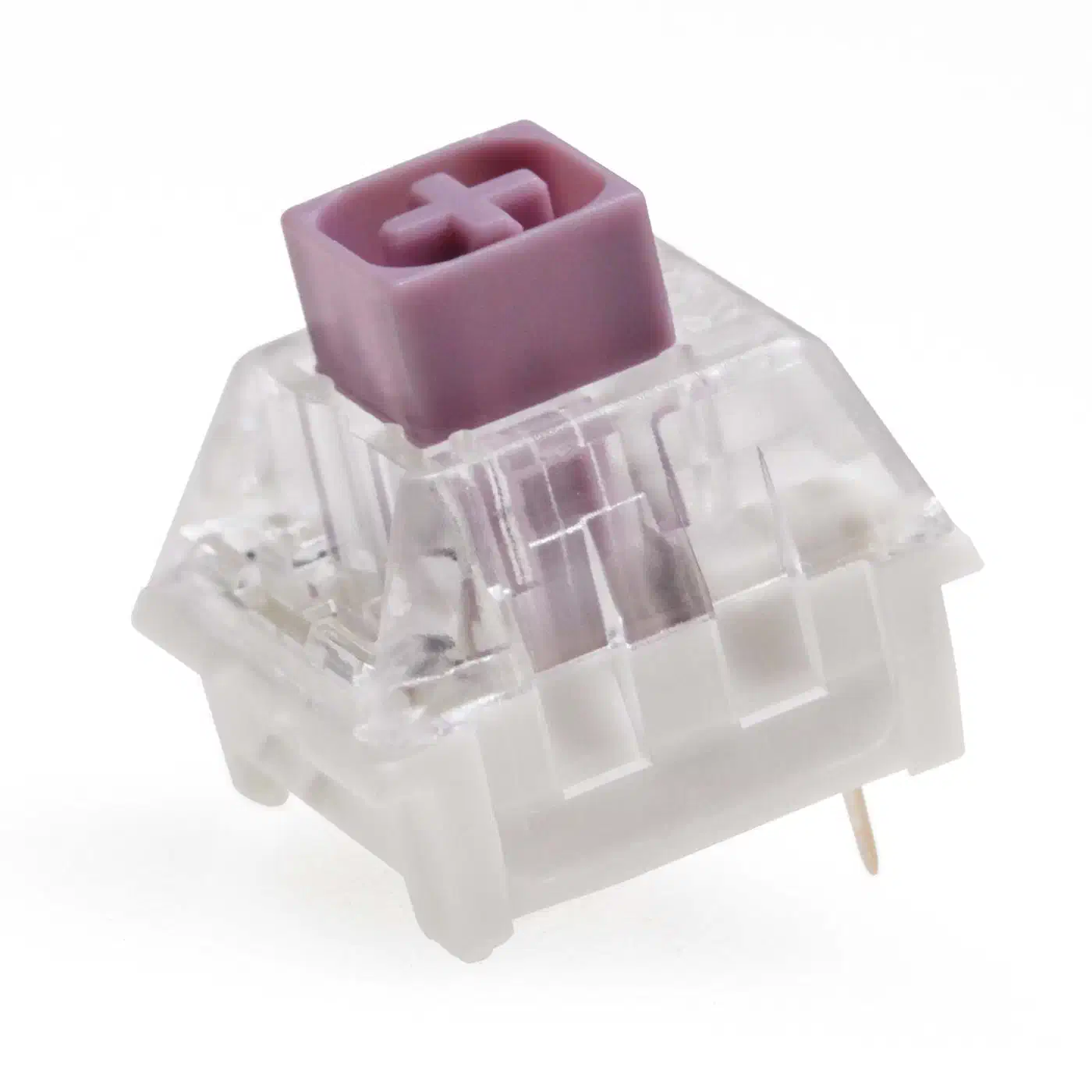
Image: KPRepublic
Akko V3 Creamy Purple Pro (30g actuation, 55g tactile peak)
This is the standout recommendation for most people in this guide. The V3 Creamy Purple Pro ships with a nylon bottom housing, a long-pole stem, and comes factory-lubed at a price point around $0.20-0.25 per switch (roughly $9-11 for 45 pieces). The tactile bump peaks at 55g before dropping back to smooth travel - so the rated 30g is the actuation point after the bump, not the peak force required. Sound out of the box is warm, deep, and relatively quiet without modifications. The nylon housing handles the acoustics well without any additional dampening.
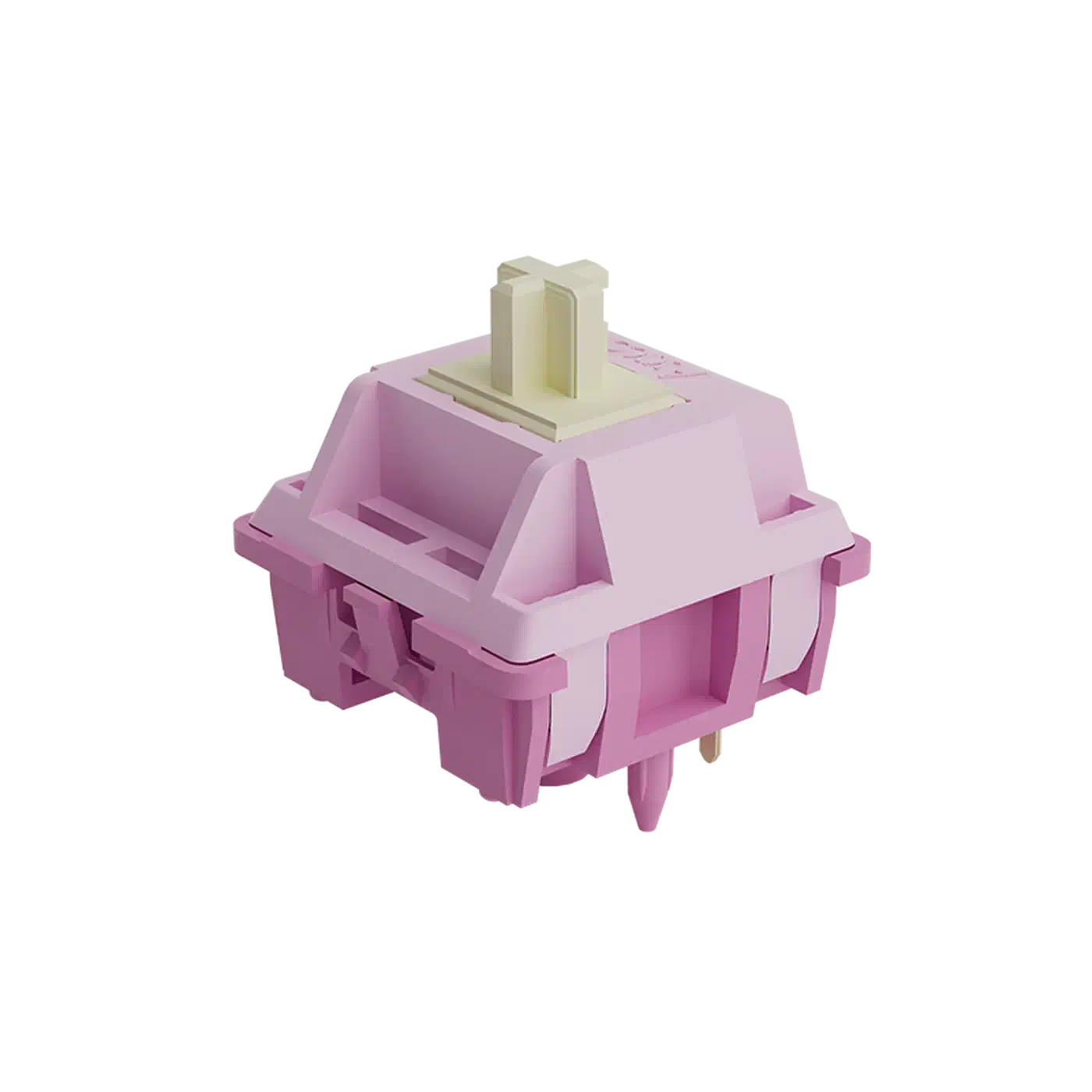
Image: Akko
Chilkey Sprout Green (35g actuation, POM housing)
Manufactured by Wuque Studio for Chilkey, the Sprout Green uses a full POM housing (both top and bottom) with a UPE stem - a more unusual combination that produces a punchier, slightly brighter tactile sound than nylon-housed switches. The double-stage spring and 35g actuation make it feel snappier than the Akko at the expense of a slight bump in pitch. Pricing is around $0.43 per switch ($14.99 for 35 pieces). Less widely stocked than Akko, but available via the official Chilkey site, Thock King, and SwitchOddities.
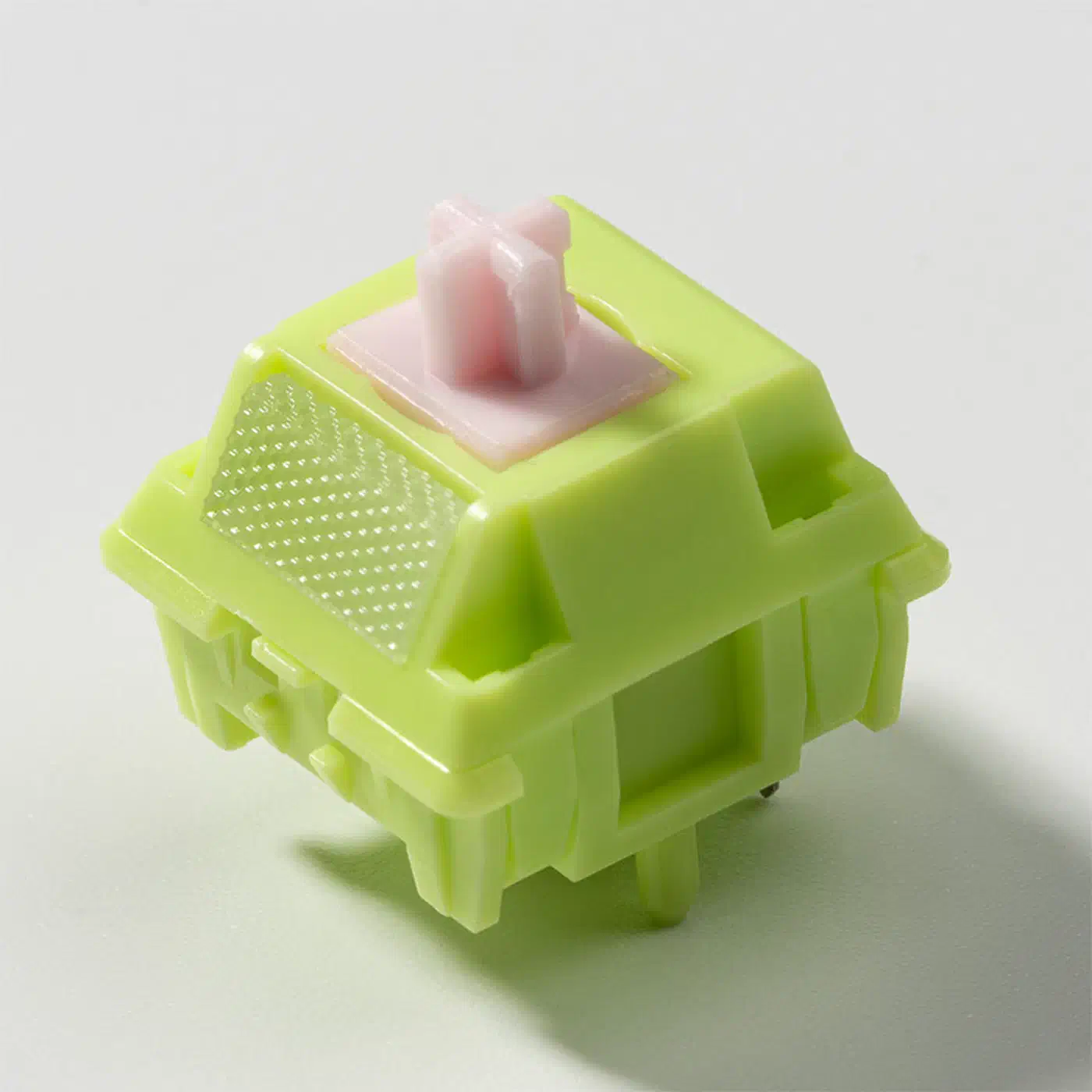
Image: Chilkey
TTC Bluish White (42g actuation, silicone-muted bottom)
TTC’s Bluish White takes an engineering approach to thock: the switch uses a silicone pad on the bottom housing to actively dampen high-frequency vibration at bottom-out. Combined with the double-coil long spring and the polycarbonate top over nylon bottom housing construction, the result is a restrained, muted thock that removes ping entirely. Peak tactile force is 60g at 0.5mm pre-travel, then drops to the 42g sustained actuation. Available for about $0.77 per switch from Milktooth, KPRepublic, and Goblintechkeys. There’s also a Silent V2 version if you need even less noise.
HMX Valerian Light (48g actuation, POM/N1 nylon)
The HMX Valerian Light sits just above the 45g threshold at 48g actuation, but earns a mention here because HMX switches typically feel lighter than their specs suggest, and the thickened N1 nylon bottom housing produces a noticeably full, loud sound for a switch in this weight class. Bottom-out force is 55g. POM top and stem with N1 nylon bottom is a combination HMX uses to balance smoothness with acoustic depth. Available from Milktooth, Keebz N Cables, Omnitype, and similar retailers.
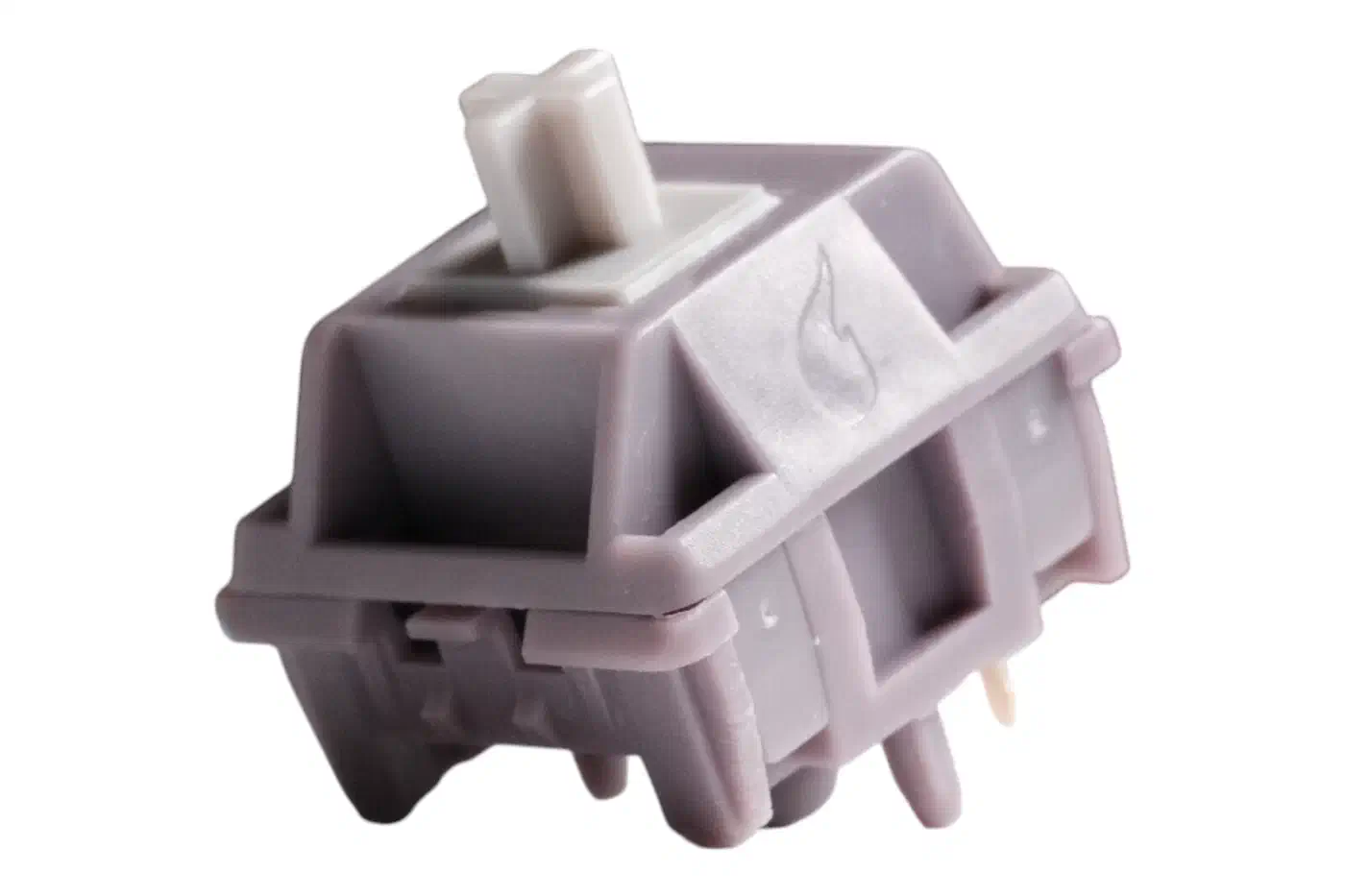
Image: Milktooth
Comparison Table
| Switch | Actuation Force | Tactile Peak | Housing | Sound Profile | Price (per switch) |
|---|---|---|---|---|---|
| Input Club Hako Violet | 28g | ~45g | Polycarbonate/Nylon | Medium thock, dustproof | ~$0.60 |
| Akko V3 Creamy Purple Pro | 30g | 55g | PC top / Nylon bottom | Deep, warm thock | ~$0.22 |
| Chilkey Sprout Green | 35g | ~50g | Full POM | Punchy, medium-bright | ~$0.43 |
| TTC Bluish White | 42g | 60g | PC top / Nylon bottom | Muted, dampened thock | ~$0.77 |
| HMX Valerian Light | 48g | 55g | POM top / N1 Nylon bottom | Full, loud thock | ~$0.55 |
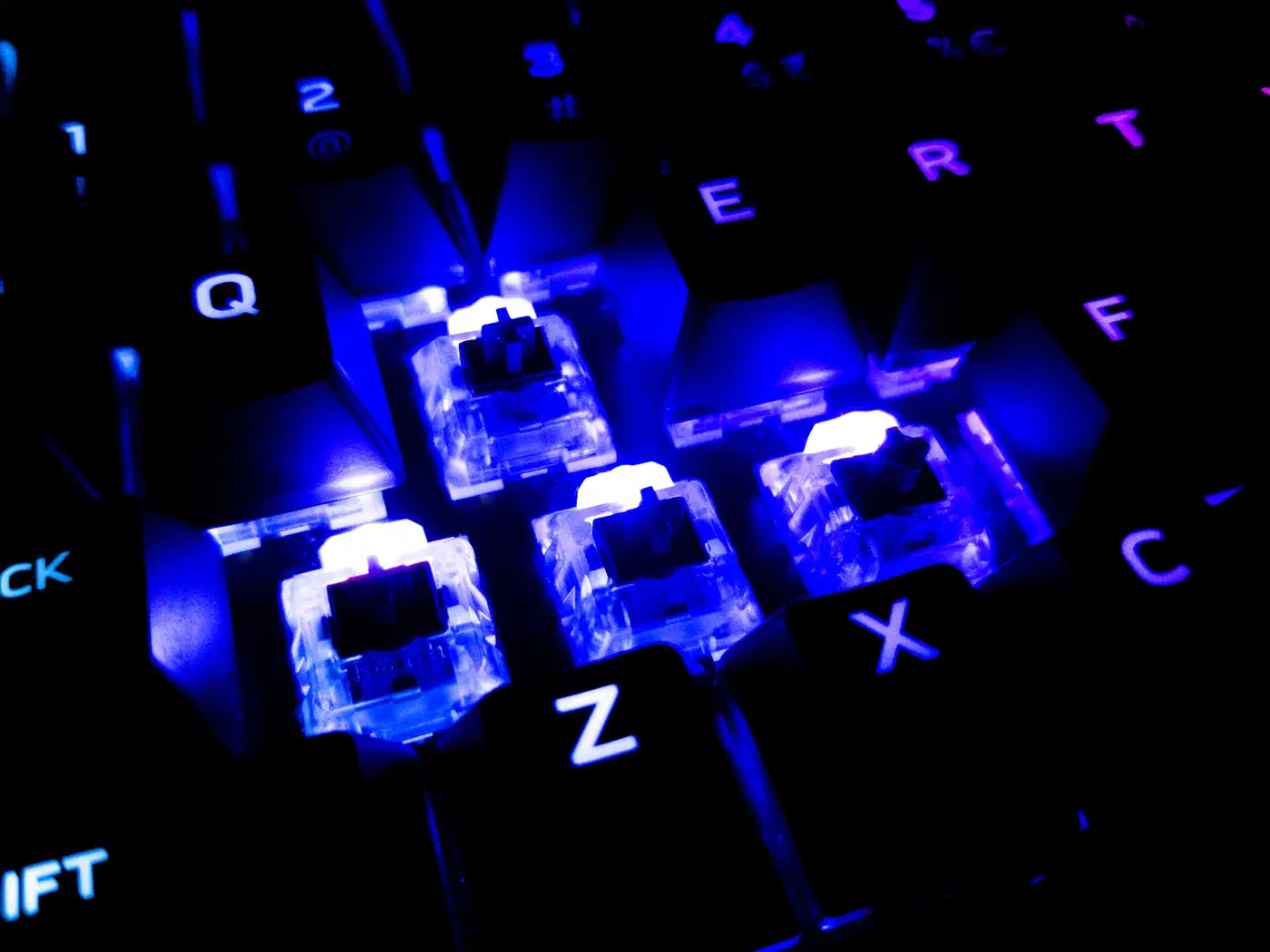
Image: ptm m / Wikimedia Commons (Public Domain)
Light-Medium Thock Kings (45-55g) - The Best of Both Worlds
If you can tolerate slightly more resistance, this weight range includes some of the most celebrated thocky tactiles in the enthusiast community - and spring-swapping makes several of them accessible at any weight target you want.
Gazzew Boba U4T (stock 62g, swappable)
The U4T is widely regarded as the benchmark for tactile thock. The proprietary Boba plastic housing produces an unusually deep resonance, and the pronounced tactile bump is strong enough to feel through thick keycaps. Stock springs are 62g Korean stainless steel. The most common enthusiast modification is swapping to aftermarket springs from TX Springs or Sprit Springs - 35g or 45g options are readily available for around $5-8 per 100 springs, adding roughly $5-10 to the total cost of a full 60% or 65% board. The switch-to-PCB solder joint on a fully soldered build also contributes additional dampening compared to hotswap. Available from RNDKBD, Thock King, and Milktooth.
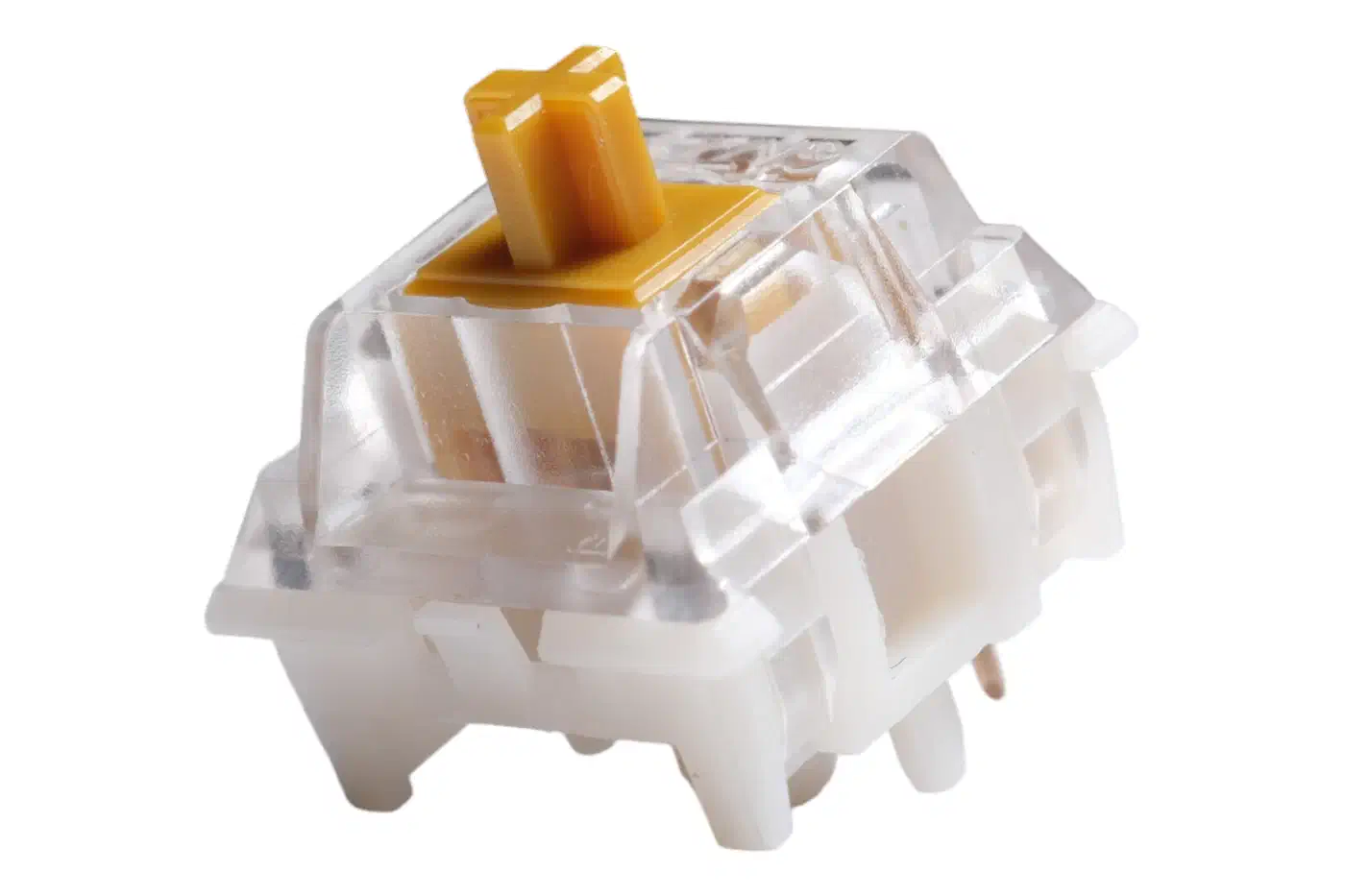
Image: Milktooth
WS (Wuque Studio) Light Tactile (45g)
Wuque Studio’s house tactile is a well-regarded all-rounder at 45g - snappy bump, neutral sound profile leaning toward depth rather than brightness. Build quality is consistently excellent. It’s a frequent recommendation for people who find the U4T too heavy but want something with a clear, well-defined bump.
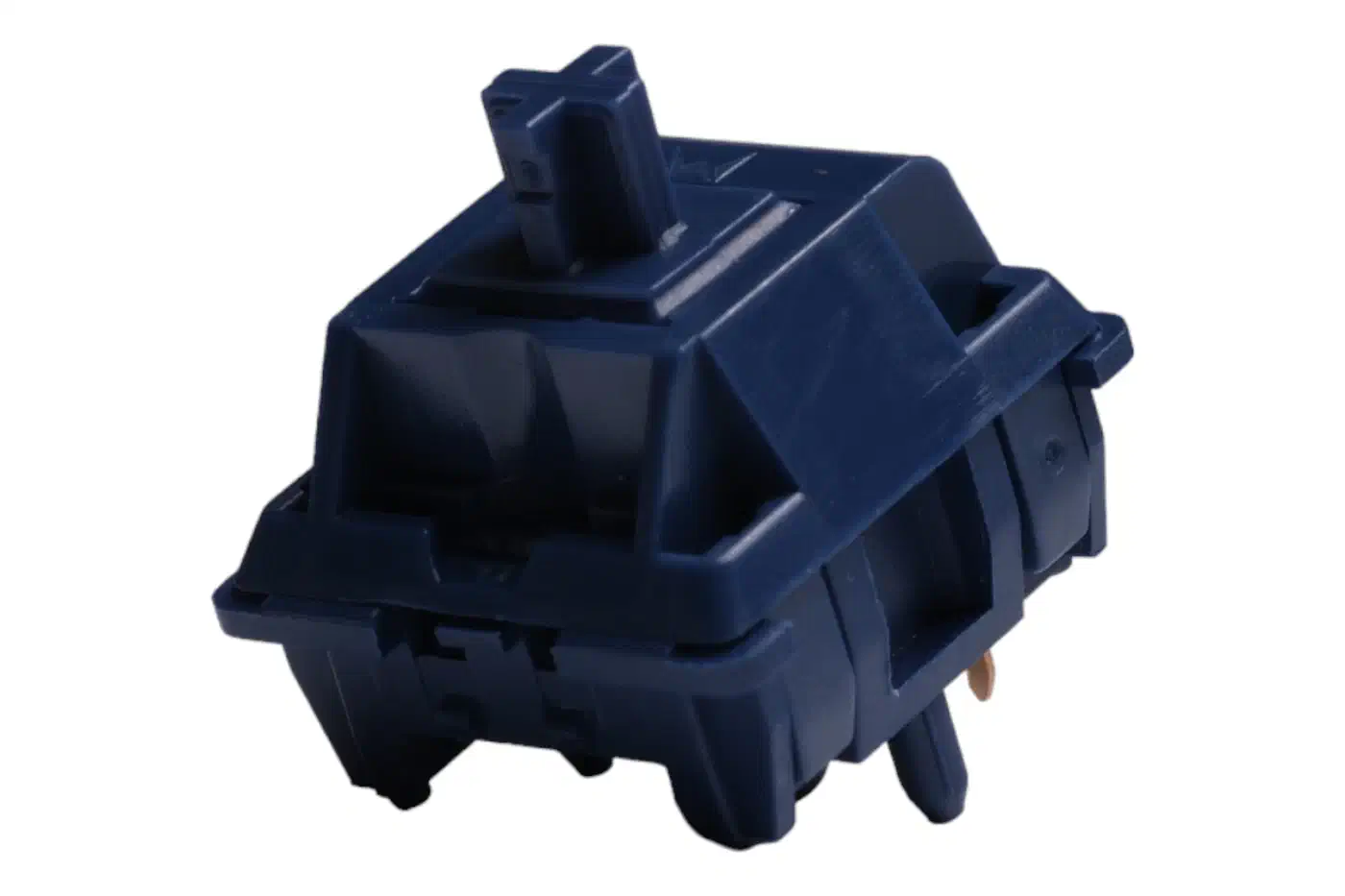
Image: Milktooth
MMD Princess Tactile (48g version)
The MMD Princess V4 Tactile in the 48g spring weight is one of the best value options in this tier. Long-pole stem, POM housing, factory-lubed, and the 48g variant specifically favors a deeper bottom-out sound over the heavier 62g version (which bottoms out harder but with more brightness). Per-switch pricing starts around $0.29-0.30, making it one of the cheapest premium-feeling tactiles available. Available from KPRepublic, LumeKeebs, and Goblintechkeys.
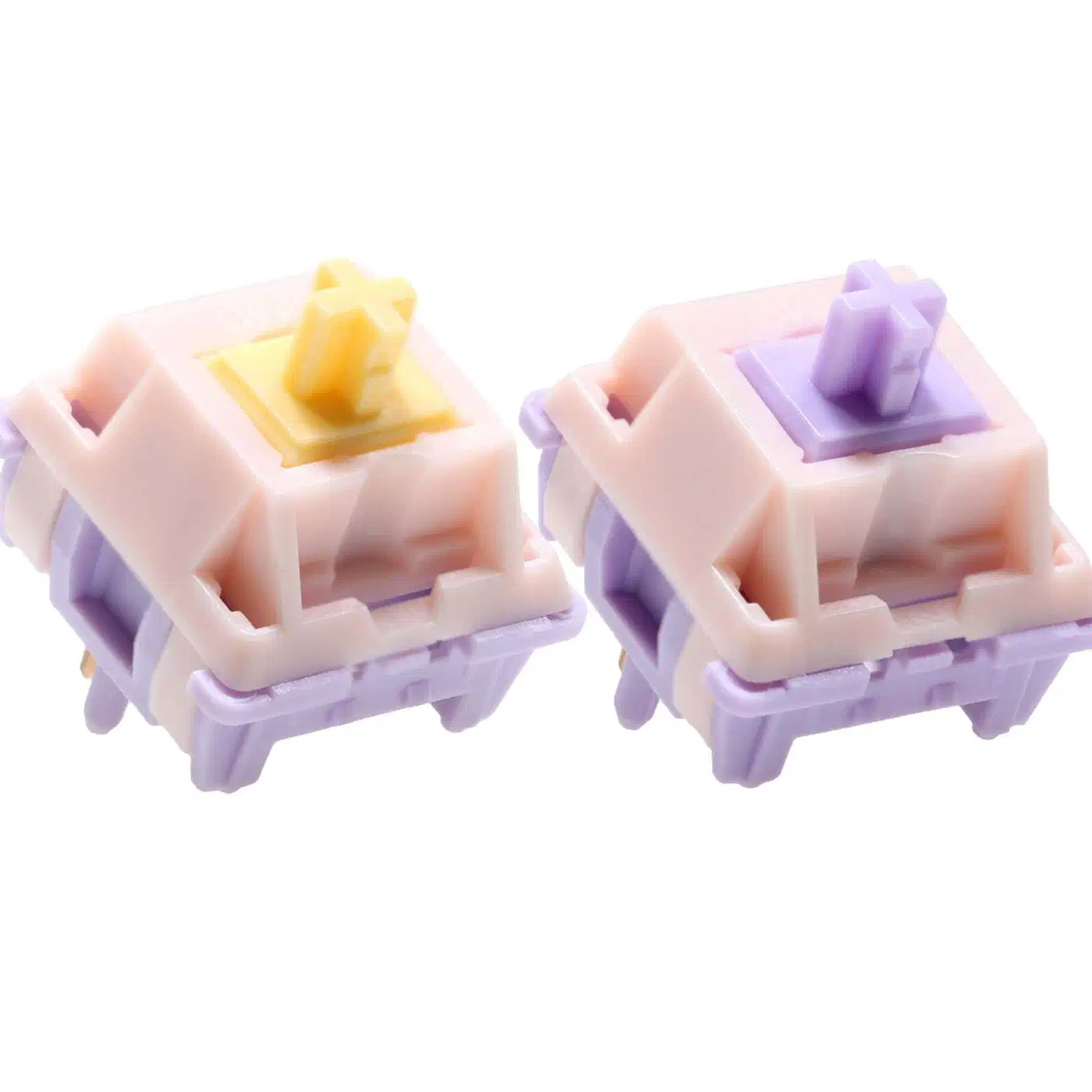
Image: KPRepublic
Linear vs. Tactile: Which Is Actually Lighter to Press?
This trips up a lot of new keyboard builders. A “42g tactile” and a “42g linear” do not feel like the same effort to type on.
Linear switches have a flat force curve. The rated weight is the actual sustained effort from top to bottom - smooth throughout with no resistance spikes. If a linear is rated at 42g, you’re pressing at roughly 42g for the entire keystroke.
Tactile switches have a bump in the force curve. The rated actuation weight is the force required at the actuation point, which occurs after the bump. To get over the bump itself, you need significantly more force - typically 10-15g higher than the rated spec. A “30g tactile” like the Akko V3 Creamy Purple Pro requires around 55g at the peak of the bump. That’s the actual work being done by your fingers.
Why this matters practically: for RSI management , gaming, or very long typing sessions, a light linear like the Gateron Clear (35g) will always require less sustained effort than any tactile in the same nominal weight class. The Gateron Clear is a useful minimum-effort benchmark for this reason.
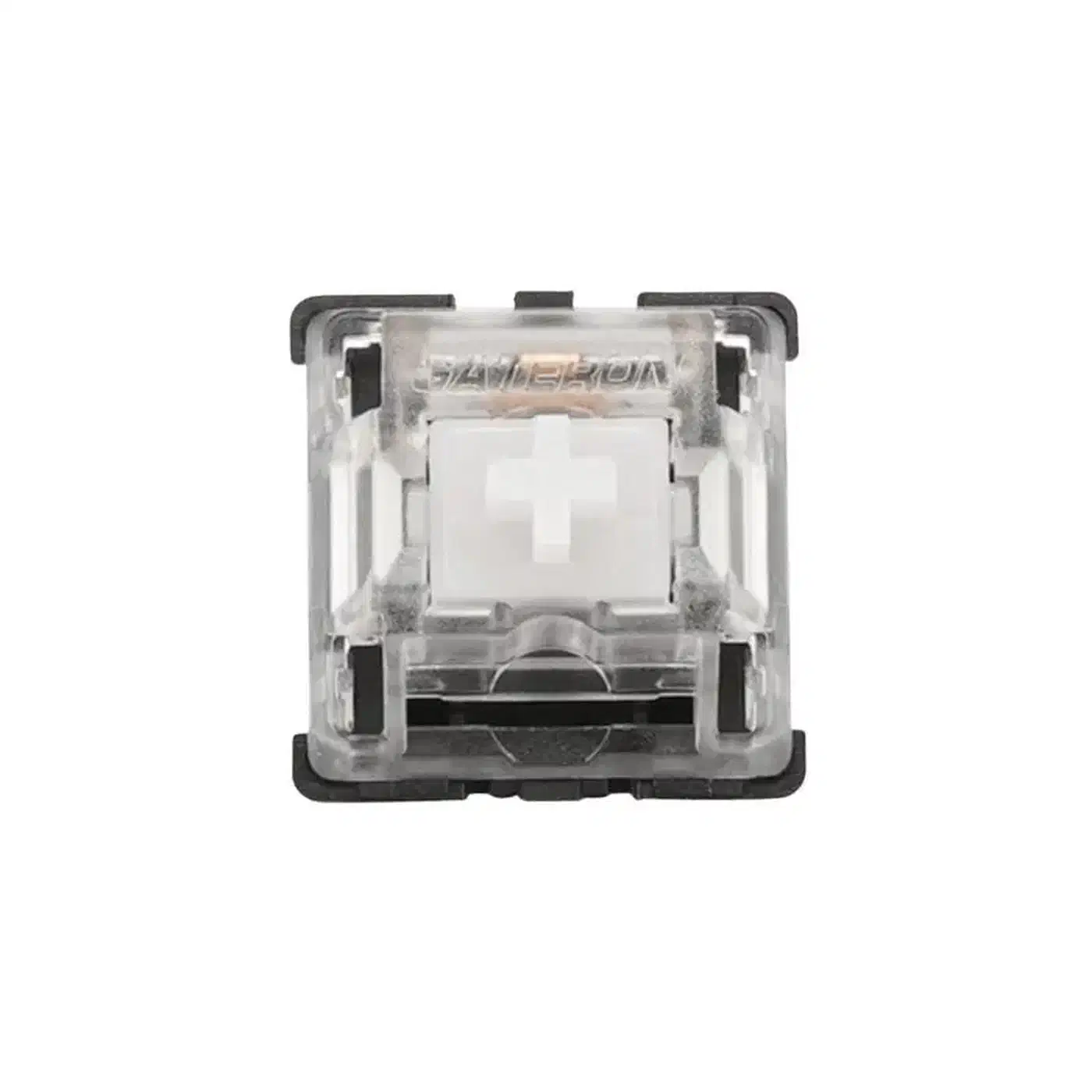
Image: KEEBD
The practical verdict:
- Pure minimum effort with no preference for feedback: light linear (Gateron Clear 35g, Gateron Yellow 35g)
- Tactile feedback with minimal fatigue: Akko V3 Creamy Purple Pro or Hako Violet
- Both tactile and thocky on a tight budget: MMD Princess 48g or TTC Bluish White
If you want to test before buying 70+ switches, a budget switch tester kit from Amazon or KPRepublic (around $10-20 for a sampler of 15-30 switches) is worth the upfront cost to feel the difference between a 35g linear, a 30g tactile, and a 45g tactile side by side.
Hotswap vs. Soldering: Do You Need a Soldering Iron?
This is worth covering because many beginners don’t know that swapping switches doesn’t always require tools.
Hotswap PCBs have spring-loaded sockets (Kailh or Mill-Max) that accept standard MX-compatible switches without any soldering. You simply align the pins, press the switch in, and it works. All the switches covered in this guide use standard MX footprints and are 5-pin (PCB mount), meaning they work in both 3-pin and 5-pin hotswap sockets (clip the two extra plastic alignment pins to fit a 3-pin socket). Most modern budget-friendly boards - Keychron V series, Epomaker, Akko boards, NuPhy - ship with hotswap PCBs. Check your keyboard’s product page before purchasing switches.
Soldered PCBs require desoldering old switches with a soldering iron and wick or pump. The upside is slightly better switch stability and the option to use vintage switches that don’t have standard pin configurations. For anyone just starting out, a hotswap board removes all of that friction.
Pro Tips to Maximize Thock on Lightweight Switches
Light switches can sound thin or hollow without the right setup. These are the variables that matter most.
Long-pole stems first
When evaluating any switch for thock potential, look for “long pole” in the product description. All switches reviewed in this guide use long-pole or extended-pole stems. This is the single biggest acoustic variable - more important than housing material, lubing, or foam.
Housing material guide
- Nylon: warm, deep, slightly muffled - ideal for thock goals
- POM: smooth, medium depth, slightly poppy - excellent balance of thock and crispness
- Polycarbonate: bright, high-frequency, clacky - avoid if thock is the primary goal
Lubing tactile switches correctly
Use a thin oil - Krytox 105 or Tribosys 3203 - applied only to the rails and spring. Never lube the tactile legs (the wings on the side of the stem). Lubing the legs kills the tactile bump and produces a mushy, muted feel that also reduces acoustic projection. Bag-lube springs separately with a small amount of oil, shake, and install.
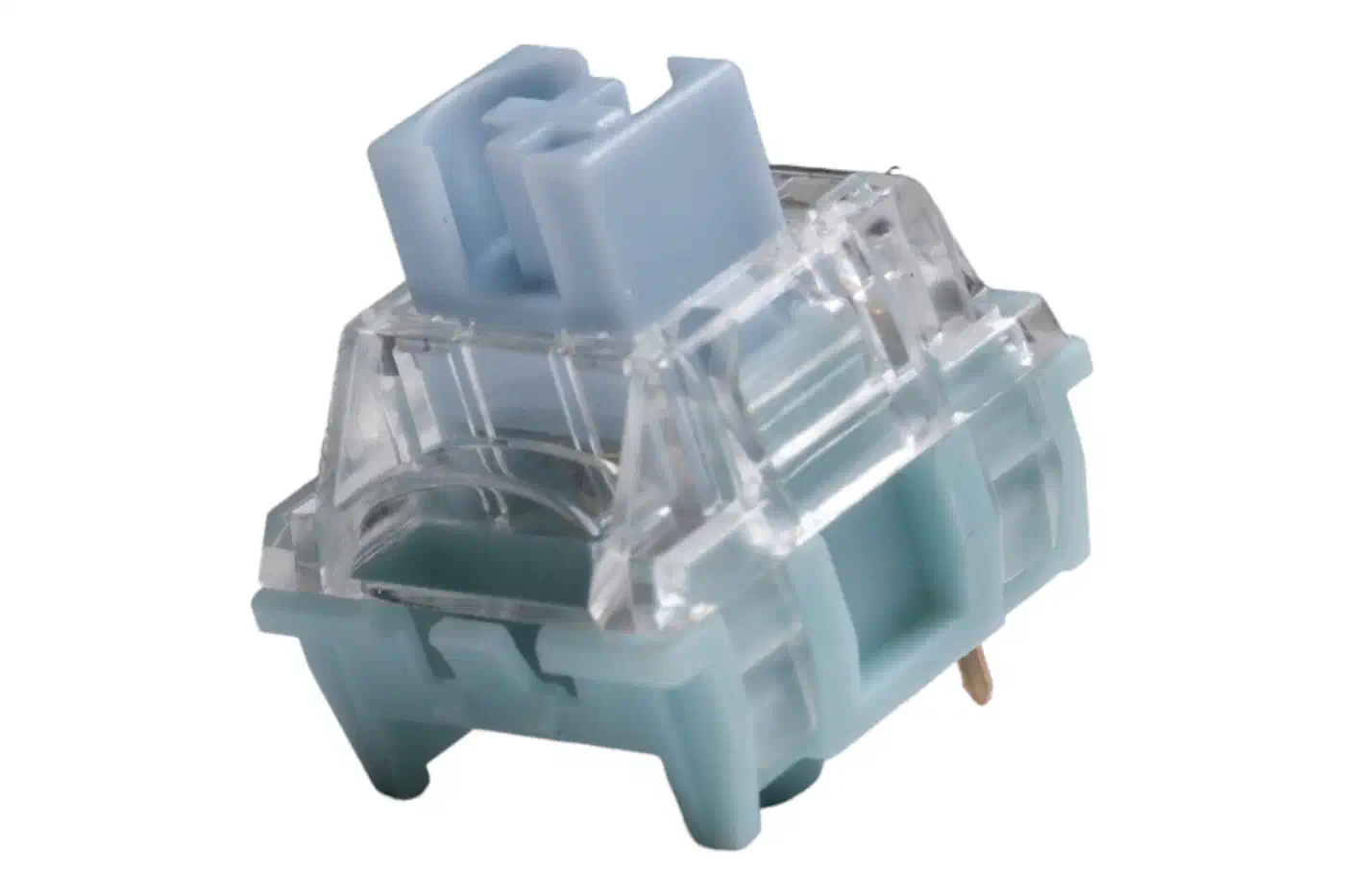
Image: Milktooth
Switch films
A 0.15mm UHMWPE or Deskeys film inserted between the top and bottom housing halves reduces stem wobble and lowers the resonant frequency of the switch housing. The result is a tighter, slightly deeper sound. Films are inexpensive ($5-8 for 100 pieces) and most switches in this guide benefit from them.
Keyboard mounting and foam
Even perfect switches will sound hollow in a hard-mounted aluminum board with no dampening. PE foam under the PCB, case foam between the PCB and the bottom of the case, and gasket or top-mount keyboard designs all contribute to the final thock profile. If you’re not ready to invest in a premium gasket-mount board, PE foam alone is a $2-3 modification that meaningfully improves any build.
Quick checklist before your first build:
- Confirm your board has a hotswap PCB (or prepare your soldering station)
- Choose a switch with a long-pole stem and nylon or POM housing
- Apply thin oil to rails and springs only - skip the tactile legs
- Add switch films to reduce wobble
- Line the PCB layer with PE foam before seating the switches
The combination of any switch from the table above with proper lubing technique and PE foam will produce better results than expensive switches in an unmodified hard-mount board.