 Botmonster Tech
The state of consumer SBCs in 2026: trends, trials, and the RISC-V frontier

The consumer SBC market in 2026 is no longer what it was sold as. Raspberry Pi, Orange Pi, Rock Pi, and the rest of the single-board computer crowd now ship 70-80% of their units to industrial customers. Think factory automation, digital signage, point-of-sale terminals, and medical devices. The $35 computer that was meant to put a hackable Linux machine in every teenager’s bedroom is now more likely bolted inside a mall vending machine.
That shift has real costs for hobbyist buyers. Prices have crept up. Feature sets have been tuned for industrial needs. And the buzz that once surrounded a new board launch has largely moved on. Where it moved, toward RISC-V and purpose-built microcontrollers, is the more interesting story.
From $35 Revolution to Industrial Dominance
When the original Raspberry Pi launched in 2012, the pitch was simple. A full Linux computer for $35, small enough to fit in a shirt pocket. It was built for students and hobbyists who wanted to learn to code and make things. It worked. Within a few years, millions of boards were in use. A full ecosystem of cases, HATs, tutorials, and community projects grew up around it.
The industrial pivot was a slow shift. Supply chains matured, software support got better, and embedded industrial customers buy in large volumes and pay on time. By the mid-2020s, boards sold as consumer products were now built with industrial temperature ranges, long-term stock guarantees, and NPUs for running machine vision models on factory floors.
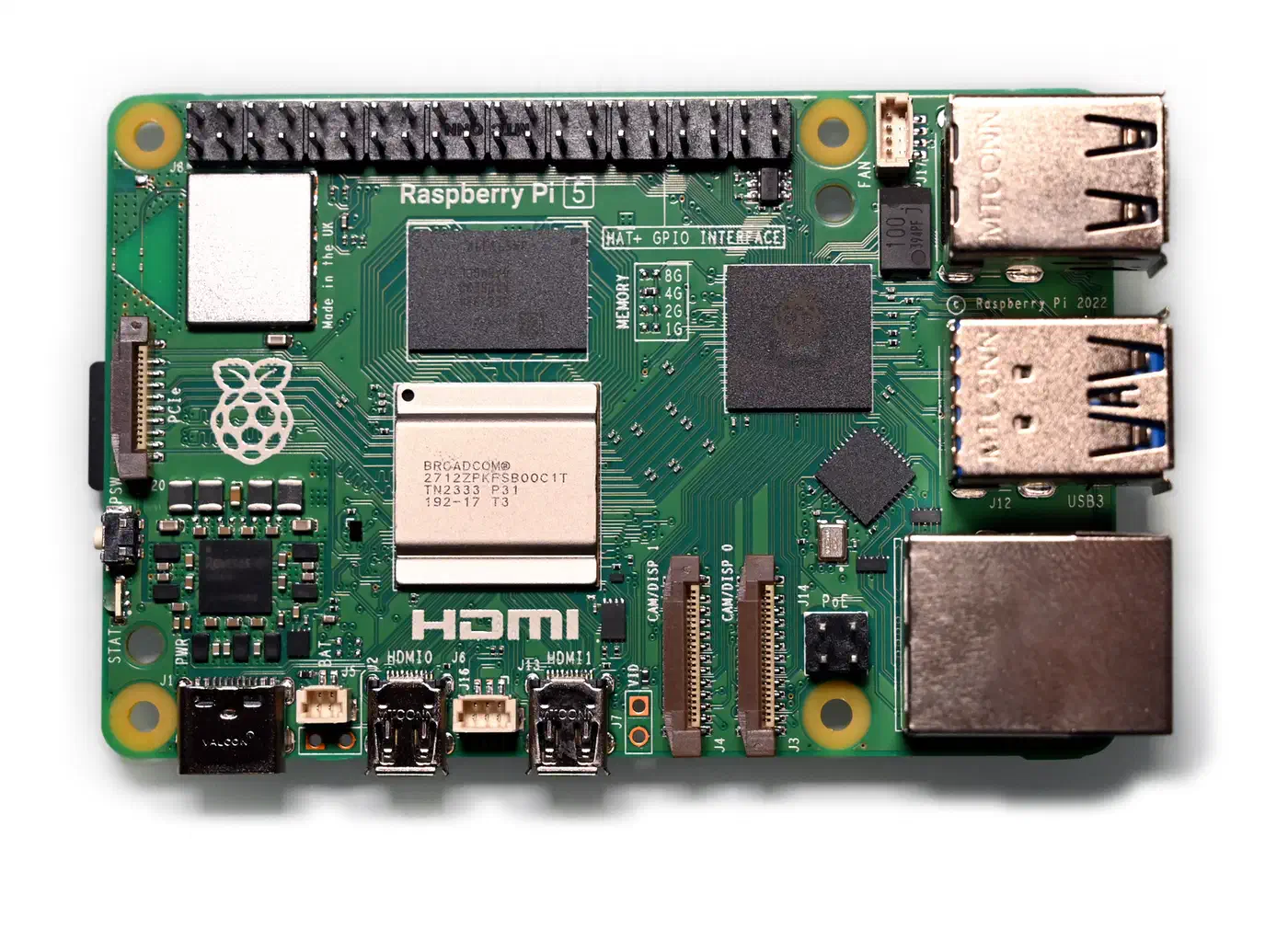
By 2026, after three memory-driven price rises, the Raspberry Pi 5 costs $175 for the 8GB version. The Raspberry Pi Compute Module 4, built for industrial integration, has been a top seller for years. Rock 5B, the Orange Pi 5 Pro, and similar high-end ARM boards hover in the $100-$200 range. The jobs these boards are tuned for are not what the original community had in mind. The hobby side still gets the benefit, though: the Pi 5 is the first board where N64 and Dreamcast emulation runs at full speed.
This raises a question for anyone who wants a cheap, hackable Linux machine for a personal project. Where do you fit in this market now?
The Three Consumer SBC Personas
“Hobbyist SBC buyers” are not one group. To judge how well the market serves them, you have to be specific about who they are.
The Makers build physical things: robots, garden sensors, home automation nodes, retro arcade cabinets, CNC controllers. GPIO access is non-negotiable for them. They need a board that can drive servos, read I2C sensors, toggle relays, and run a light Python or Rust process. And it must do all that on no more than 3-5 watts at idle. They are not running a browser. They do not need HDMI. The Raspberry Pi Zero 2W and similar tiny boards still serve this group well, though even the Zero has crept up in price.
The Small PC Seekers want a cheap desktop replacement. Something to drive a TV, run a NAS, act as a light media server, or run as a low-power home server. Mid-range ARM boards used to serve this group well. Now they face the sharpest competition from Mini PCs. A used Intel NUC or a current Beelink S12 Pro with an N100 chip costs about the same as a Raspberry Pi 5 with storage and accessories. And it runs x86 Linux with no compatibility headaches.
The Diehard Enthusiasts buy hardware because it is interesting, not because it is the most practical tool for the job. They were the people running Gentoo on the original Pi, overclocking Orange Pi boards, and writing kernel patches. In 2026, this group has largely moved to RISC-V boards and odd SoCs. The hardware is immature, yet working through rough edges on a new architecture beats flashing the same Ubuntu image onto yet another ARM board.
The SBC market fails these groups unevenly: Small PC Seekers most visibly, Makers hardly at all, and Enthusiasts find it interesting again.
The Crisis of the “Low-Cost Computer” Category
The original promise of SBCs for desktop and server use has been undercut by two forces moving the opposite way. SBC prices have gone up. Meanwhile, x86 Mini PC prices have come down.
A Raspberry Pi 5 with 8GB RAM, a case, a power supply, a MicroSD card, and an NVMe HAT for real storage will run $225-$255 all-in. For the same money or less, you can buy a Beelink EQ12 or a GMKtec NucBox M5. That gets you an Intel N100, 16GB of soldered LPDDR5, a 500GB NVMe SSD, and a proper aluminum case. The Intel box runs any x86 Linux distro out of the box. It has better single-core speed, handles full browser workloads, compiles code faster, and plays video with no driver quirks.
ARM SBC defenders will correctly note that idle power draw tells a different story. A Pi 5 idles at around 3-4 watts. An N100 Mini PC idles at 7-12 watts, depending on setup. Over a year of 24/7 use as a home server, that gap adds up. If your workload is light, say a Pi-hole, a small Home Assistant instance, or a low-traffic Gitea server, the SBC’s power profile is a win.
For anyone eyeing an ARM SBC as a desktop, a developer workstation, or a NAS with several drives, though, the Mini PC argument is now strong in a way it was not three years ago. The speed gap between ARM and x86 at the $100 price point has shrunk. But the software ecosystem and driver gap has not closed in ARM’s favor.
ARM SBCs still win in the embedded project space. Think anything needing GPIO pins, anything that must fit in a small enclosure, anything where 3-5 watts is a hard ceiling, and anything that is not running a general-purpose workload. That is still a large space, and it is where the Maker group lives.
The “Edge AI” Badge on Every Board
Open any SBC product listing in 2026 and you will find NPU TOPS ratings front and center. They sit next to phrases like “Edge AI acceleration” and “on-device inference.” The Rockchip RK3588 has a 6 TOPS NPU. The Allwinner A527 has an NPU. Even budget boards now ship with some form of neural accelerator.
Customers running machine vision on production lines use NPU acceleration. They read barcodes, check component placement, and spot defects. Running a MobileNet model at 30fps on a small board without burning 15 watts is a capability. For those customers, the NPU spec earns its place.
For a maker building a weather station, a Bluetooth speaker, or a robot vacuum controller, the NPU is a feature they will never touch. It is silicon area and BOM cost that went toward corporate machine vision pipelines instead of the person who just wants reliable GPIO, a working WiFi driver, and good kernel support.
The bigger problem is what industrial focus does to pricing. When the main buyers spend procurement budgets rather than their own cash, the push to hold a sub-$50 price point weakens. The Raspberry Pi Foundation is in an awkward spot. Its educational and hobbyist branding depends on being cheap. But its revenue leans more and more on industrial customers who care less about price. That tension shows up in the Pi 5’s price tag.
There is also a separate question about the SBC as a learning platform. The original Pi worked partly because learning to code on Linux, even in Python on a slow ARM chip, was a credible path toward a software career. In 2026, AI coding assistants can scaffold a working app in minutes. So the claim that “learning on a Pi builds good habits” is harder to make with a straight face. That changes the case for buying an SBC as an educational tool.
The New Frontier: RISC-V and Microcontrollers
When ARM became the settled, predictable, slightly boring option, enthusiasts needed somewhere new to go. Two places soaked up that energy: RISC-V Linux boards and mature 32-bit microcontrollers.
RISC-V is an open instruction set architecture. ARM licenses its ISA from a single company on terms that can change, as the ARM/Qualcomm dispute showed. RISC-V, by contrast, is royalty-free and run by a non-profit foundation. That openness appeals to the kind of person who got into SBCs in the first place. It also means anyone can design a RISC-V chip without paying license fees, which has produced a wave of varied designs.
In 2026, the usable RISC-V Linux scene looks roughly like this. The StarFive VisionFive 2 is the most mature cheap RISC-V SBC. It runs a mainline-tracked Linux kernel with improving upstream support, and the VisionFive 2 is the board to start on if you want that toolchain work today. The Milk-V Mars and Milk-V Pioneer target different ends of the market. At the high end, the Milk-V Pioneer uses a Sophgo SG2042, a 64-core RISC-V server chip, and costs accordingly. These are not $35 boards, and they are not plug-and-play. Closing gaps in peripheral support, writing device tree patches, and pushing upstream kernel submissions is the same frontier work that drew enthusiasts to early ARM boards in 2013.
For a headless Linux server with basic networking and storage, the VisionFive 2 is usable in 2026. For desktop use with GPU acceleration, audio, and video decode, RISC-V boards are still catching up. Upstream kernel support keeps improving, but the timeline is “getting there” rather than “arrived.”
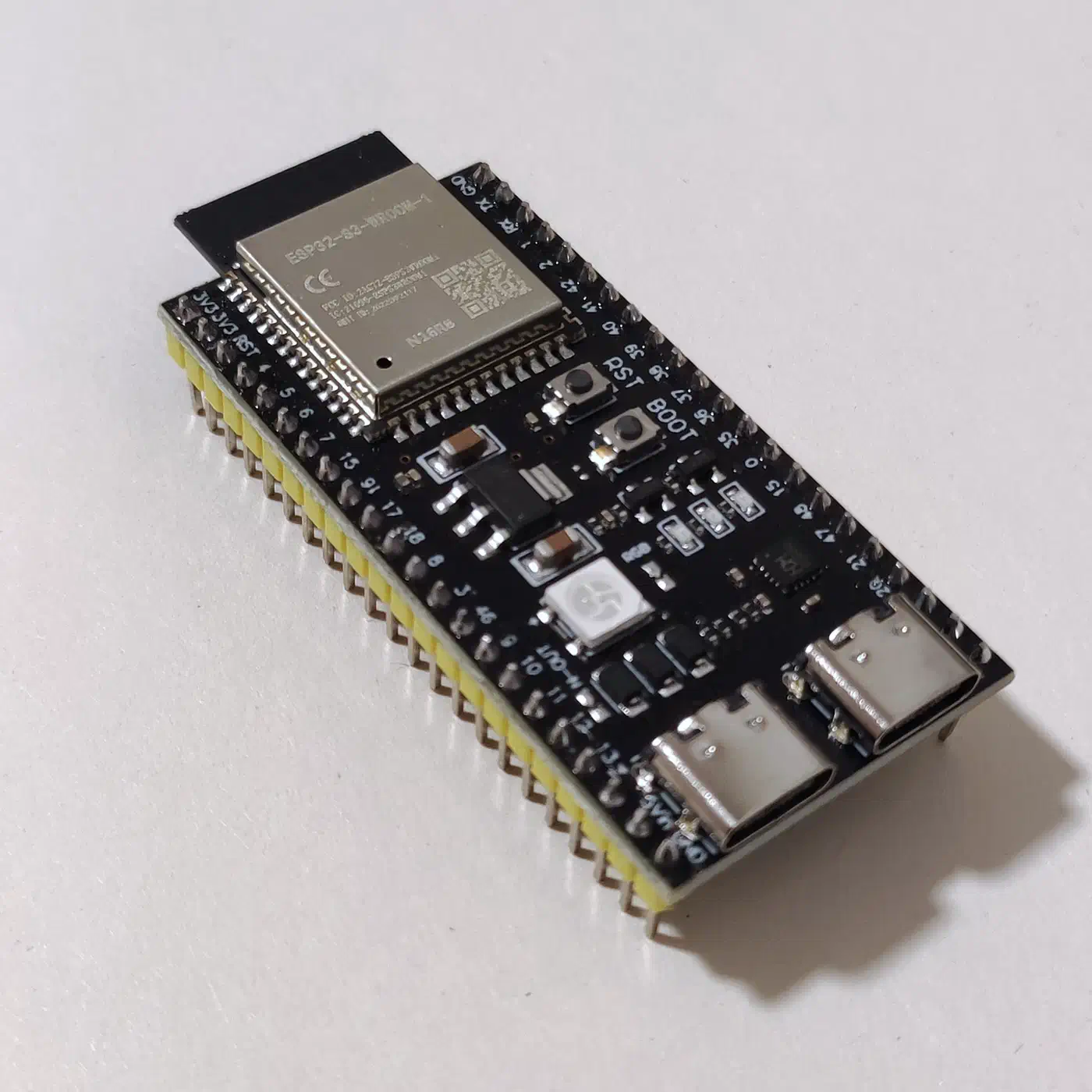
At the other end of the range, the Raspberry Pi Pico 2W and the ESP32-S3 have grown into capable platforms. They now handle projects that once needed a full SBC. MicroPython and CircuitPython run well on both. The ESP32-S3 has built-in WiFi, Bluetooth, and USB. It covers most sensor-and-connectivity projects that would have once needed a Pi Zero, at $5-$10 per unit rather than $15-$25.
For pure maker projects, think robot arms, environmental monitors, custom keyboards, and IoT sensors, the microcontroller tier often fits better than a full Linux SBC. You get lower power draw, faster boot times, predictable real-time behavior, and a simpler software stack.
Where the SBC Market Goes From Here
The SBC market is sorting itself into clear tiers with different jobs. And the hobbyist tier is finding a new shape.
The industrial tier will keep growing. These are high-end ARM boards with NPUs, long-term support commitments, and industrial temperature ratings. This tier funds the R&D and factories that make consumer boards possible. The Raspberry Pi Foundation’s commercial success pays for the educational boards, even if you find the resulting product direction frustrating.
The maker tier still needs sub-$50 boards with solid GPIO support, reliable Linux kernels, and good community docs. A gap is opening up here. Boards like the Orange Pi Zero 3 and newer compact Allwinner-based boards are trying to fill it. But kernel support quality varies a lot. The community would gain from more vendor investment in upstream kernel work. Too often, vendors ship out-of-tree BSP kernels that turn into unsupported orphans eighteen months after launch.
The enthusiast tier is healthy in 2026, just in different places than in 2018. RISC-V boards are the new frontier. Rough edges abound, and the community building RISC-V Linux support is active and growing. Boards using Qualcomm mobile SoCs are also drawing interest. Their strong GPU and DSP stacks appeal to people who want desktop-class ARM speed without the Mini PC form factor.
If you are buying an SBC in 2026 for a physical project, say a sensor or a controller with GPIO, a Pi 4, Pi Zero 2W, or a similar compact ARM board still makes sense. If you want a cheap Linux server or desktop and do not need GPIO, buy a Mini PC. If you want to be at the frontier and do not mind rough edges, look at RISC-V. The worst choice is paying $150 for an ARM board with an NPU you will never use because the product page made it sound like the future of computing.
The SBC that changed the world in 2012 by being a $35 Linux computer is most valuable in 2026 when used close to that original idea.