 Botmonster Tech
Thunderbolt 5 explained: what it means for Linux users

Thunderbolt 5 doubles the pipe to 80 Gbps in both directions (120 Gbps with Bandwidth Boost for displays). It is USB4 v2 compliant and tunnels PCIe Gen 4 x4. For Linux users, that means real gains for eGPU rigs, multi-display docks, and fast NVMe drive bays. Kernel 6.10+ ships basic Thunderbolt 5 support through the thunderbolt driver. Full feature work depends on your distro, firmware, and hardware. The upgrade pays off only when you need more speed than Thunderbolt 4’s 40 Gbps can give.
Thunderbolt 5 Specs Breakdown: What Changed from Thunderbolt 4
Thunderbolt 5 isn’t a small tweak. The spec adds new signaling, asymmetric bandwidth modes, and wider protocol tunneling. Together they double the bandwidth while keeping full backward support.
The headline number is bandwidth. You get 80 Gbps in both directions (40 Gbps each way) in symmetric mode. It uses PAM-3 signaling over the same USB-C plug. Thunderbolt 4 topped out at 40 Gbps total (20 Gbps each way). So this is a clean 2x bump in raw throughput.
Display-heavy setups get Bandwidth Boost. This asymmetric mode shifts to 120 Gbps in one direction, usually toward a display. The return path drops to 40 Gbps. The switch happens by itself when you plug in a high-bandwidth display. No manual setup needed.
PCIe tunneling jumps from Gen 3 x4 (32 Gbps on Thunderbolt 4) to Gen 4 x4 (64 Gbps). This hits eGPU and NVMe bay speeds head on. It roughly halves the external device bottleneck. On the display side, DisplayPort 2.1 tunneling lets one Thunderbolt 5 port drive up to three 4K@144Hz screens or one 8K@60Hz screen. Thunderbolt 4 capped at two 4K@60Hz or one 8K@30Hz.
Power delivery stays at up to 240W via the USB PD 3.1 Extended Power Range spec. That matches the latest Thunderbolt 4 docks. It’s enough to charge gaming laptops while running gear off the same cable. Backward support is full. Thunderbolt 5 ports accept Thunderbolt 3/4, USB4, and USB 3.x/2.0 devices at their native speeds. You don’t need to replace any of your old kit.
| Feature | Thunderbolt 3 | Thunderbolt 4 | Thunderbolt 5 |
|---|---|---|---|
| Total bandwidth | 40 Gbps | 40 Gbps | 80 Gbps (120 Gbps Boost) |
| PCIe tunneling | Gen 3 x4 (32 Gbps) | Gen 3 x4 (32 Gbps) | Gen 4 x4 (64 Gbps) |
| Display output | 2x 4K@60Hz | 2x 4K@60Hz | 3x 4K@144Hz |
| Min. display support | 1x 4K | 2x 4K | 3x 4K |
| Power delivery | 100W | 100W | 240W (PD 3.1) |
| Signaling | NRZ | NRZ | PAM-3 |
Linux Kernel Support and Driver Status in 2026
Hardware specs are useless without working drivers. The Thunderbolt 5 story on Linux is mostly good. Some catches depend on your kernel version and distro choice.
The thunderbolt kernel driver gained Thunderbolt 5 controller support in kernel 6.10, merged in mid-2024. The first supported chip was the Intel Barlow Ridge controller. If you’re on anything older than 6.10, Thunderbolt 5 devices won’t be seen at all.
Kernel 6.12+ (LTS) and 6.15+ (stable, shipping in 2026) ship the most complete Thunderbolt 5 support. PCIe tunneling, DisplayPort 2.1 tunneling, and USB3 tunneling all work. Aim for 6.12 or later if you want a steady Thunderbolt 5 setup.
Distro support varies. Fedora 43 (kernel 6.14+) works out of the box with no manual setup. That’s the smoothest path. Ubuntu 26.04 LTS (kernel 6.12) works, but may need manual bolt daemon updates and device approval on first connect. Arch Linux, with its rolling release and latest kernel, has the best support overall. The Arch Wiki Thunderbolt page is the single best guide for fixing issues on any distro.
The bolt daemon is the userspace bit that handles device approval and security rules. You need version 0.10+ for Thunderbolt 5 devices. Check your plugged-in gear and its security state with:
boltctl listThunderbolt on Linux has four security levels, set in BIOS. none skips approval. user prompts on first connect. secure adds crypto checks of the device. dponly allows DisplayPort but no PCIe tunneling. Most distros default to user. It prompts through GNOME or KDE system settings when you first plug in a device. On GNOME 3.30+, approval runs natively through the Settings UI. KDE Plasma users need the plasma-thunderbolt package.
To approve a device for good, so it works on every boot without prompts, use boltctl enroll with the device UUID:
boltctl list          # find the device UUID
boltctl enroll <uuid> # permanently authorize it
Some limits remain in 2026. Bandwidth Boost (asymmetric mode) needs kernel 6.14+ and firmware help from both the dock and the display maker. Some early Thunderbolt 5 docks drop back to 80 Gbps symmetric mode even with a single high-bandwidth display. Firmware updates through fwupd can sometimes fix this. fwupd 2.0.11 added support for Lenovo Thunderbolt 5 Smart Docks, and other vendors are following.
eGPU on Linux with Thunderbolt 5: Finally Practical?
External GPUs have been rough on Linux. The reasons: bandwidth bottlenecks, shaky hot-plug, and driver quirks. Thunderbolt 5 doubles the PCIe bandwidth, which changes the math. Still, you need to go in with real expectations.
Thunderbolt 5’s PCIe Gen 4 x4 tunnel gives 64 Gbps of bandwidth for eGPU traffic. In practice, this cuts the speed hit from about 25-30% on Thunderbolt 3/4 to about 10-15% versus a native PCIe x16 desktop slot. Tom’s Hardware tested an RTX 5070 Ti in a Thunderbolt 5 box. The GPU ran about 14% slower on average than over OCuLink. OCuLink acts more like a direct PCIe link with no tunneling overhead.
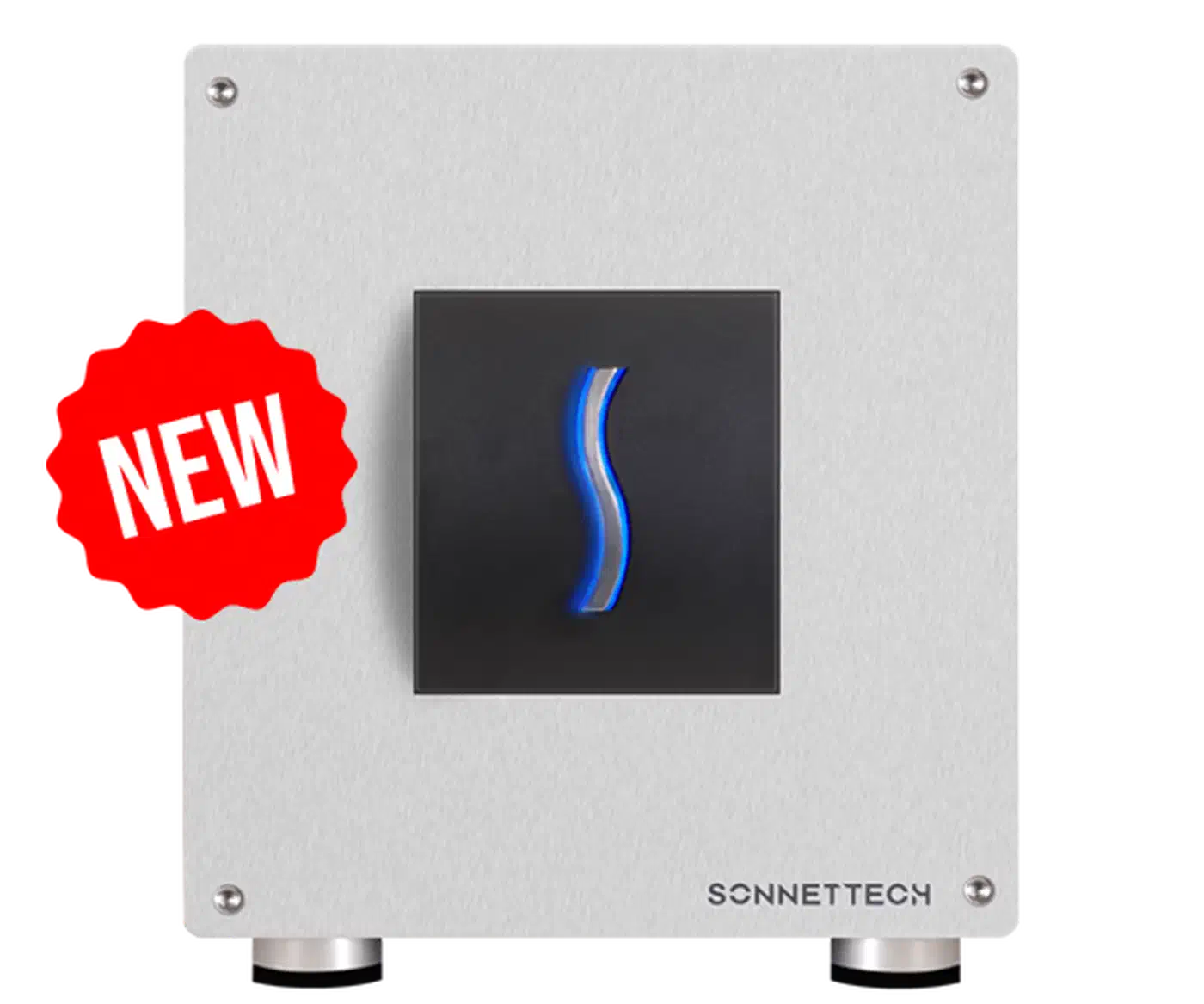
eGPU boxes in 2026 include the Razer Core X successor (Thunderbolt 5), Sonnet Breakaway Box 850 TB5, and the OWC Mercury Helios TB5. All use a standard PCIe x16 slot inside. The full eGPU enclosure lineup for Linux covers how each one behaves once the driver loads. Check the eGPU.io buyer’s guide for the latest fit reports.
For GPU choice, AMD is the safer pick on Linux. The RX 7000 and RX 8000 lines use the open-source amdgpu driver. It handles hot-plug much better than NVIDIA’s closed stack. Authorizing the device takes one command:
echo 1 > /sys/bus/thunderbolt/.../authorizedAfter authorization, the GPU appears in lspci and the amdgpu driver loads automatically.
NVIDIA eGPU on Linux works with the closed driver, version 550 and later. You’ll need to add AllowExternalGpus=True to your xorg.conf on X11. On Wayland, you set specific env vars for the compositor. Hot-plug stays shaky with NVIDIA. The advice is to plug in the eGPU before boot. There’s no sign this gets better until NVIDIA’s open kernel modules grow up more.
To route rendering to the eGPU, the egpu-switcher tool does the xrandr and Xorg setup for you. It sends output to external screens. On Wayland, Sway and KDE Plasma both support DRM lease. That makes external display routing cleaner through sway output commands or the KDE display panel.
If your machine has an OCuLink port (or an M.2 slot you can adapt), it’s worth a look as an option. OCuLink gives a direct PCIe link with no tunneling overhead. It beats Thunderbolt 5 for eGPU work in benchmarks, again and again. The trade-off is that OCuLink doesn’t carry power, display signals, or USB data. It’s PCIe only. Thunderbolt 5 stays the better pick for a one-cable dock setup.
To set the bar: eGPU on Thunderbolt 5 works well for GPU compute jobs (ML training, Blender renders) and for gaming at 1440p or 4K on Linux. It won’t match a desktop GPU in a PCIe x16 slot if you chase top frame rates in competitive shooters.
Docks, Displays, and Storage: Real-World Thunderbolt 5 Peripherals
The Thunderbolt 5 peripheral pool has grown fast. Here’s what actually works on Linux in 2026.
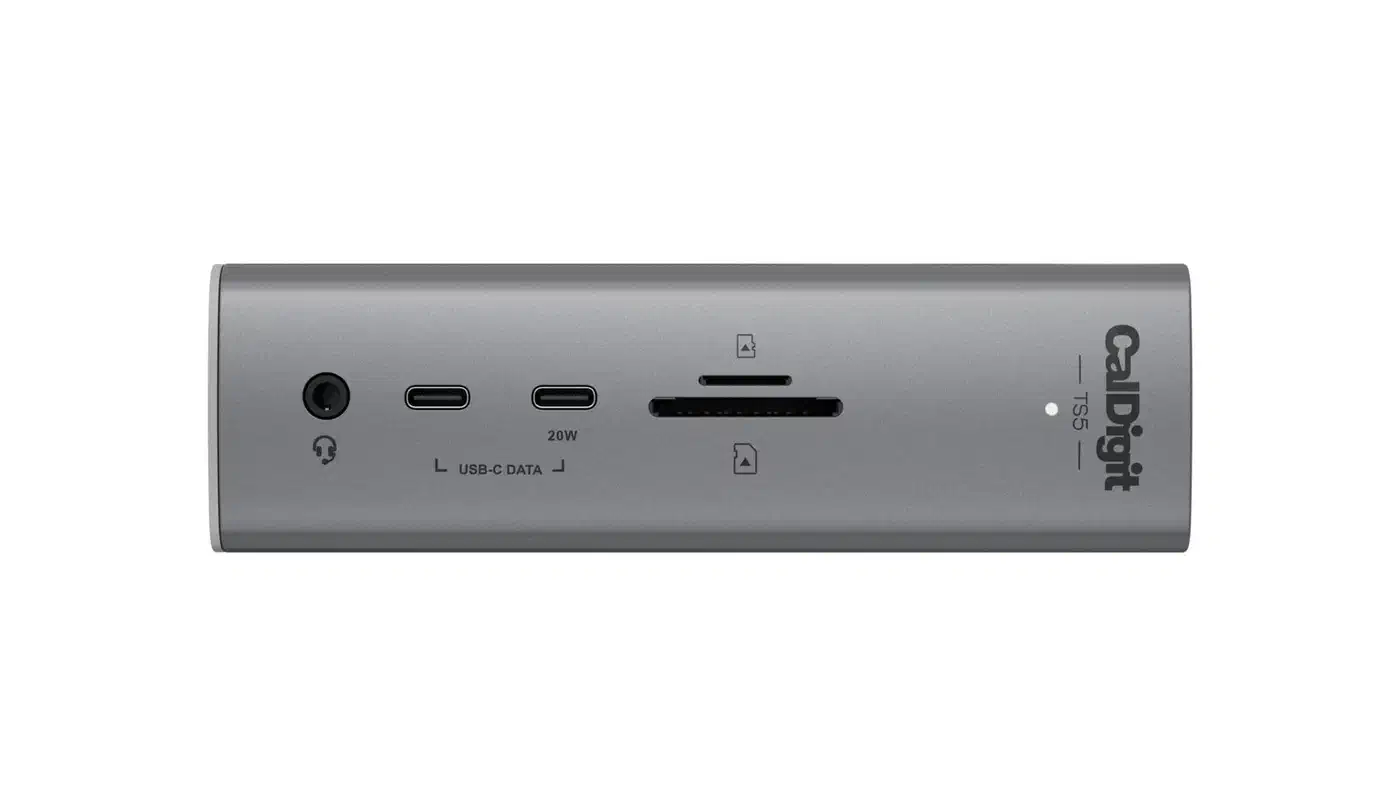
On the docking side, the CalDigit TS5, Anker Apex TB5, and Kensington SD5800T all offer several DisplayPort and HDMI outputs, 10GbE Ethernet, USB-A and USB-C ports, and SD card slots through a single Thunderbolt 5 cable. They push up to 140W of power. On Linux, these docks tend to work well. Standard kernel drivers handle USB gear, Ethernet, and audio. Display output depends on your GPU driver and the dock’s DisplayPort build.
Display daisy-chaining is another Thunderbolt 5 trick worth knowing. You can chain up to three 4K@144Hz screens through a single port. On Linux, each screen shows up as a separate output in your compositor’s display settings, like sway output, xrandr, or GNOME Display Settings. The catch: each screen in the chain must support Thunderbolt passthrough.
External NVMe storage is where Thunderbolt 5 gives the biggest day-to-day lift. PCIe Gen 4 NVMe drives in Thunderbolt 5 boxes like the OWC Envoy Ultra TB5 hit about 6,000 MB/s in sequential reads. That’s close to internal NVMe speeds. On Thunderbolt 4, the same drives capped near 2,800 MB/s. Check your bay’s speed with fio (see our NVMe benchmark guide for reading the results):
fio --name=seqread --rw=read --bs=1M --size=4G \
    --filename=/dev/sdX --direct=1 --numjobs=1
The thunderbolt-net kernel module lets two Thunderbolt-linked machines talk over 10GbE or even 25GbE. It’s handy for fast file moves between a laptop and a workstation. You skip the network switch.
One handy note on cables. Thunderbolt 5 needs active cables for runs over 1 meter at full 80/120 Gbps speeds. Passive cables work up to about 0.8 meters. Look for the Intel Thunderbolt 5 logo, and plan to pay $40-80 for a quality cable. Cheap, uncertified cables will quietly drop to lower speeds.
Thunderbolt Security: The Thunderspy Context
Any chat about Thunderbolt on Linux should cover the security model. Thunderspy, shown in 2020, proved that Thunderbolt’s direct memory access (DMA) features could be used for evil maid attacks. The risk was on machines built before 2019.
Modern Thunderbolt 5 hardware fixes this with Kernel DMA Protection (IOMMU-based). It’s been in the Linux kernel since version 5.0. Pair it with the user or secure levels in the bolt daemon, and the attack surface shrinks a lot. Kernel DMA Protection stops untrusted devices from reading system memory. The approval flow makes sure that only OK’d devices get PCIe tunneling access.
To see if your system has Kernel DMA Protection on:
cat /sys/bus/thunderbolt/devices/domain0/iommu_dma_protectionA value of 1 means protection is on. If it shows 0, turn on VT-d (Intel) or AMD-Vi in your BIOS.
Should You Upgrade? Decision Framework
Thunderbolt 5 gear costs more in 2026. So the real question: does the extra bandwidth pay off for your workflow?
Thunderbolt 5 makes sense in a few cases. You use an eGPU and want to cut the speed hit from 25-30% down to 10-15%. You drive three or more 4K screens from a laptop. You often move large files to external NVMe and need over 2,800 MB/s. You need 10GbE or faster networking through one dock connection.
Staying on Thunderbolt 4 is the right call in a few cases. You use a single 4K screen and a basic USB dock. Your external storage is SATA-based or HDD-based. You don’t use an eGPU. Or your laptop just doesn’t have a Thunderbolt 5 port (you can’t add one).
On price, Thunderbolt 5 docks cost about $100-150 more than the same Thunderbolt 4 docks. Laptops with Thunderbolt 5 (Intel Lunar Lake, Arrow Lake, and AMD Strix Point) run $50-200 above their Thunderbolt 4 peers.
Thunderbolt 4 isn’t going away soon. At 40 Gbps, it’s still enough for most dev workflows. A single 4K@144Hz screen, USB gear, and Gigabit Ethernet through a dock all fit well inside that pipe.
If you’re buying a new laptop in 2026, pick Thunderbolt 5 when it’s offered at a close price. The extra bandwidth keeps the port useful for five or more years as new gear asks for more speed. But don’t spend an extra $200 on Thunderbolt 5 when your workflow fits inside Thunderbolt 4’s limits.
Before you buy any Thunderbolt 5 hardware, check that your Linux box is ready:
uname -r                    # kernel version (need 6.10+, prefer 6.12+)
boltctl --version           # bolt daemon version (need 0.10+)
cat /sys/bus/thunderbolt/devices/domain0/iommu_dma_protection  # DMA protection
Search the kernel Thunderbolt docs and the Arch Wiki for your chip’s fit notes before you click buy.