 Botmonster Tech
ML for Beginners teaches the machine learning LLMs skip

This post is open for corrections. Highlight any line of text to challenge it or ask for a clearer explanation and leave a comment.
Microsoft’s ML for Beginners is a free classic machine learning course, and its smartest decision is what it leaves out. The 26 lessons cover regression, classification, clustering, and time series forecasting with Scikit-learn. Deep learning is left to a separate course. That gap is the ground every generative AI tutorial assumes you already have.
Key Takeaways
- Twenty-six lessons cover the machine learning that came before language models.
- Deep learning is left out on purpose, with a separate course for it.
- Regression and clustering still solve most business prediction problems.
- Every lesson has two quizzes, so you find out what you missed.
- You learn to spot when a language model is the wrong tool.
What a classic machine learning course still covers
ML for Beginners groups its lessons by the kind of problem you have. It opens with four intro lessons: the basics, the history of the field, fairness, and the tools researchers use.
| Section | Lessons | What it predicts |
|---|---|---|
| Regression | 4 | A number: prices, temperatures, capacity |
| Web app | 1 | Nothing new, it ships a trained model |
| Classification | 4 | A category: triage, routing, detection |
| Clustering | 2 | Groups nobody labelled |
| Natural language processing | 5 | Sentiment and translation, before transformers |
| Time series | 3 | What comes next in a sequence |
| Reinforcement learning | 2 | Which action to take next |
| Real-world postscript | 2 | Applications and model debugging |
Count those and you get 25 numbered lessons plus two postscript ones, so the headline number of 26 is close enough.
The datasets are odd on purpose. Regression runs on North American pumpkin prices pulled from a USDA report. Classification sorts Asian and Indian recipes, clustering digs into Nigerian music tastes, and time series forecasts world power use.
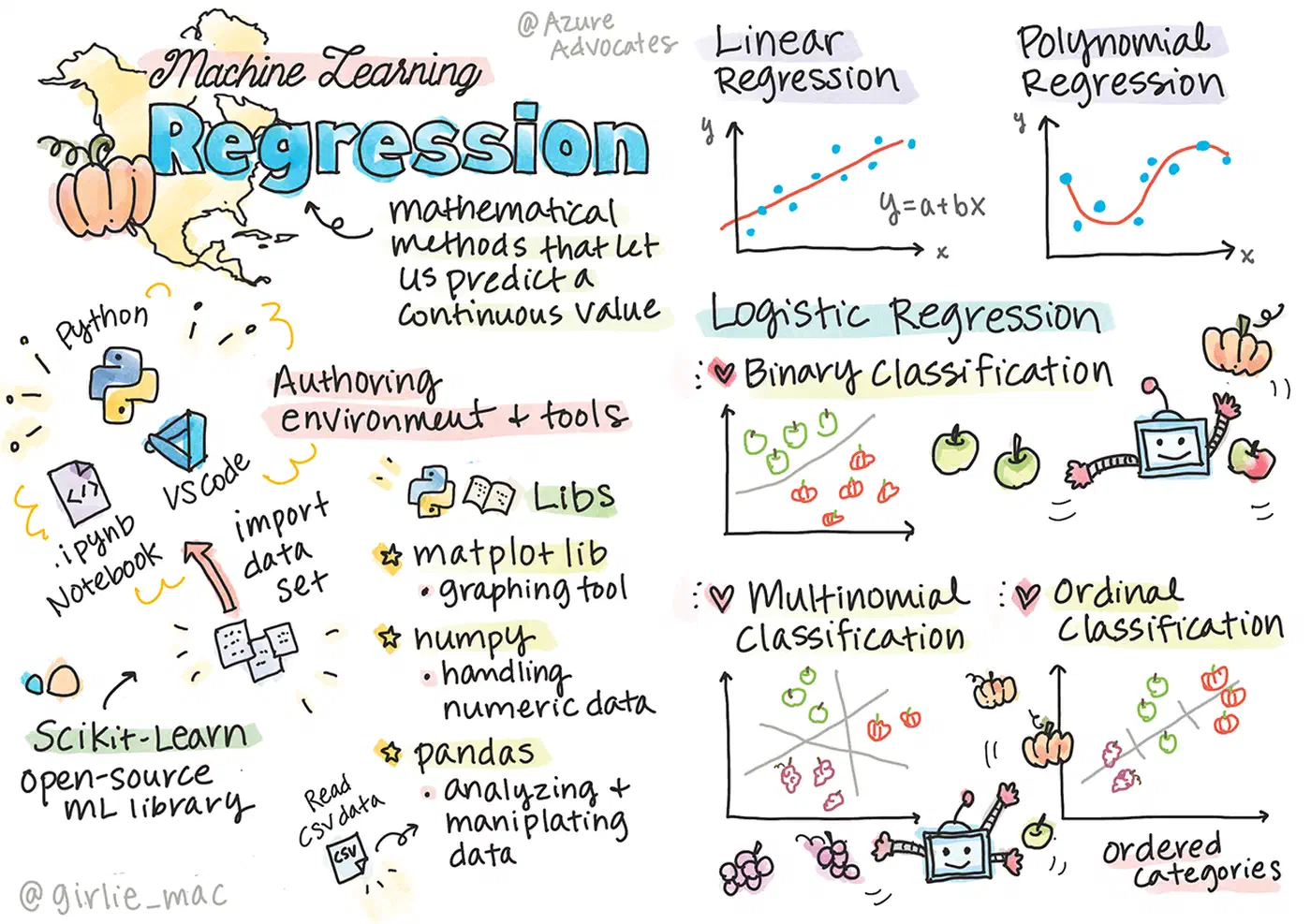
Odd data forces you to look at the columns instead of skimming a familiar example. You end up spending real time on the cleaning step, which is where most of the job lives anyway. Many lessons also ship an R version alongside the Python one.
Why the course leaves out deep learning
The project’s own README is blunt about the scope. The course teaches classic machine learning with Scikit-learn, and neural networks go to the separate AI for Beginners course. The narrow scope is what keeps the lessons workable.
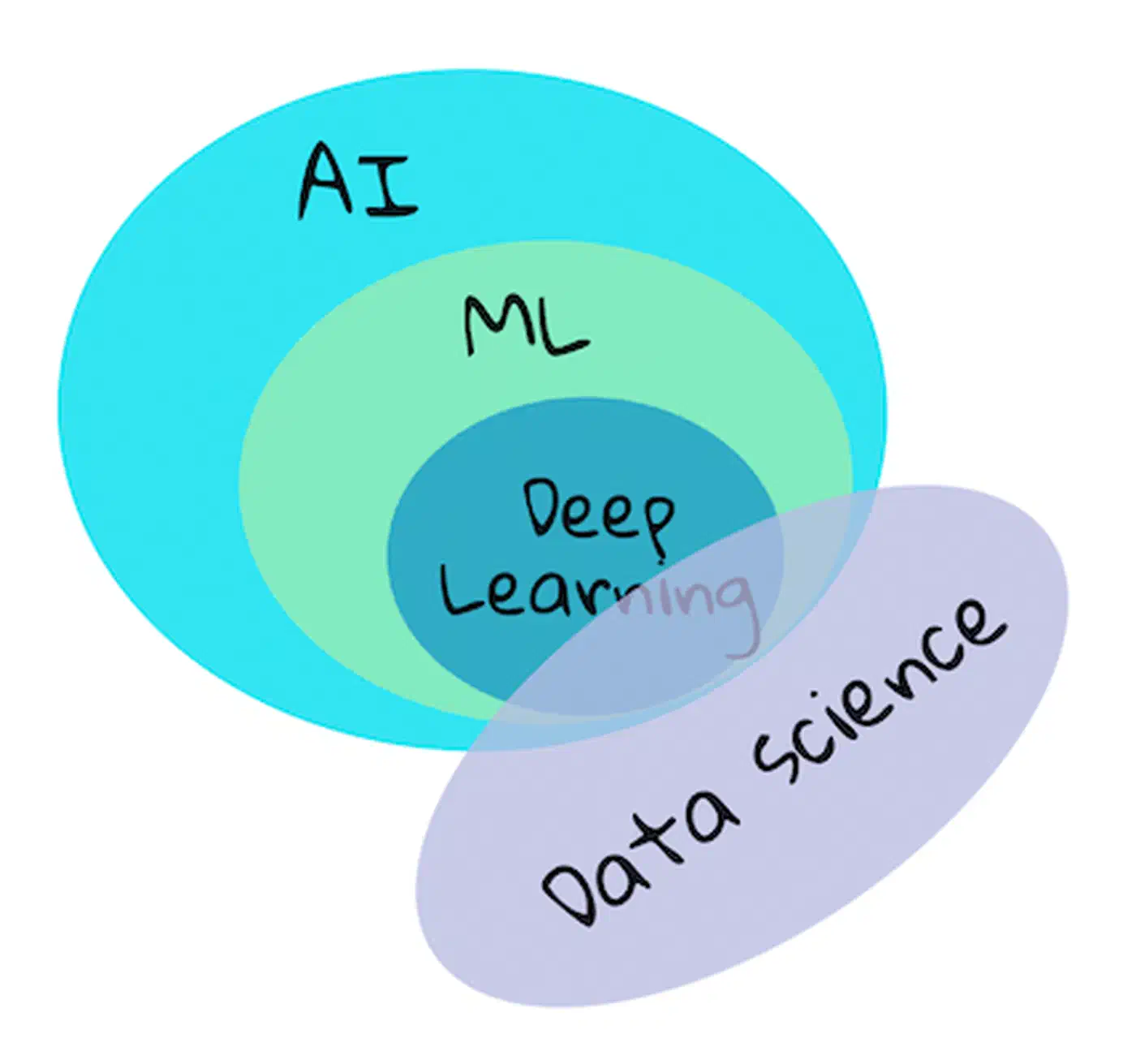
A classical model fits inside one lesson end to end. You load the data, clean it, fit a model, and score it. Then you read the coefficients to see what the model learned. Nothing hides behind a training loop you can’t inspect. You come out with a feel for the whole pipeline, which is the part a deep learning course skips.
Grinsztajn, Oyallon and Varoquaux tested tree-based models against deep learning methods across 45 tabular datasets for NeurIPS 2022. Tree-based models stayed ahead on medium-sized data of about 10,000 samples, and that ignores how much faster they train. Trees handle irregular, jagged patterns better, and junk columns hurt neural networks more than they hurt trees.
A gradient-boosted tree trains on a laptop in seconds, runs on a CPU, and can tell you which column moved the prediction. When someone asks why the model said no, you have an answer.
Still, the course is clear about where this stops. For images, audio, and language itself, deep learning won, and pointing you at another course is the right call. Language models keep changing, too. One new design writes a rough gist first and fills in the words later.
How the course is built
The lessons span 12 weeks and carry 52 quizzes of three questions each, one before every lesson and one after. The quiz app is hosted and live, so you don’t have to run anything locally to use it.
Take the pre-lesson quiz cold and you find out in two minutes whether the lesson has anything for you. For an experienced Python developer, that is the honest way to skip half the introduction section without guessing.
Everything else is notebooks plus data, so every technique arrives attached to a dataset. The project is MIT licensed, which means a team can fork it and adapt it for internal training without asking anyone. It also carries more than 50 translations, which bloats the clone. The README suggests a sparse checkout that skips those folders and cuts the download sharply.
The repository sits near 88,900 stars with about 7 open issues, and it was still picking up commits in 2026. A TROUBLESHOOTING.md covers kernel problems, clashing package versions, and the warnings newer seaborn and matplotlib throw. The notebooks run, with the odd deprecation warning you can ignore.
The entry bar is low but real. You need Python 3.8 or newer, Jupyter, and the usual data stack of Scikit-learn, pandas, numpy, matplotlib, and seaborn. No statistics course is required on paper. However, the regression section puts distributions, correlation, and error metrics in front of you. There’s no way around them.
How to work through this course
Clone the repository
The notebooks and their data are easier to handle locally. Use the sparse checkout from the README so you skip the translation folders.
Set up a Python data environment
Install Jupyter, Scikit-learn, pandas, numpy, matplotlib, and seaborn. Give them their own virtual environment so pinned versions don’t leak into your other projects.
Take the quiz before the lesson
Each lesson has a pre-lesson quiz. Do it first, because a good score tells you to skip ahead and a bad one tells you to slow down.
Work the early sections in order
Regression, then classification, then clustering. The order earns its keep, because each section reuses the data-cleaning habits from the one before it.
Run every notebook and change the data
Rerun a model on a different column, or a different train-test split. Watching a score move teaches more than reading about why it would.
Do the post-lesson quiz honestly
The quiz exists to find the parts you only thought you understood. Guessing at it defeats the point.
Apply one technique to your own data
After the regression section, stop and fit a model to something you actually care about. That is when it stops being homework.
Take the deep learning course afterwards, not instead
The project points at a separate curriculum for neural networks. Do that one second, because this one is the groundwork it assumes.
Who should take this instead of an AI course
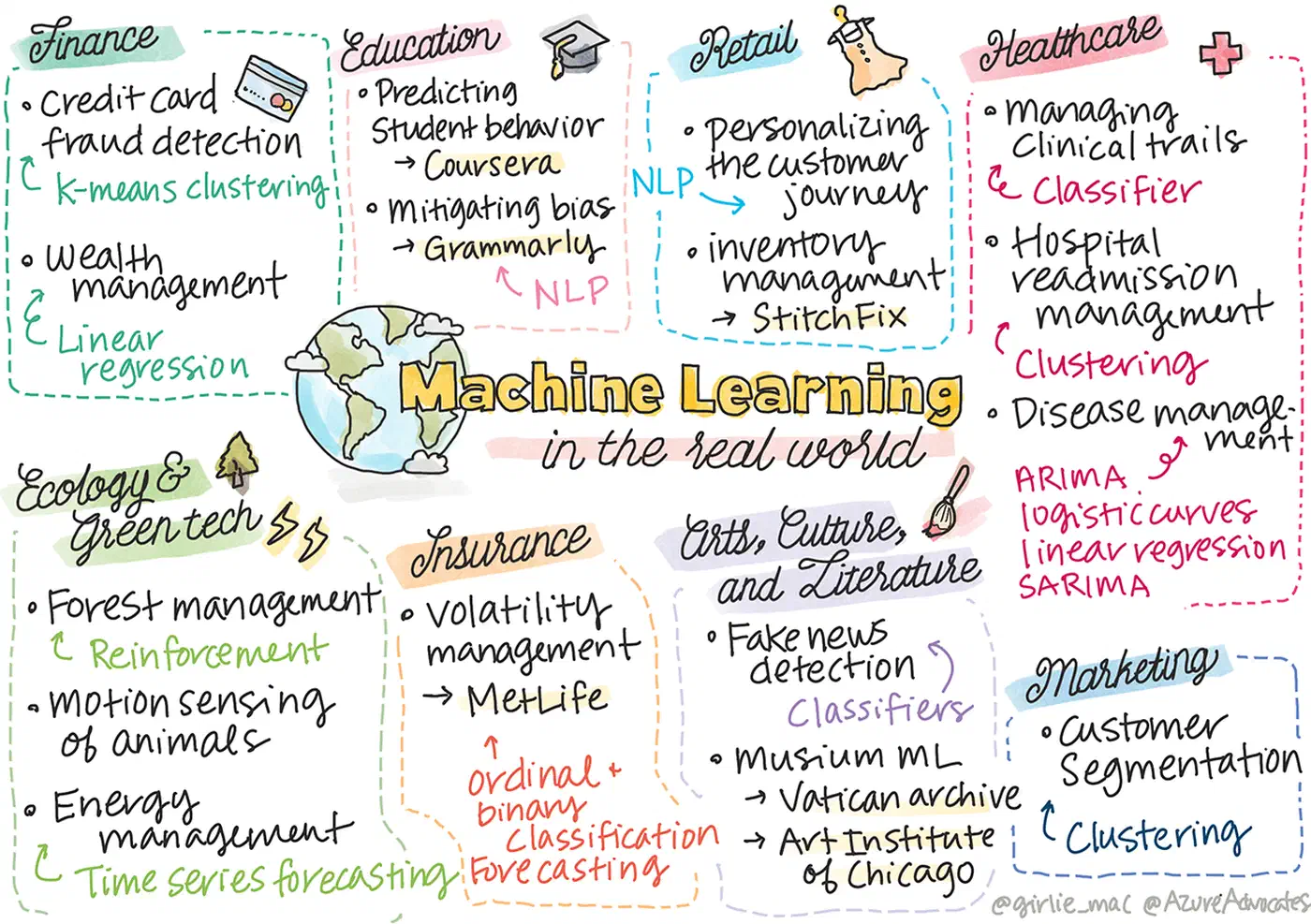
Take this course if your real problem is a number or a category. That’s what these techniques do, and a language model doesn’t do it better or cheaper. Take it too if you keep hitting model papers that assume the statistics and never teach them. It also fills the gap most AI engineering curricula leave open at the start.
| Course | Teaches | Take it when |
|---|---|---|
| ML for Beginners | Classic ML with Scikit-learn | Your problem is a number or a category |
| AI for Beginners | Neural networks, vision, deeper NLP | You work with images, audio, or language |
| Generative AI for Beginners | Building on top of language models | You are shipping a product on an LLM |
| AI Agents for Beginners | Agent patterns and frameworks | You want a model to take actions |
Go to Microsoft’s generative AI curriculum first only if you want to ship a product on a language model. If you have the time, take both, in this order. Without the groundwork, the second course lands as a pile of recipes you can’t debug.
A lot of what gets built on language models today would be cheaper, faster, and more accurate as a classifier trained in an afternoon. Telling those two cases apart is a skill, and this is the course that teaches it.