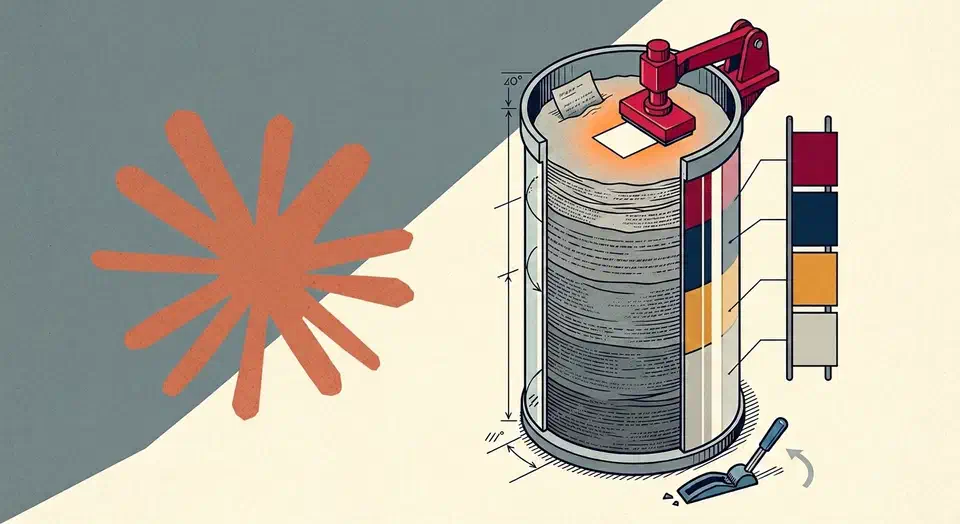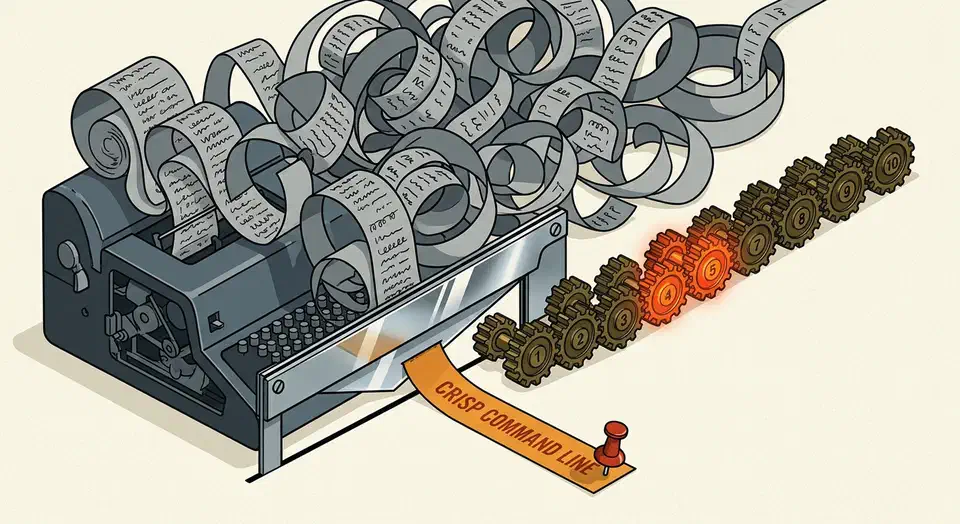
The most productive developers in 2026 don’t use a single AI tool. They run a three-tier stack. Tier 1 is inline completions for line-by-line speed. Tier 2 is parallel agent sprints that take on feature-sized work. Tier 3 is overnight batch agents that run 30 to 50 improvement cycles while you sleep. GitHub’s research shows AI pair programming makes developers 55% faster, but that gain comes mostly from Tier 1. The real win comes from running all three tiers at once, with clear rules about which task goes where.
Fine-Tuning Gemma 4 with Unsloth on a Single GPU: A Practical Guide
Google’s Gemma 4 family - spanning the 2.3B E2B, 4.5B E4B, 26B MoE, and 31B dense variants - delivers frontier-level open-weight performance across text, vision, and audio. But general-purpose models still struggle with narrow, domain-specific tasks where you need consistent output formats, specialized terminology, or knowledge that wasn’t in the pretraining data. Fine-tuning fixes this, and Unsloth (version 2026.4.2 as of this writing) makes it possible on a single consumer GPU through custom CUDA kernels that cut VRAM by up to 60% and double training speed compared to standard Hugging Face + PEFT.
Gemma 4 vs Qwen 3.5 vs Llama 4: Which Open Model Should You Actually Use? (2026)
For most developers in 2026, Gemma 4 31B is the best all-around open model. It ranks #3 on the LMArena leaderboard, scores 85.2% on MMLU Pro, and ships under Apache 2.0 with zero usage restrictions. Qwen 3.5 27B edges it on coding benchmarks - 72.4% on SWE-bench Verified versus Gemma 4’s strength in math reasoning - and its Omni variant offers real-time speech output that no other open model matches. Llama 4 Maverick (400B MoE) wins on raw scale but requires datacenter hardware and carries Meta’s restrictive 700M MAU license. Pick Gemma 4 for the best quality-to-size ratio under a true open-source license, Qwen 3.5 for coding-heavy workflows, and Llama 4 only when you need the largest available open model and can absorb the legal overhead.
Local Meeting Transcriber: Whisper, Ollama, Structured Notes
You can build a fully local meeting transcriber on Linux. Capture system audio with PipeWire. Transcribe with Faster-Whisper on your GPU. Pipe the transcript to a local LLM through Ollama for structured summaries with names, decisions, and action items. The pipeline runs on 16GB of RAM and a mid-range NVIDIA GPU, and produces notes within seconds of the call ending. No data leaves your network.
Commercial services like Otter.ai and Fireflies.ai route your audio through their servers. If your meetings cover sensitive topics like product plans, HR, or legal reviews, that’s a non-starter. A local pipeline gives you the same structured output, and nothing leaves your building.
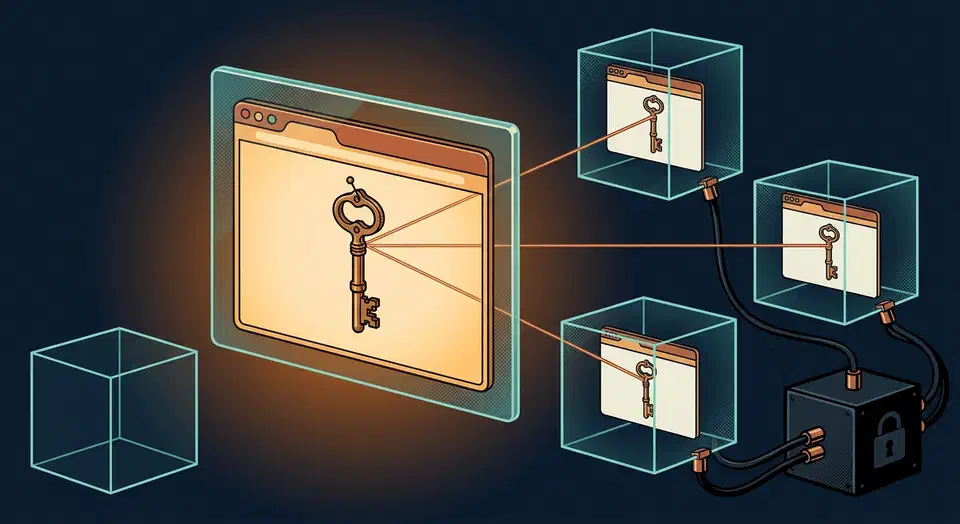
Route Ollama, vLLM, OpenAI through one LiteLLM API
You can unify access to Ollama, vLLM, cloud providers like OpenAI, Anthropic, and Google, plus custom model servers behind one OpenAI-compatible endpoint using LiteLLM Proxy
. LiteLLM is a reverse proxy. It maps the standard /v1/chat/completions request to each provider’s native API. From one YAML file it handles auth, model routing, load balancing, fallbacks, rate limits, and spend tracking. Your app calls one endpoint with one key, and LiteLLM picks the right backend. You can swap models, add providers, or run A/B tests without touching app code.
Running Multiple AI Coding Agents in Parallel: Patterns That Actually Work
Three focused AI coding agents consistently outperform one generalist agent working three times as long. That finding, presented by Addy Osmani at O’Reilly AI CodeCon in March 2026, captures the central promise - and central difficulty - of multi-agent development. The throughput gains are real, but they only materialize when you solve the coordination problem. Without file isolation, iteration caps, and review gates, parallel agents produce a mess of merge conflicts and duplicated work that takes longer to untangle than doing everything sequentially.
Botmonster Tech