 Botmonster Tech
Gemini 4 Neon almost beats Opus 5.5 at coding

Gemini 4 Neon vs Opus 5.5 is nearly a tie for coding. Neon, Google’s new mid-tier model, scores 66.0 on the Models Engineering Index to Opus’s 63.2. Neon costs just over half as much per benchmark run and streams about 127 tokens per second. Yet coders who use both slightly favor Opus, mostly because its Claude Code tool beats Google’s.
Key Takeaways
- Gemini 4 Neon is Google’s new middle model, and it codes almost as well as Opus 5.5.
- It costs $3 in and $15 out per million tokens, below Opus 5.5’s $4 and $20.
- On one coding index it beats Opus 5.5 and trails only Fable 5.2 and GPT 6.2 Astra.
- People who use both every day say Opus 5.5 is still a little better.
- Most of Claude’s lead comes from the Claude Code harness.
What is Gemini 4 Neon?
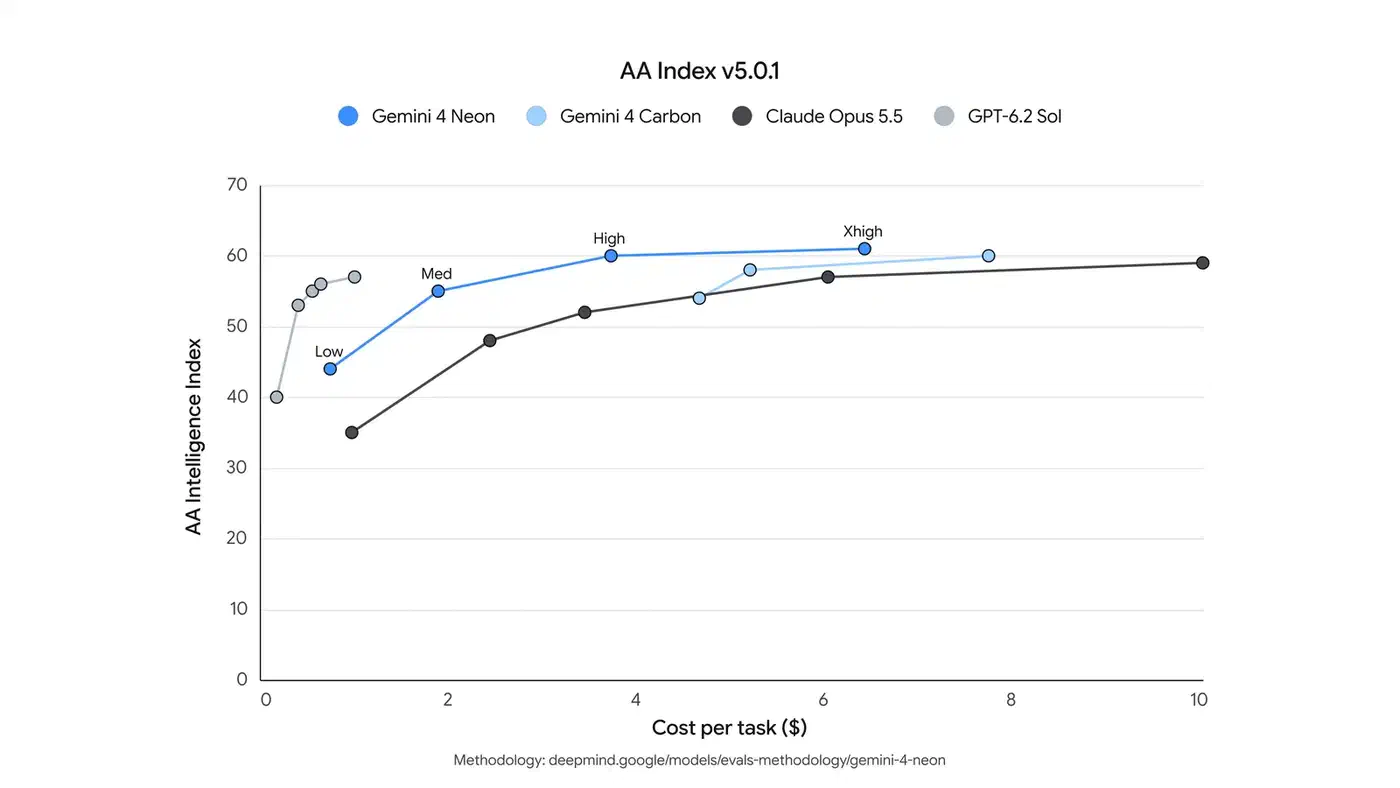
Gemini 4 Neon is the middle tier of Google DeepMind’s Gemini 4 family. Below it, Gemini 4 Hydrogen handles fast everyday work, and above it, Gemini 4 Carbon takes the hardest long-running projects. Neon itself is aimed at complex coding and AI agents for businesses. It has four thinking levels, which set how much it reasons before it answers: high is the default and xhigh is the top.
The price is $3 per million input tokens and $15 per million output tokens. Cached input drops to $0.15, a 95% discount, and the context window holds 1 million tokens.
Neon runs in the paid Gemini API in AI Studio, in Android Studio and in the Gemini app for AI Pro and Ultra subscribers. Paid Pro and Ultra users also get it in Google’s Antigravity coding tool, where it is the default model. Antigravity comes as a desktop app, IDE extensions and a terminal CLI called agy, which replaced Gemini CLI.
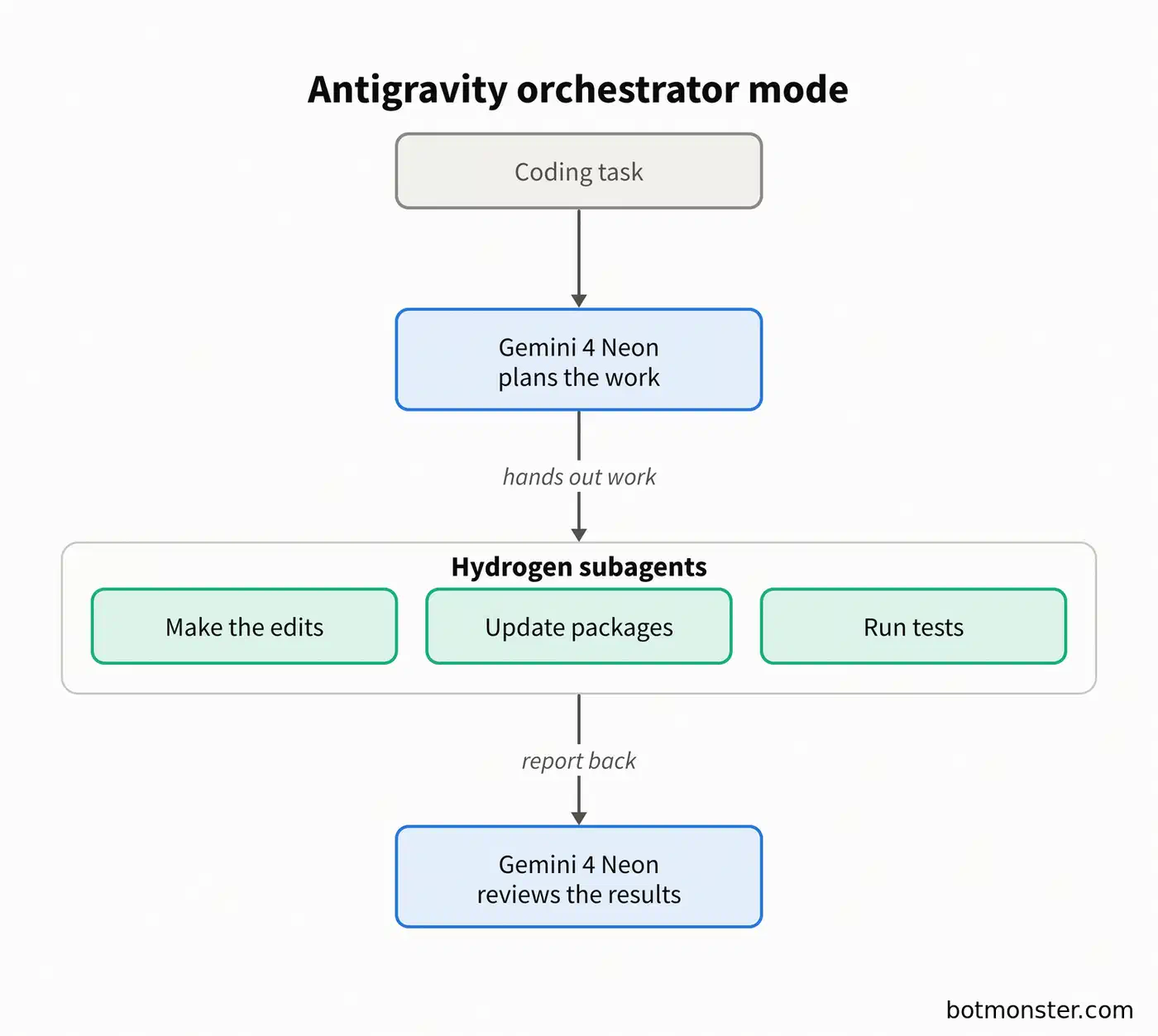
In Orchestrator mode, Neon plans and reviews while cheaper Hydrogen subagents make the edits, update packages and run tests. In Antigravity, a /swarm command splits one task across many parallel agents.
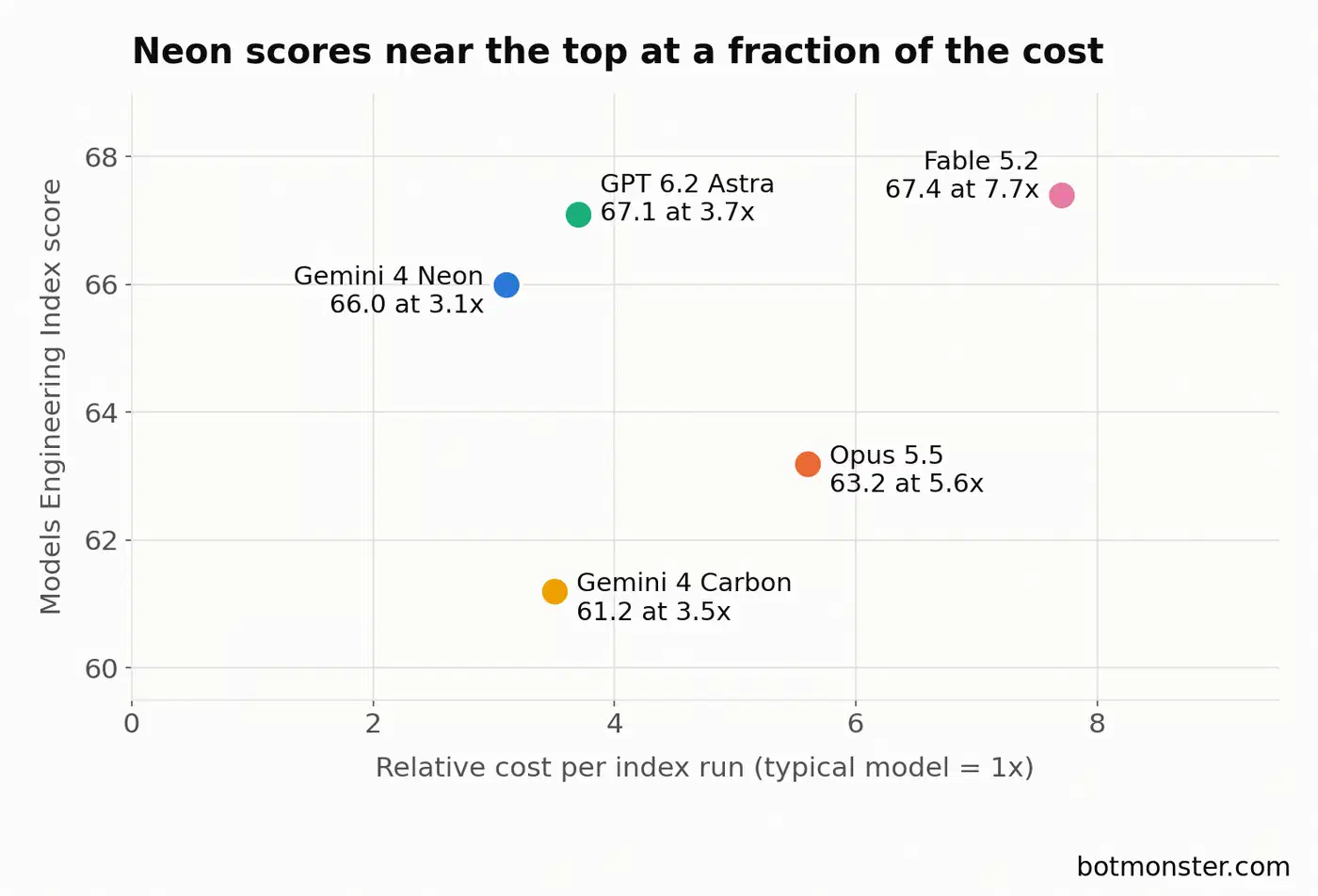
Gemini 4 Neon vs Opus 5.5 on coding benchmarks
The Models Engineering Index combines 17 coding benchmarks into one score, scaled so the average model lands at 50. Cost and token use are scaled against a typical model too: that model is 1x, so 2x means twice what it spends.
| Model | Index | Relative cost | Relative tokens |
|---|---|---|---|
| Fable 5.2 | 67.4 | 7.7x | 1.4x |
| GPT 6.2 Astra | 67.1 | 3.7x | 0.4x |
| Gemini 4 Neon | 66.0 | 3.1x | 0.84x |
| Opus 5.5 | 63.2 | 5.6x | 1.5x |
| Gemini 4 Carbon | 61.2 | 3.5x | 1x |
The index has no error bars, so its gap over Opus 5.5 is too small to call a clear win. The board also moves fast: Neon briefly ranked first after launch and had slipped to third within a week. As with most coding leaderboards, the ranking depends on which tests go in.
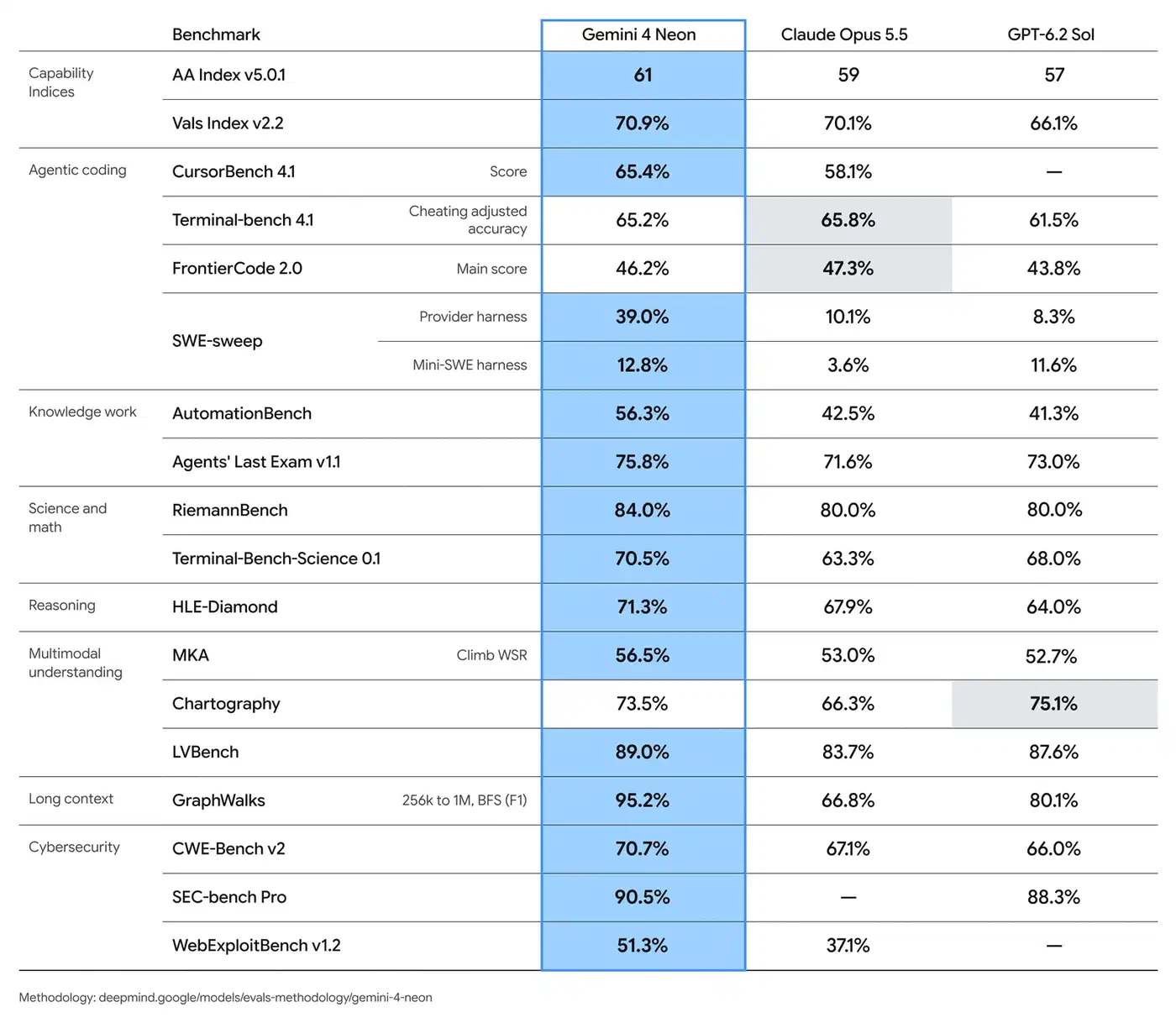
Neon ranks first on the Artificial Analysis Coding Agent Index at 58.6, scores 65.2% on Terminal-Bench 4.1 and reaches 46.2% on FrontierCode 2.0 at its default high setting. Google’s benchmark table puts Opus 5.5 next to Neon, and Opus wins both of those last two tests, at 65.8% and 47.3%. Fable 5.2 doesn’t appear in Google’s comparison.
A third view comes from Agent Duel, a leaderboard where users vote on agents built on OpenCode. Its author modeled how Neon would rank, assuming Carbon-level quality at Neon’s measured 127 tokens per second, against 46 for Carbon. The projection gives Neon an Elo of 1,066 against 1,078 for Opus 5.5, so Neon would win 48.3% of head-to-head matches. The 90% range runs from 94 points behind to 68 ahead, which makes it a coin flip. In that model, speed counts for about as much as which model you pick.
Gemini 4 Neon price against Opus 5.5 and Fable 5.2
| Model | Input | Output | Index cost | Index tokens |
|---|---|---|---|---|
| Gemini 4 Neon | $3 | $15 | 3.1x | 0.84x |
| Opus 5.5 | $4 | $20 | 5.6x | 1.5x |
| Fable 5.2 | $8 | $40 | 7.7x | 1.4x |
Per token, Neon is only 25% cheaper than Opus 5.5. Neon writes far fewer tokens to finish each task, though, so a full benchmark run with Neon costs about 55% of the Opus bill. Fable 5.2 scores 4.2 index points higher than Opus, but its per-token price is double.
What Reddit coders say after using both
When Opus 5.5 launched, Reddit warmed to it because it talks like a person and stretches usage limits further. Two months on, Neon is the first model to test that goodwill. The biggest Reddit discussion of the two models was a thread on r/ClaudeCode asking whether the hype on X, which said Neon beats Opus 5.5, was earned.
Another answer came from someone with a week of daily Neon use. In their codebases Neon beat Opus: it was faster, planned almost at Fable’s level and executed well. Its subagents were the weak spot. Meanwhile, a separate post the same week argued that Opus 5.5 still leads two months after launch.
The top answer landed between those two camps:
Neon is truly a special model, it reminded me of when Opus 5.5 released, it’s much better than the rest of the Gemini 4 series even if benchmarks are close (Carbon). It is not at Opus 5.5 level yet but close. With that said, the harness is what truly limits these models, Antigravity is a year behind Claude Code, until then Claude top models will always be better for work stuff even if a new Gemini model beats them in benchmarks.
Antigravity vs Claude Code decides most of the gap
A coding model runs inside a harness, the tool that feeds it files, runs commands and manages its sessions. On SWE-sweep, Neon scores 12.8% in a minimal harness and 39.0% inside Antigravity, so the harness alone triples the model’s score.
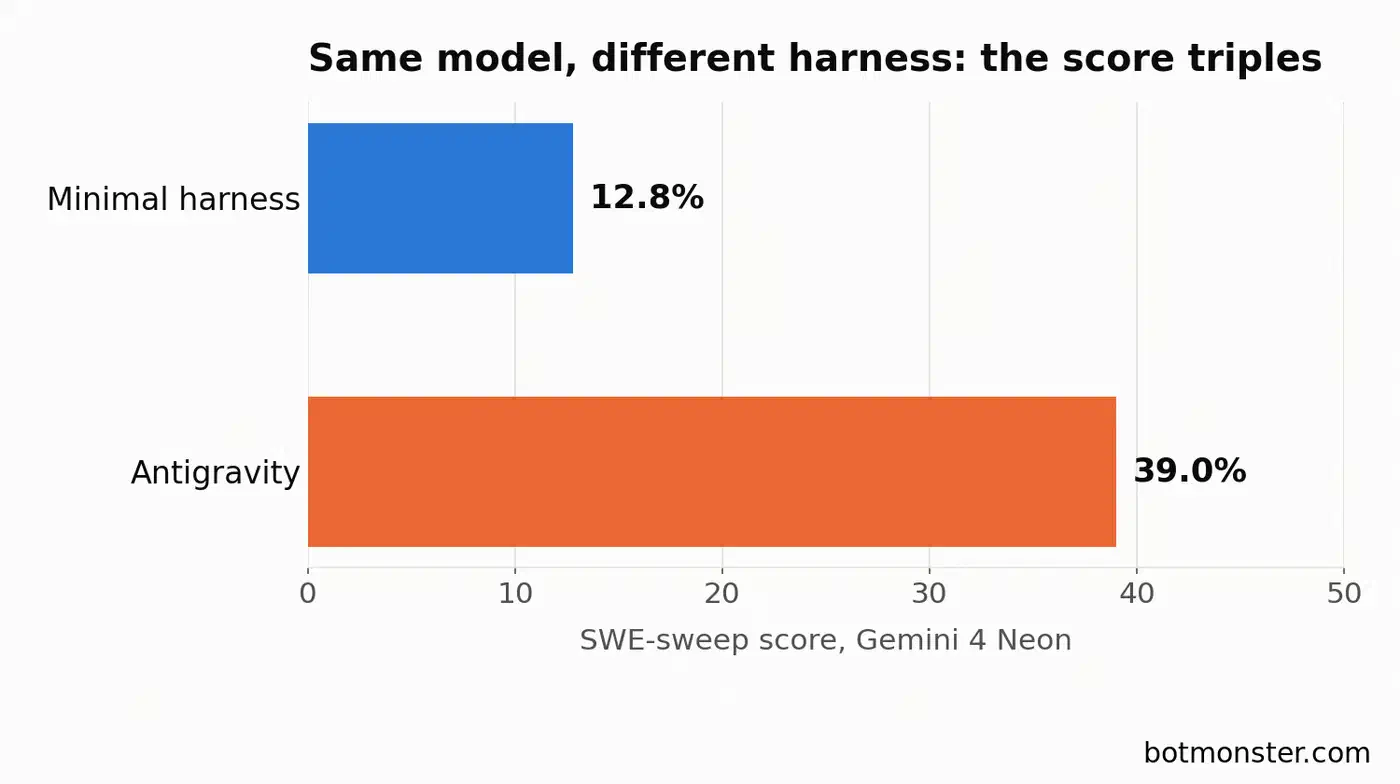
Antigravity is still behind Claude Code on daily features, though. Claude Code runs background sessions and creates git worktrees on its own, so parallel tasks don’t trip over each other.
| Feature | Claude Code | Antigravity |
|---|---|---|
| Background sessions | ✅ | |
| Automatic git worktrees | ✅ | |
| Parallel subagents | ✅ | ✅ |
| Terminal CLI | ✅ | ✅ |
| Default model | Opus 5.5 | Gemini 4 Neon |
Some users drive the agy CLI from inside Claude Code, which puts Neon to work under Claude’s harness.
Which model should you code with?
- Gemini 4 Neon suits price-sensitive or speed-bound work. You get near-Opus quality at about half the task cost and close to three times Carbon’s speed.
- Opus 5.5 is the pick for daily agent work in an existing Claude Code setup, mostly because of the harness.
- Fable 5.2 is for the hardest problems when budget is no object. It tops the index at 7.7 times a typical model’s cost.
If your code can’t leave your machine, none of these three fit, because using any of them sends your code to the company that runs it. The choice then moves to open models you can download and run yourself, such as Inkling 2 Mini and Qwen3.8-27B. Z.ai’s GLM-5.4 doesn’t help here yet, because Z.ai has not released its weights, the model files you would need to run it.
When Antigravity ships background sessions and automatic worktrees, run the comparison again, because the model side is already close.