 Botmonster Tech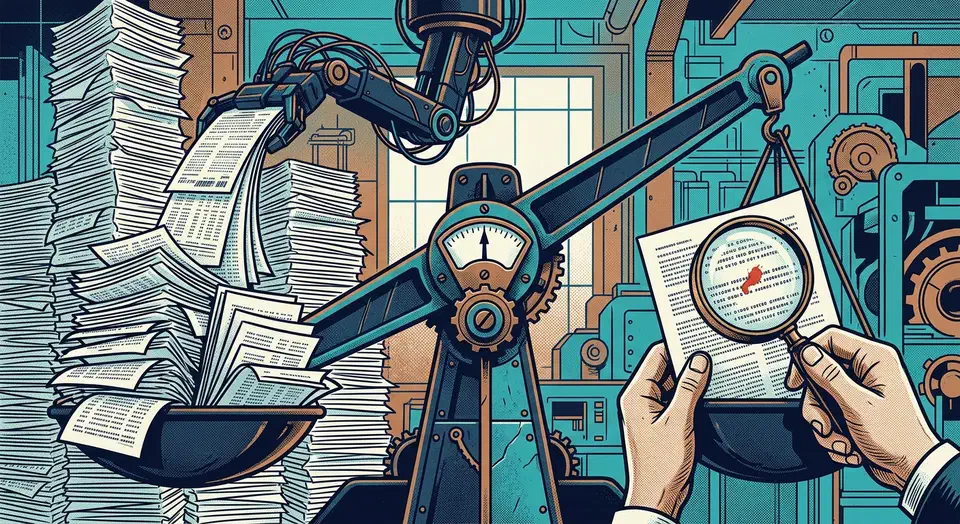
AI writes about 41% of all committed code in 2026, and some teams report well above 50%. AI review tools have cut PR cycle times by as much as 59%. Yet when Sonar asked 1,149 developers for their 2026 State of Code report , 47% ranked “reviewing and validating AI-generated code for quality and security” the top skill in the AI era, above prompting at 42%. The paradox: the more code AI writes, the more vital human review becomes.
Ai
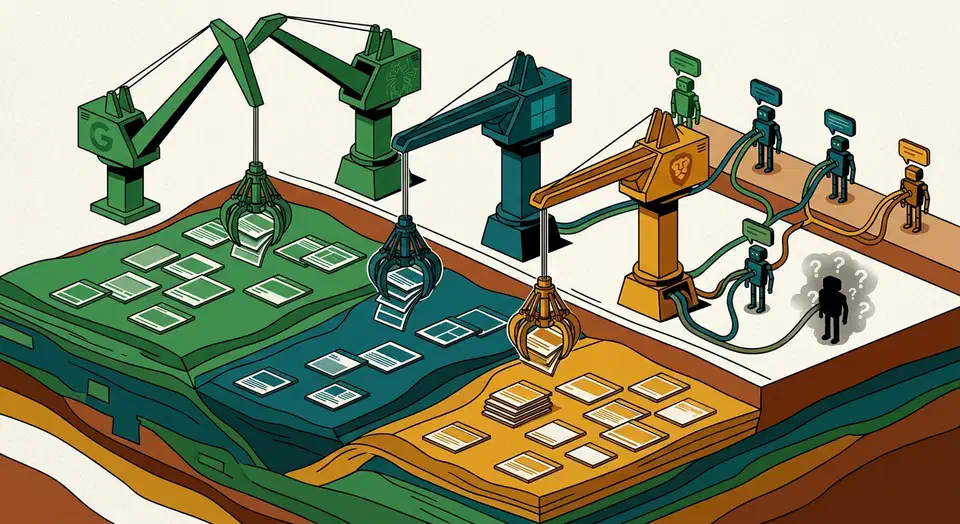
AI Web Search Backends: Who Owns, Who Rents
Only Google Gemini and Microsoft Copilot run on a search index their parent company crawls itself. Anthropic Claude rents Brave Search
, Mistral Le Chat rents Brave too, OpenAI ChatGPT rents Bing
plus its own crawler, and Meta AI rents both. The key clue: Claude’s web_search tool exposes a literal BraveSearchParams field, and citation overlap with Brave runs about 86.7%.
Key Takeaways
- Only Google and Microsoft own a web-scale search index.
- Claude and Mistral both reportedly run on the Brave Search API.
- ChatGPT uses Bing, OpenAI’s own crawler, and publisher deals.
- IndexNow helps Bing-backed AI products, not Brave or Google.
- Brave now acts as AI’s third search pole beside Google and Bing.
Only Five Companies Actually Crawl the Open Web
Before mapping each AI lab to its backend, the key constraint is simple: only five operators crawl the open web at scale. Everything else sold as a “search engine” resells one of those indexes. The five are Google, Microsoft Bing, Yandex, Baidu, and Brave Search, with Mojeek as a much smaller niche sixth.

Claude Code vs COBOL: The AI Migration Controversy That Crashed IBM's Stock 13%
On February 23, 2026, Anthropic published a blog post titled “How AI Helps Break the Cost Barrier to COBOL Modernization” . It shipped with a Code Modernization Playbook . By market close, IBM’s stock had fallen 13.2% to $223.35 per share. That was IBM’s worst single day since October 2000. More than $31 billion in market cap vanished. Accenture fell 6.5%. Cognizant dropped 6%. One blog post had shaken the whole legacy migration sector.

DeepSeek V4 Tech Report: 3 Tricks That Cut Compute 73%
DeepSeek V4 is a 1.6 trillion parameter open-weight Mixture-of-Experts model. It reads 1M tokens at once. It uses 27% of V3.2’s inference FLOPs and 10% of its KV cache. The DeepSeek V4 tech report credits three moves: hybrid CSA plus HCA attention, Manifold-Constrained Hyper-Connections, and the Muon optimizer in place of AdamW.
Key Takeaways
- DeepSeek V4 is a free, open-weight AI that goes toe-to-toe with the top closed models from OpenAI, Anthropic, and Google.
- It reads 1 million tokens in one prompt, enough for several full books or a long agent run without losing track.
- It runs on roughly a quarter of the compute its previous version needed, making long-context AI affordable to operate.
- A smaller team built it without access to top NVIDIA chips, proving clever engineering can rival raw GPU spend.
- It scored a perfect 120 out of 120 on the 2025 Putnam math competition and beats Google’s Gemini 3.1 Pro at 1M-token recall.
DeepSeek V4 at a Glance
The official launch announcement on April 24, 2026 framed the release as “the era of cost-effective 1M context length.” It shipped two checkpoints under the MIT license. DeepSeek-V4-Pro runs at 1.6T total and 49B active parameters. DeepSeek-V4-Flash runs at 284B total and 13B active. Both models read 1M tokens at once. Both ship as open weights on Hugging Face . The routed expert weights use FP4 math, and most other weights use FP8.
GPT 5.5 Reddit Reception: Goblins and the Cost Backlash
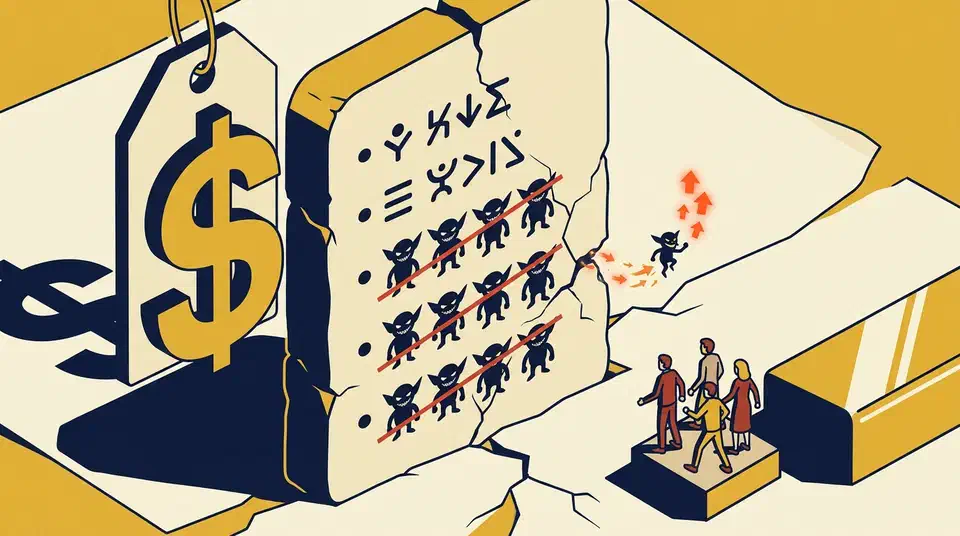
GPT-5.5 launched on April 23, 2026, and two weeks of Reddit reception split along three fault lines that no aggregator roundup captured cleanly. A leaked Codex system prompt forbidding “goblins, gremlins, raccoons, trolls, ogres, pigeons” went viral on r/ChatGPT (856 votes) and r/OpenAI (1.2K votes) before OpenAI’s own post-mortem dropped. Doubled output pricing at $30 per million tokens drew the loudest dissent on r/OpenAI’s launch thread , and a measurable 5.4 holdout faction emerged around hallucination regressions on factual recall workflows. This post is a Reddit-only community-reception snapshot bounded to the first 14 days.
The 80% Coverage Trap: Why AI-Generated Tests Create a False Sense of Security
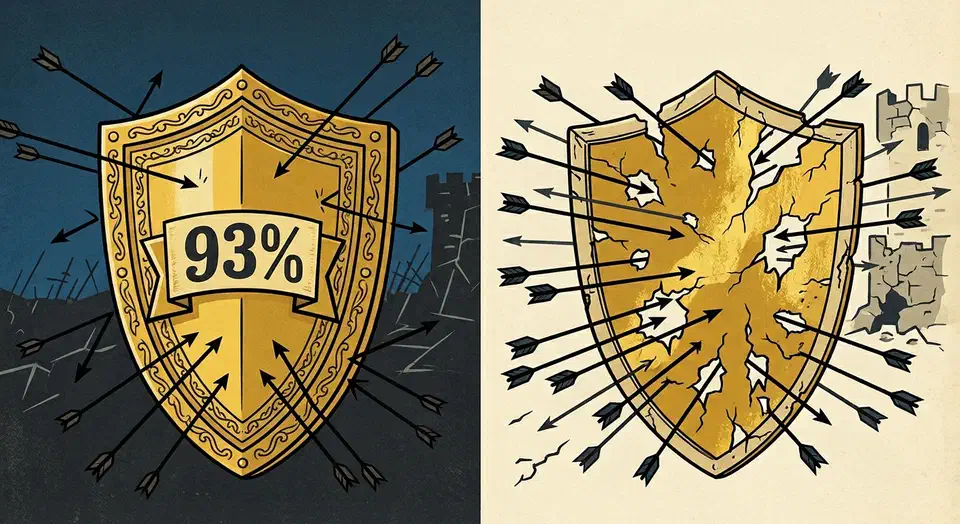
AI test generators make it easy to hit 80% or even 90%+ line coverage. Point GitHub Copilot
at a codebase, use the @Test directive, and watch it write hundreds of test methods by itself. The number looks great on a dashboard. But line coverage only measures execution, not detection. A test suite can run every line of your code while checking nothing about whether that code is correct. In one 2026 experiment, an AI-built suite scored 93.1% line coverage but only 58.6% on mutation testing. Over a third of realistic bugs slipped through undetected, with CI green across the board.