 Botmonster Tech
The hall effect keyboards worth buying for gaming in 2026

The best hall effect keyboard for competitive gaming in 2026 is the Wooting 80HE. It pairs mature Wootility firmware with a 0.1mm actuation floor and native 8000Hz polling. FPS players who want the lowest latency and built-in Snap Tap should look at the Razer Huntsman V3 Pro TKL 8KHz. On a budget, the Drunkdeer G65 gives you real Rapid Trigger under $90. For build quality and open-source firmware, the Keychron Q1 HE has a gasket-mounted aluminum body, Keychron Launcher, and QMK support.
Hall effect keyboards went from a $200 premium feature to a sub-$60 commodity in under two years. The sensing tech itself no longer sets boards apart. What counts now is firmware maturity, polling rate, configurator software, and Linux support. This guide covers what the tech does, which boards lead in each use case, how to set up Rapid Trigger, and where tournament rules stand in 2026.
What hall effect and Rapid Trigger do
Standard mechanical switches are binary. A metal leaf makes contact, and the key registers. Hall effect switches drop the leaf and put a magnet under the keycap, with a Hall sensor on the PCB. The sensor reads the magnetic field as a number. That gives sub-millimeter precision across the usual 4.0mm of travel. The board always knows how far down each key sits.
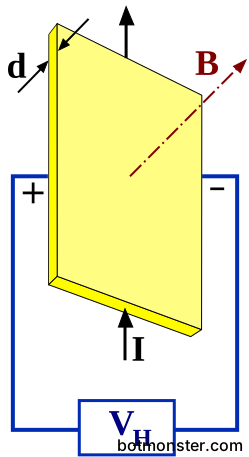
This analog sensing is what makes Rapid Trigger work. On a standard switch, the actuation point is fixed. Press past 2.0mm and the key fires. Release back to 1.6mm and it resets. Rapid Trigger throws out those fixed points. The key now reacts the moment you reverse direction by a set distance, called the “sensitivity delta”. Most boards let you set it from 0.1mm to 0.5mm. Press a key down 2mm, then lift just 0.2mm, and it stops firing at once. Press back down 0.2mm and it fires again. FPS players can counter-strafe faster than any mechanical switch allows, because the key tracks direction changes instead of waiting to cross a reset point.
Continuous Rapid Trigger (CRT) goes further. Standard Rapid Trigger needs the key to shut off fully before it can fire again on the next press. CRT fires on every direction change with no full release, which is what tap-strafe moves in games like Apex Legends depend on. The tradeoff: with a delta under 0.3mm, CRT can throw ghost double-inputs in games that punish fast toggling.
You can also set a different depth for each key. A common FPS setup puts WASD at 1.0-1.2mm for fast movement. Shift and Tab sit at 2.0mm so resting fingers don’t misfire, and the spacebar sits at 1.5mm. Mechanical switches simply cannot do this.
Dynamic Keystroke (DKS) comes from Razer and SteelSeries. It binds up to four outputs to one key at different press depths. Half-press W to walk and full-press to sprint, which helps in tactical shooters like Escape from Tarkov. These boards can also send gamepad-style analog values over XInput, so racing sims and flight games work without a separate controller.
Razer’s Huntsman V3 Pro uses optical switches, not magnets. One breaks a beam of light, the other reads a magnetic field. For gaming the result is the same: analog position tracking with Rapid Trigger. When people say “hall effect keyboard” in 2026, they mean any analog keyboard with Rapid Trigger, whatever the sensor. The split between TMR and hall sensors only shows up once you read the spec sheet.
Why hall effect went mainstream in 2026
Two years ago, Wooting owned this market almost alone. The Wooting 60HE was backordered for months, and the only other choices were niche Chinese boards with shaky firmware. That changed fast.
CES 2026 brought over a dozen new hall effect boards. Some cost under $60, from MonsGeek, Attack Shark, and Aula. The shift began when Gateron’s Magnetic Jade and KS-20 switches turned into cheap stock parts. Gateron pushed the same volume play into slim KS-33 low-profile switches a year later. Kailh’s magnets got better too, and its lineup now holds a steady 50gf force across batches, which fixed the quality problems that hurt early budget boards.
Wooting’s earliest Rapid Trigger patent claims ran out, and open-source versions showed up in QMK community forks and in Keychron’s Launcher, so any brand could ship the feature.
The rules helped as well. Valve chose to allow Rapid Trigger in official CS2 matchmaking after the heated SOCD fight in late 2024, which made the feature normal for tournament play. Riot then set out Valorant’s stance in the 2026 VCT season: Rapid Trigger is fine, some SOCD setups are not. Those calls removed the biggest barrier to adoption. Players no longer worry that a keyboard will get them banned.
The Wooting Two HE cost $200 in 2023, and in 2026 the $79 Drunkdeer A75 Pro matches its feature list. Competition among the top brands has moved to build quality, polling rate, and software.
8000Hz polling is the new flagship baseline, up from 1000Hz in 2024. Razer’s HyperPolling dongle and Wooting’s USB-C 8K firmware drove that jump. On paper it cuts input-to-screen lag by 0.5-1ms against a 1000Hz board. Wireless works now too: the Keychron Q1 HE and Lemokey P1 HE ship tri-mode radios and keep Rapid Trigger live over wireless.
Faster polling only pays off on a screen that is set up right. A new OLED can look oversaturated or tinted at the edges until you work through AW3926QW picture fixes such as firmware and HDR mode.
Top picks by use case
Here is a comparison of the seven boards covered in this roundup:
| Board | Switch | Actuation Range | Polling Rate | Wireless | Linux Support | Street Price |
|---|---|---|---|---|---|---|
| Wooting 80HE | Lekker L60 v2 | 0.1-4.0mm | 8000Hz | No | Excellent (WebHID) | $200 |
| Razer Huntsman V3 Pro TKL 8K | Analog Optical Gen 2 | 0.1-4.0mm | 8000Hz | No | Partial (OpenRazer) | $220 |
| Drunkdeer G65 | Gateron Magnetic | 0.2-3.8mm | 1000Hz | No | Good (Web app) | $80-90 |
| Keychron Q1 HE | Gateron Double-Rail | 0.2-3.8mm | 1000Hz wireless | Yes (tri-mode) | Good (WebHID) | $160-240 |
| SteelSeries Apex Pro TKL Gen 3 | OmniPoint 3.0 | 0.1-4.0mm | 8000Hz | Optional | Poor (Windows only) | $190-220 |
| Lemokey P1 HE | Gateron Double-Rail | 0.2-3.8mm | 1000Hz wireless | Yes (tri-mode) | Good (WebHID) | $169 |
| Wooting 60HE v2 | Lekker Tikken | 0.1-4.0mm | 8000Hz | No | Excellent (WebHID) | $175-240 |
Wooting 80HE: best overall ($200)
The Wootility web app runs in Chrome and Firefox over WebHID, with no driver to install. Firmware updates work on Linux with no Windows VM, and the board holds four profiles onboard. Tachyon Mode drops RGB work to hold a steady 0.125ms input cycle at 8000Hz. The 80% layout keeps function and arrow keys while saving desk space. End-to-end latency measures near 2.5ms, the lowest of any keyboard tested in 2026.
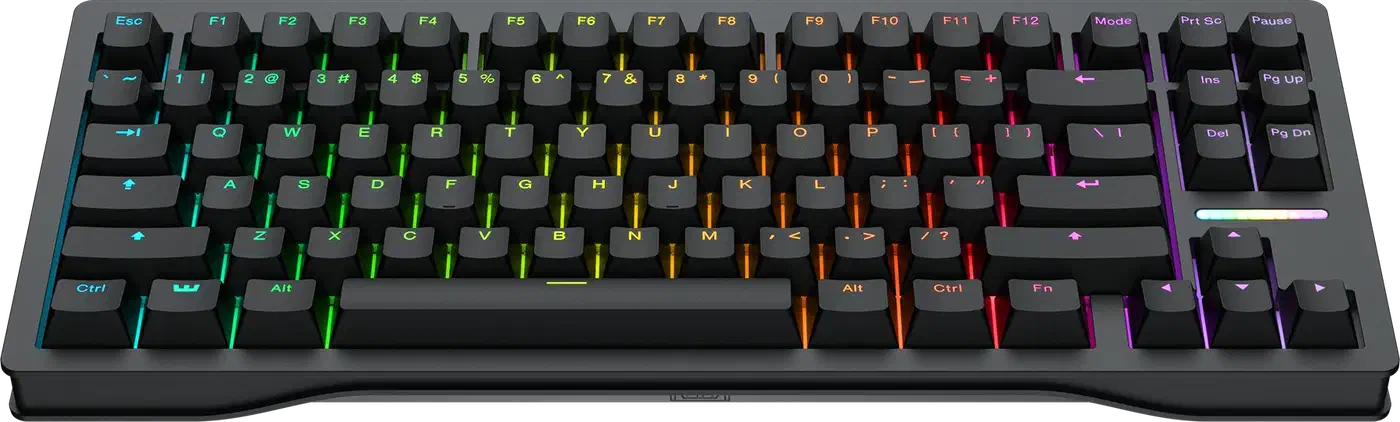
Razer Huntsman V3 Pro TKL 8KHz: best for FPS ($220)
Razer’s second-gen analog optical switches run with HyperPolling at a native 8000Hz. Snap Tap is built in, and FN + Left Shift toggles it. It links the A and D keys, so pressing one drops the other. That is exactly what counter-strafing needs. Razer Synapse 4 also keeps a Rapid Trigger profile per game and swaps them as you switch windows. Synapse is Windows only, but OpenRazer 3.x adds partial Rapid Trigger tuning through razer-cli on Linux. Measured Huntsman V3 HE latency sits at 0.60 ms, a touch behind Razer’s plain optical line, the price of adjustable actuation.
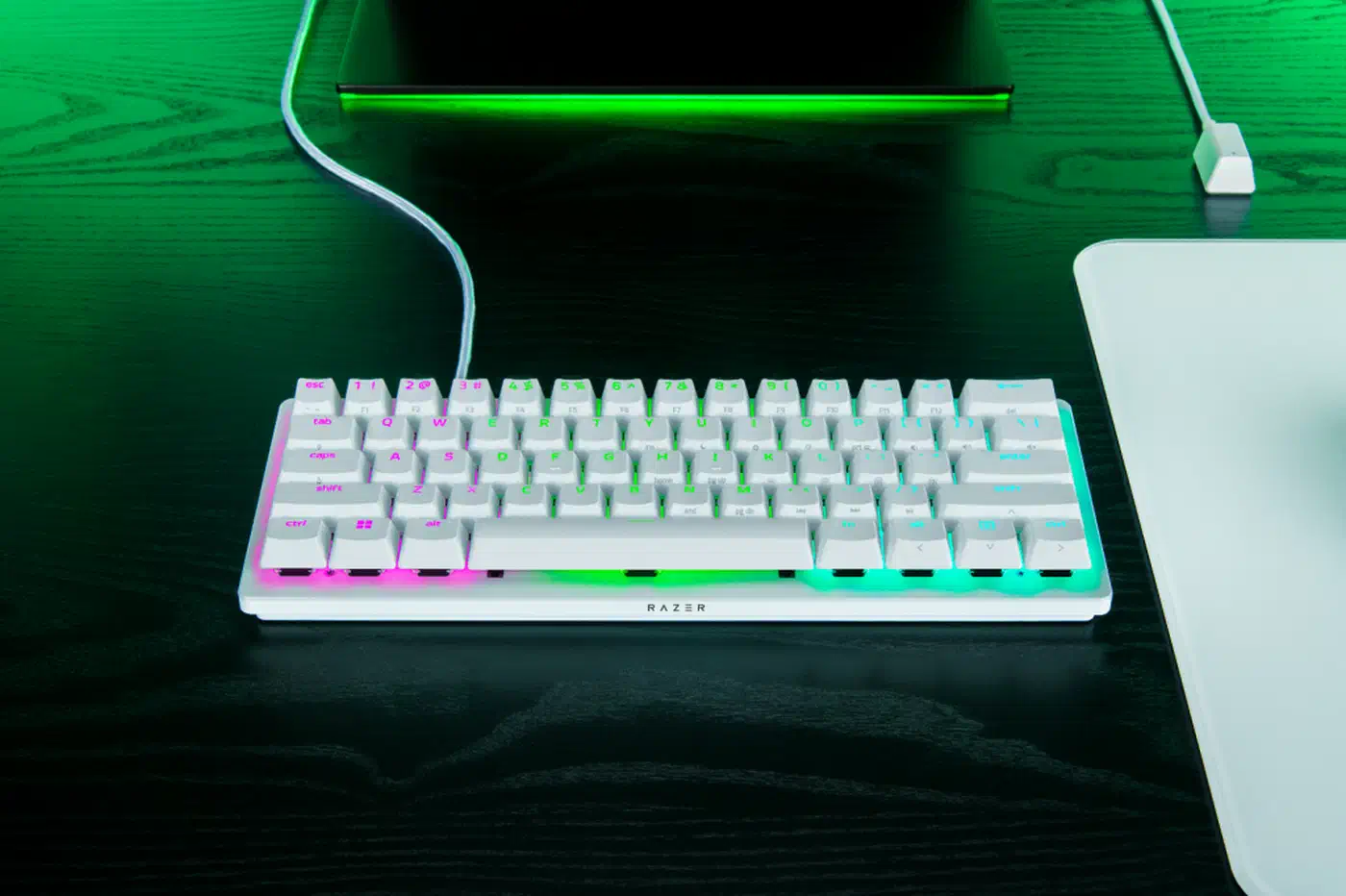
Drunkdeer G65: best budget ($80-90)
Gateron white magnetic switches give you Rapid Trigger for a fraction of the price. The 0.2mm floor sits a bit higher than premium boards, but you will not feel it. The web app works on Linux through Chrome. The trade-offs are 1000Hz polling, a plastic case, and firmware updates that used to need Windows. Polling is fine on a 144Hz monitor and shows at 360Hz. Pair the board with one of the high-refresh OLED panels coders like, and that gap shows most at the top of the range. The 65% layout keeps arrow keys without the numpad bulk.
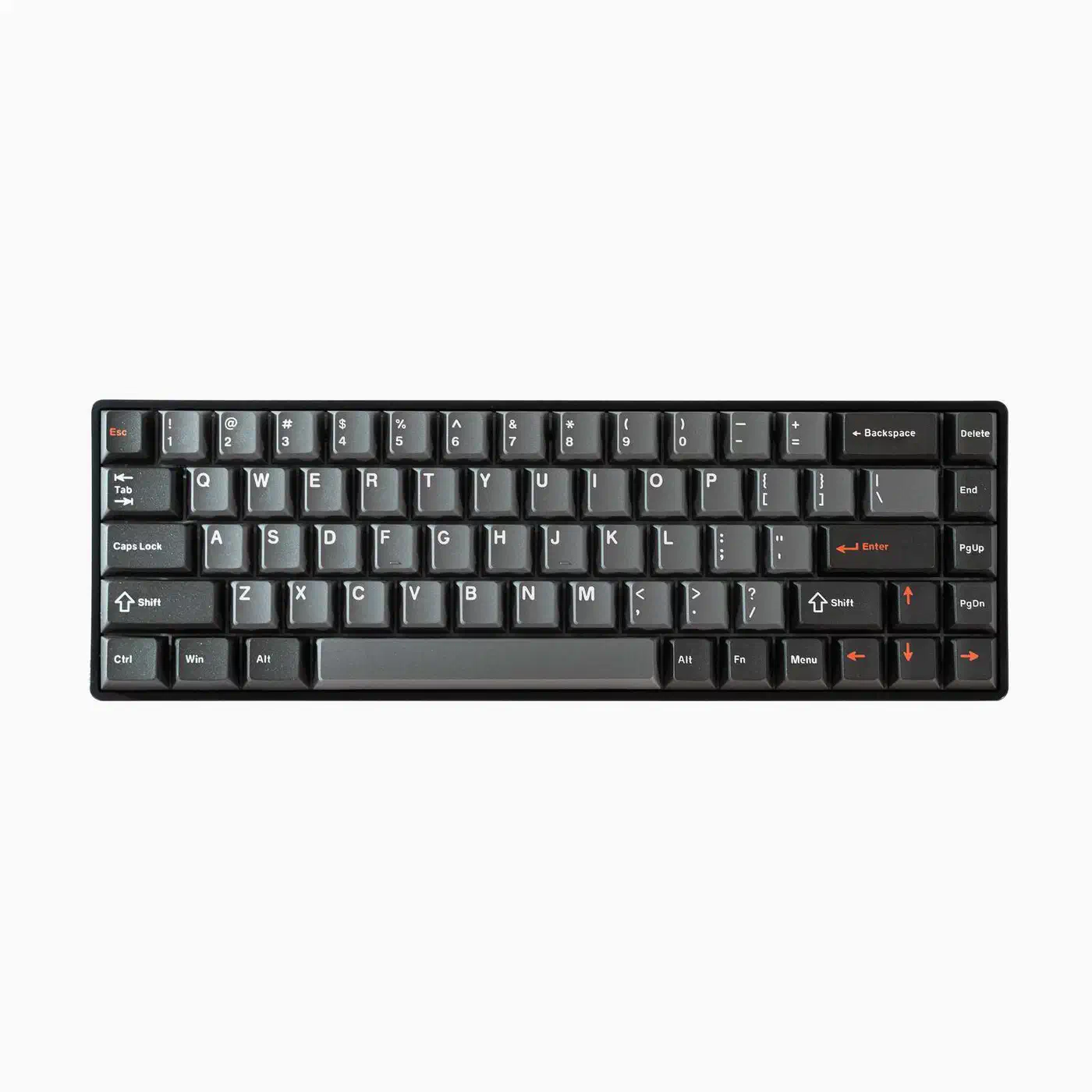
Keychron Q1 HE: best enthusiast ($160-240)
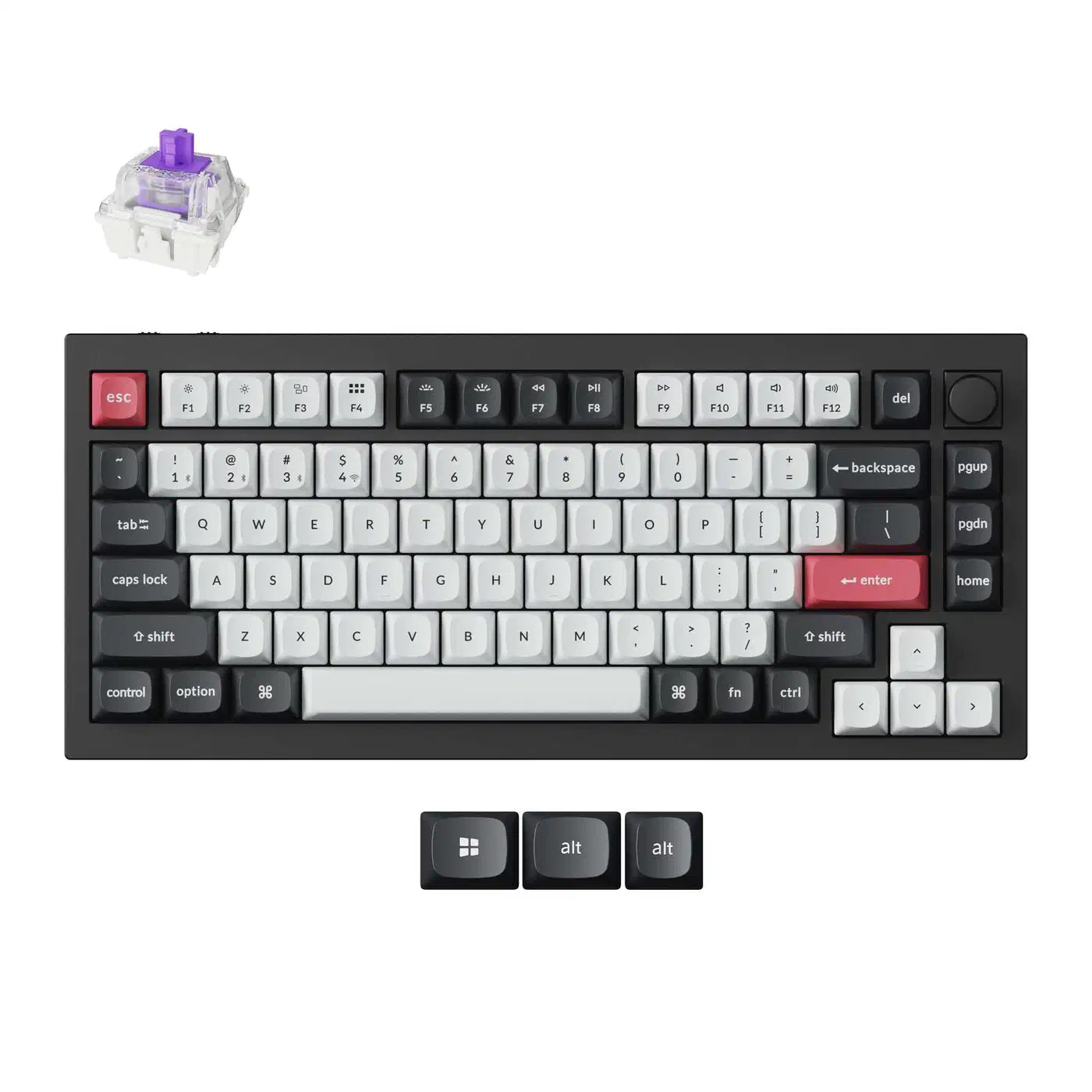
A CNC aluminum case on a gasket mount, Gateron double-rail magnetic switches, and tri-mode wireless: 2.4GHz, Bluetooth 5.2, and USB-C. The Keychron Launcher uses WebHID, is open source, and has full QMK and VIA support for custom keymaps. Build and typing sound sit a tier above everything else here. Price tracks the build: the base model starts at $160, and loaded versions with premium keycaps pass $240.
SteelSeries Apex Pro TKL Gen 3: best for MMO and productivity ($190-220)
Protection Mode is the standout, and only SteelSeries has it. Press a key and it lowers the sensitivity of the keys around it, so fast typing does not throw double-taps. The OLED display lets you change settings without alt-tabbing. OmniPoint 3.0 switches match Wooting and Razer on range. The limit: SteelSeries GG is Windows and macOS only. On Linux you get whatever the onboard memory last stored. The Apex Pro is a fine typing board, but it still sits flat on the desk. Coders who write all day rather than frag get more relief from ergonomic keyboards for programmers that split and tent each half.
Lemokey P1 HE: best compact wireless ($169)
A 75% layout with a rotary knob, Gateron double-rail magnetic switches, a gasket mount, and tri-mode wireless at 1000Hz. It works with Keychron Launcher over WebHID. South-facing RGB clears Cherry-profile keycaps. A good pick if you want wireless and still want Rapid Trigger.
Wooting 60HE v2: best for Valorant ($175-240)
The 60% layout frees up desk space for low-sensitivity aim. Inside it is the same Lekker switch as the 80HE, with 8000Hz polling via Tachyon Mode and the same Wootility app. The v2 adds an aluminum case option and the new Lekker Tikken switch, which sounds softer. The split spacebar is a nice bonus for extra binds.
Setting up Rapid Trigger correctly
Buy a hall effect keyboard, leave it on defaults, and you waste most of it. Here is a starting setup that works well for FPS games, and you can adjust from there.
For FPS, set WASD to 1.2mm with Rapid Trigger at 0.2mm on press and release. You get fast counter-strafing and no ghost inputs from resting fingers. Do not set 0.1mm across the whole board. Typing turns into a mess at that depth, and the weight of a finger alone fires keys, above all on light magnetic switches.
CRT tuning depends on the game, and Apex Legends tap-strafing needs it. For CS2 and Minecraft PvP, keep the reset delta at 0.3mm or higher. Go lower and you get double-jumps and stray repeats. In Valorant, plain Rapid Trigger at 0.2mm beats CRT, since the game rewards clean single taps.
Dynamic Keystroke is worth setting up for tactical shooters. In Razer Synapse 4, you can bind walk to a half-press (1.5mm) and sprint to a full press (3.5mm) on a single key. This works well in Escape from Tarkov and DayZ, where you need fine control over movement speed and a standard keyboard burns extra keybinds to get it.
Use the Apex Pro Gen 3 for both gaming and writing, and Protection Mode earns its keep. It stops double-taps by asking for a full release first. Make two profiles: one with Protection Mode for typing, one without it for gaming. Then let SteelSeries GG swap them as you change windows.
All four apps swap profiles by active window: Wootility, Razer Synapse, SteelSeries GG, and Keychron Launcher. Wootility needs a small local helper app for it, while the others do it on their own. At a LAN event, watch out: Razer and SteelSeries pull profiles from the cloud, which can fail with no internet. Wooting and Keychron keep profiles on the board, four slots each.
Linux compatibility and vendor software
If you run Linux, your keyboard choice narrows based on configurator support.
Wooting has the best Linux story by far. Wootility runs inside a Chromium browser over WebHID. Firmware updates need no Windows VM, and the board shows up as a plain HID device with no kernel module to build. Any distro with a recent Chromium works: Ubuntu, Fedora, or Arch.
Keychron Launcher also uses WebHID and runs on Linux with Chrome or Chromium, though there is no Firefox support. This covers the Q1 HE, Q3 HE, and Lemokey P1 HE.
Razer Synapse 4 is Windows only, though OpenRazer 3.x added partial Huntsman V3 Pro support in late 2025. You can tune Rapid Trigger with razer-cli, but Dynamic Keystroke is not exposed yet. First setup still needs a Windows box or a VM with USB passthrough.
SteelSeries GG is Windows and macOS only, with no Linux build and no community driver. On Linux the Apex Pro Gen 3 falls back to onboard memory, so set your profiles on Windows first and they stick.
Drunkdeer’s web app works on Linux through Chrome, but firmware flashing has needed Windows in the past. If you run Linux only, check the 2026 firmware notes before you buy.
Watch out for the compositor: most Wayland compositors cap 8000Hz polling at an effective 1000Hz unless they handle high-rate input events. KWin 6.3+ and Hyprland 0.45+ do it right. Sway and other wlroots compositors still cap at 1000Hz.
To get WebHID working without root, you need a udev rule. By default, /dev/hidraw* devices are owned by root with no user ACLs. The modern approach uses the uaccess tag rather than the plugdev group (which systemd maintainers now consider deprecated):
# /etc/udev/rules.d/99-hall-effect-keyboards.rules
# Wooting
KERNEL=="hidraw*", SUBSYSTEM=="hidraw", ATTRS{idVendor}=="31e3", TAG+="uaccess"
# Keychron / Lemokey
KERNEL=="hidraw*", SUBSYSTEM=="hidraw", ATTRS{idVendor}=="3434", TAG+="uaccess"
After saving, run sudo udevadm control --reload-rules && sudo udevadm trigger and replug the keyboard.
Tournament legality and the anti-cheat question
Through most of 2025, nobody knew if these boards were legal in ranked play. That is mostly settled now, though the rules still vary by game and by tournament organizer.
In Valorant, Riot Vanguard allows Rapid Trigger and per-key tuning under the January 2026 policy update. One thing is banned: a movement key that sends different keys based on how long you hold it. So some Dynamic Keystroke setups on A and D are out. Plain Rapid Trigger on WASD is fine.
CS2 and VAC allow Rapid Trigger but ban SOCD resolution. Press A and D at once to force a null input or a last-key-wins result, and VAC will flag it. Turn off Snap Tap and any SOCD cleaner before ranked play. In January 2026 a CS2 update flagged thousands of honest players whose boards sent fast direction changes by hand. Valve undid most of those bans within 48 hours, but it showed how touchy the checks have become.
Tournament organizers (IEM, ESL, BLAST) standardized on a firmware allow-list for 2026. Wooting boards must run firmware 3.x with Tournament Mode enabled, Razer Huntsman V3 Pro needs firmware 2.10 or later, and SteelSeries Apex Pro Gen 3 needs firmware 1.5+. Boards not on the allow-list may be rejected at check-in.
FACEIT’s anti-cheat scans for SOCD patterns and multi-output keys on movement. Every major app now has a safe-mode toggle to keep FACEIT happy.
Overwatch 2 and Apex Legends set no rules against Rapid Trigger or CRT at any depth. They are the most relaxed of the big competitive titles.
Fighting games add a wrinkle. Capcom’s rules for Street Fighter 6 and Tekken 8 require SOCD resolution on leverless controllers, which is the opposite of the FPS rules. A board set up for Tekken 8, with SOCD cleaning on, can break Valorant or CS2 rules. Keep separate profiles.
The safe move is two onboard profiles. Make a “Tournament Safe” one with CRT off, SOCD cleaning off, and no Dynamic Keystroke on movement keys. Make a “Practice” one with it all turned on, then switch with a key combo before matches.
Quick buyer’s decision tree
If you are still unsure which board to buy, here is the short version:
- Competitive Valorant or CS2, fastest input: Wooting 80HE or Wooting 60HE v2.
- Snap Tap built in, and you are on Windows: Razer Huntsman V3 Pro TKL 8KHz.
- Budget under $100: Drunkdeer G65.
- Wireless with Rapid Trigger intact: Keychron Q1 HE or Lemokey P1 HE.
- Gaming and heavy typing on one board: SteelSeries Apex Pro TKL Gen 3.
- Linux only, no Windows at all: Wooting 80HE first, Keychron Q1 HE second.
- Fighting game tournaments: any board here, but set SOCD profiles per game.
What to expect later in 2026
Wooting has hinted at a full-size 100HE, which would be the first board with a numpad from a brand with mature firmware. Ducky should ship the One X HE later this year, its first hall effect board. TMR sensors, short for tunnel magnetoresistance, are showing up as the next step past Hall sensors. Makers claim finer position reading, but no shipping board uses one as its main sensor yet.
For most buyers, this generation is good enough that waiting gains little. Prices sit near their floor, firmware is stable, and the tournament rules have answers. Pick the board that fits your layout and your software, then set Rapid Trigger to match your game.