 Botmonster Tech
The best ARM Linux laptop in 2026 runs Snapdragon X2

The best ARM Linux laptop you can buy in 2026 runs a Snapdragon X2 Elite, and almost every guide you will find still describes the first-generation X Elite hardware from 2024 and 2025. The second generation rebuilt the CPU, rewrote the GPU, and doubled the NPU throughput, and each of those changes needs a specific kernel or Mesa version to run at full speed.
Key Takeaways
- Buy the second-generation X2 Elite, not the older X Elite from 2024.
- The Lenovo ThinkPad X13s Gen 2 is the safest model to buy.
- You need kernel 6.18 or newer, and Mesa 26.0 for full Vulkan.
- Linux cannot drive the fan, so the chip throttles before full speed.
- Most x86 apps run through FEX-Emu, but CUDA and anti-cheat games fail.
The Lenovo ThinkPad X13s Gen 2 is the model to buy, because Qualcomm’s own engineers drive its upstream support. Next come the HP Omnibook Ultra and the Dell XPS 14 ARM. The Microsoft Surface Pro 11 still needs patched device tree files on kernel 6.19.
The Mesa Turnip driver for the Adreno X2 GPU now clears desktop Vulkan conformance. Most x86 software runs through FEX-Emu 2501 or box64 0.4. Some things stay broken or very slow, though: CUDA, a few VPN clients, and games with anti-cheat.
If your stack is Docker, Firefox, VS Code, Rust, Go, and Python, ARM on Linux has caught up. If it is DaVinci Resolve Studio or Adobe Lightroom Classic, it has not.
What changed from X Elite to X2 Elite
The X2 Elite is a bigger change than the version number suggests. Qualcomm reworked the CPU, the GPU and the NPU, which is why advice written for the 2024 machines often no longer applies.
The new Oryon cores (branded as Oryon Prime for the top-binned parts) come in two configurations: 18 cores on the X2 Elite Extreme and 12 cores on the base X2 Elite. The top prime cores clock up to 5 GHz, which is a first for any ARM laptop chip. Linux handles the two core clusters through the Energy Aware Scheduling code added in kernel 6.18, so task placement works without any vendor patches.
The Adreno X2 GPU moves to a new instruction set, called Adreno Gen 8 in Qualcomm’s marketing. That forced a full rewrite of the Turnip driver. Phoronix’s coverage of the Mesa 26.0 merge confirms the stable Vulkan driver only landed in Mesa 26.0. A usable OpenGL path arrived earlier, in 25.2. Anything older falls back to software rendering, which is too slow for a desktop.
The Hexagon NPU v75 is good for about 45 TOPS, and the qcom-hexagon driver hands it to userspace. Kernel 6.19 added support for offloading Whisper and llama.cpp onto it. It works for mid-size models, around 3B quantized weights, without eating the battery.
The LPDDR5X-9600 memory controller and the PCIe 5.0 root complex both needed new bindings in drivers/pci/controller/dwc/pcie-qcom.c. On older kernels these fail in ways that are hard to trace back to their cause, which is why 6.18 LTS is the floor for daily use.
Mainline Linux support in kernel 6.19 and 7.0
Most buyers want to know one thing. Does it all work from a stock Fedora, Arch or Debian image? In 2026 the answer is mostly yes, with one asterisk per model.
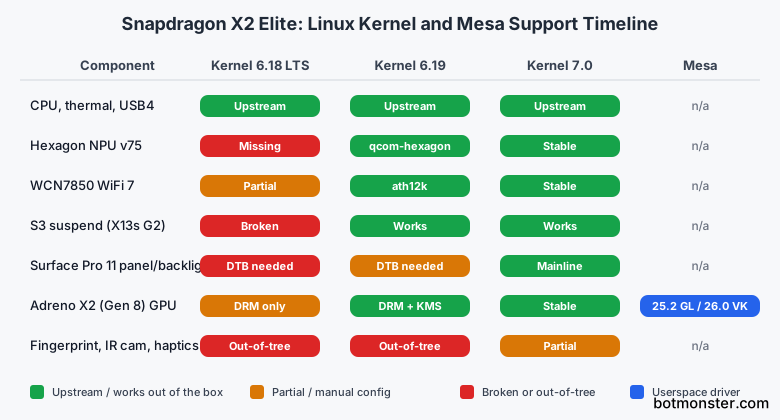
Kernel 6.18 is the current LTS and the lowest version worth running. It is the first one where CPU scheduling, thermal control, cpufreq, USB4 and the display pipeline all work without vendor patches. Kernel 6.19 adds the NPU driver, WiFi 7 support for the WCN7850 module, and working sleep on the ThinkPad X13s Gen 2. Kernel 7.0 lands mid-2026 and fixes screen brightness on the Surface Pro 11.
For the GPU, the Mesa Freedreno docs are the source of truth. Mesa 25.2 gives you OpenGL 4.6 and early Vulkan. Mesa 26.0 gives you full Vulkan 1.3. Ubuntu 26.04 LTS and Fedora 42 both ship installer images with the device trees already bundled in for the X13s Gen 2, the HP Omnibook Ultra and the Dell XPS 14 ARM.
The Surface Pro 11 still needs a hand-written systemd-boot entry pointing at a patched device tree from the linux-surface project . That holds until kernel 7.0 settles the panel driver. If you want an ARM Linux tablet with no fuss, wait six months or pick a different body.
The parts still missing from the kernel are the ones people touch every day. The fingerprint reader on the ThinkPad X13s Gen 2 waits on a Goodix driver stuck in review. The IR camera on the HP Omnibook Ultra does not work, nor does the accelerometer on the Surface Pro 11. The laptop is still a solid daily driver, but know that list before you spend $2,000.
The best ARM Linux laptop picks for 2026
Not every X2 Elite laptop is a good Linux target. The ranking below weighs how much of the support is upstream, how open the firmware is, and how well each one behaves on the same Fedora 42 image with kernel 6.19.
| Laptop | Config | Best for | Caveats |
|---|---|---|---|
| Lenovo ThinkPad X13s Gen 2 | X2 Elite, 32 GB / 1 TB | Default recommendation | Fingerprint reader out-of-tree |
| HP Omnibook Ultra 14 ARM | X2 Elite Extreme, 64 GB / 2 TB | Maximum performance | Needs hp-bioscfg for fans, IR cam broken |
| Dell XPS 14 ARM | X2 Elite, 32 GB / 1 TB | Chassis and display | Thunderbolt/USB4 DP alt-mode flaky |
| Microsoft Surface Pro 11 ARM | X2 Elite, 16 GB / 512 GB | Portability | Needs linux-surface DTB, no haptics |
The ThinkPad X13s Gen 2 is the default pick, because Qualcomm engineers do the upstream work on it themselves. File a kernel bug about this laptop and someone paid to fix it will usually reply. The 14-inch OLED screen is very good. If you dock it to a desktop OLED for coding , the sharpness gap between WOLED and QD-OLED will affect your eyes more than the laptop screen does.
The HP Omnibook Ultra 14 is the fastest of the four. It ships an exclusive X2 Elite Extreme part rated at 85 TOPS for the NPU . Load the hp-bioscfg module or the fan curve stays wrong under long builds.
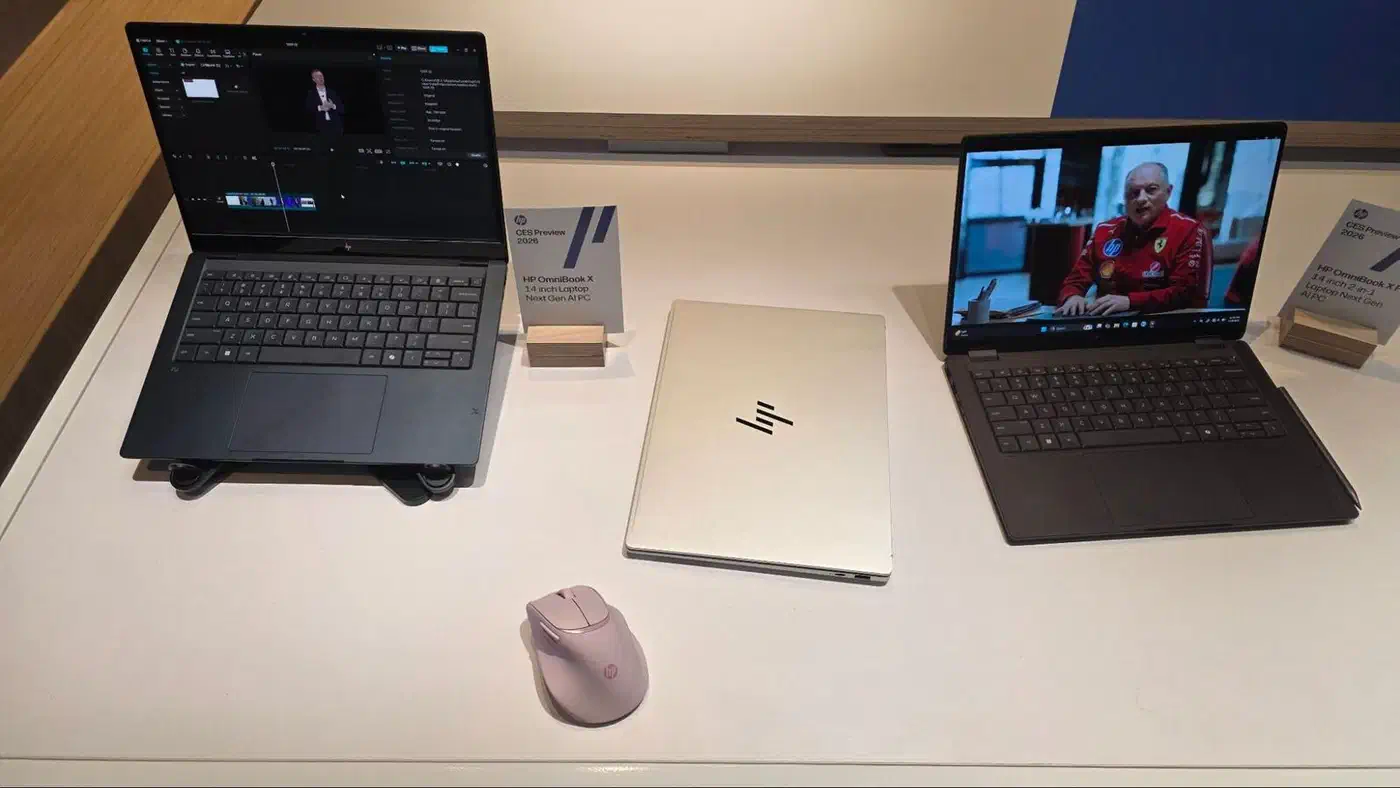
The Dell XPS 14 ARM has the nicest body and screen of the four. Dell signs and locks the Thunderbolt firmware, though, so video over USB4 is still unreliable on kernel 6.19. If you use a dock every day, skip it until Dell ships new firmware through LVFS.
The Microsoft Surface Pro 11 ARM is the lightest, and the hardest to set up. The tablet shape and the proprietary Surface Connect dock are both poorly supported. A Framework 13 ARM Edition is rumored for late 2026 and has not shipped, so watch the Framework community forum if you want something repairable.
Running x86 software on an ARM64 laptop
Plenty of software is still x86-only. FEX-Emu and box64 now run most command line tools, many desktop apps, and a fair number of Steam games at usable speed. Both of those words, most and many, are doing real work in that sentence.
FEX-Emu 2501 shipped in January 2026 with a better cache. It reaches about 75 to 85% of native speed on integer work, and about 60% on AVX2-heavy code. The same release added support for self-modifying code. Denuvo games that used to crash now start, though anti-cheat still blocks online play.
box64 0.4 handles most games and works well with Wine 10 for older Windows titles. The box64 project notes that Steam, Battle.net and a growing list of games are stable on ARM64. Valve’s Proton ARM fork is still experimental.
The kernel’s binfmt_misc hook hides all of this. Register FEX once and x86 binaries just run, with no wrapper script. The same hook means docker run --platform linux/amd64 alpine calls FEX for you. If you build x86 images while travelling, that saves you a remote build box.
What still breaks:
- 32-bit installers. The i686 path in FEX is slow and buggy.
- Kernel modules shipped as x86 binaries. No emulator can help here.
- Anti-cheat systems like EAC and BattlEye. They refuse to run translated code.
- Apps that check for CPU features like AVX-512 and quit when they are missing.
Three paid apps are still broken outright: DaVinci Resolve Studio needs CUDA, Adobe Lightroom Classic fails under Wine, and most paid VPN clients ship their own kernel modules.
Battery life and sustained performance vs Intel and AMD
Battery life has always been the selling point. It holds up at idle and under light load. Under heavy load the gap closes, because Zen 5 and its SMT still win on parallel work.
The clearest public numbers come from kernel contributor Daniel J Blueman in a FOSSASIA 2026 talk . The 12-core X Elite is a 23 W chip, where he puts an equal x86 part at 40 to 50 W. He runs one of these laptops daily. From a 70 Wh battery he gets about 8 hours of real use and 11 hours idle, at about 5 W when idle, which he calls high for a chip derived from phones. Two power-saving patch sets were unmerged at the time, worth about 2 W together.
Read any vendor battery claim as the Windows figure. Linux comes in lower, mostly because those sleep states are still missing.
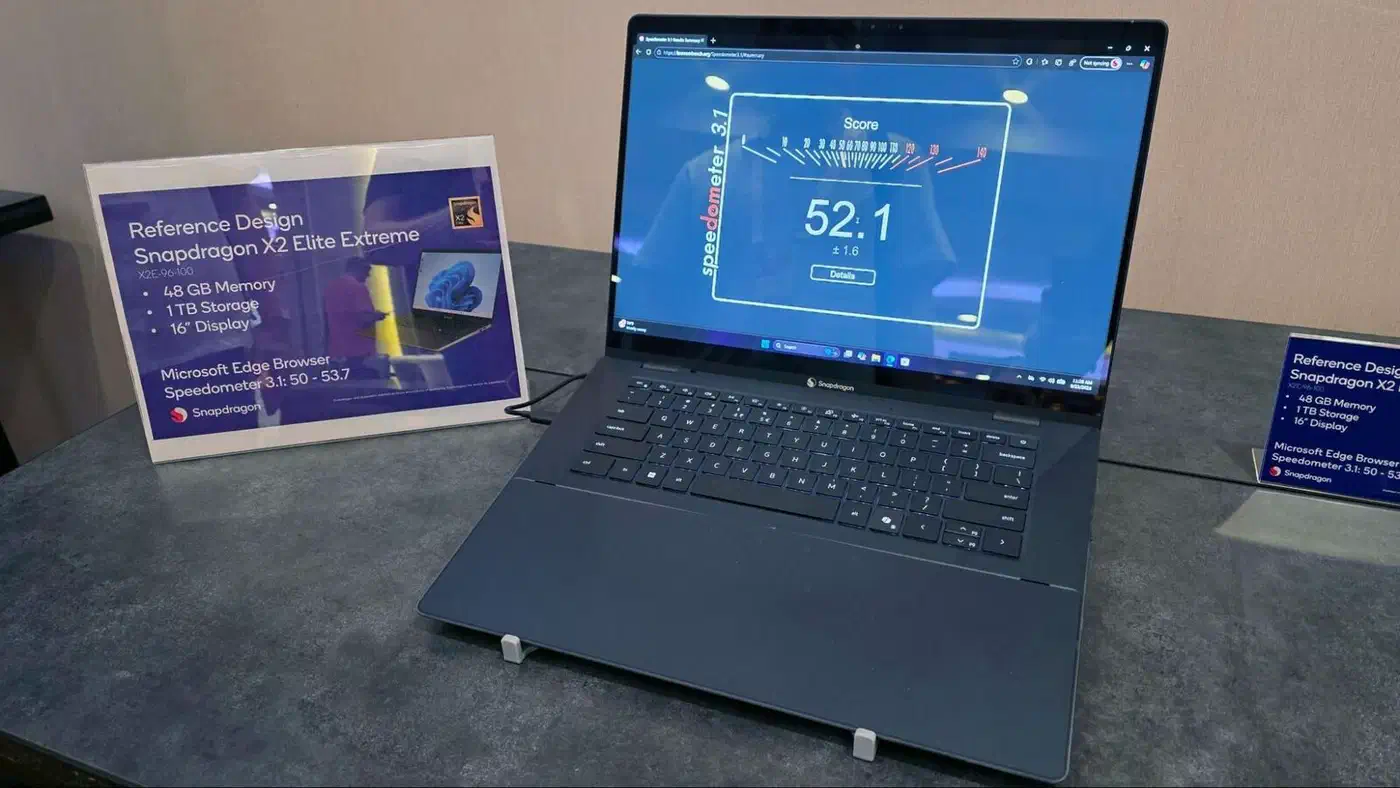
Single-core speed is where the X2 Elite leads. Tom’s Hardware’s benchmark coverage of the 18-core X2 Elite Extreme puts it ahead of Intel and AMD on single-threaded work. Those runs are on Windows. Linux comes in a few percent lower, because task placement across the two core clusters is still being tuned.
AMD pushes the same efficiency idea further on the desktop with its Ryzen AI Max 395 mini PCs . You lose portability and gain the memory bandwidth to run big local models.
Multi-threaded work is the weaker side. Zen 5’s SMT still pays off on parallel loads, so an 18-core Oryon part does not pull far ahead of a Ryzen laptop on a big build. Cooling limits these machines more than the chip does, which is the next section.
Why the fan barely works on ARM Linux laptops
Fan control limits sustained performance on these laptops, and it rarely comes up before you buy.
The embedded controller is the small chip that runs the fan and the charging circuit. The laptop maker picks it and writes its firmware, not Qualcomm. Only Lenovo knows how to talk to Lenovo’s controller, and there is no shared standard to write one driver against.
Engineers from Linaro and Qualcomm said as much in a Linux Foundation session on ARM laptops. One of them worked out the commands to spin the fan on a Lenovo machine, then found five or six other vendor variants and stopped. A driver per model does not scale, and guessing at commands can damage the hardware.
Three things follow:
- The chip slows down early. With no fan control, the kernel cuts clock speed at about 56 to 60 degrees, so the laptop never reaches its rated speed.
- Sometimes it cuts out. If the kernel misses that point, a safety circuit fires and the machine reboots.
- Linux slows the wrong part. It reads a temperature and drops CPU cores without knowing where the heat comes from. Charge the battery while building and it will cut three cores, when the fix is to charge more slowly. Charging belongs to the controller, and Linux cannot reach it.
On an x86 laptop, ACPI defines a standard way to do all this. These are Windows-on-ARM machines, so that logic sits in PEP, a Windows-only driver, and the standard path is missing. Qualcomm has promised Linaro a driver for its own reference boards, which will not help on a Lenovo, a Dell or an HP.
The laptops still work. A long build just runs slower than the spec sheet suggests, which is the main reason to treat them as light-load machines rather than build servers.
Common questions about ARM Linux laptops
Can ARM laptops run Linux?
Yes. Snapdragon X2 Elite laptops run mainline Linux from kernel 6.18 onward, and Ubuntu 26.04 and Fedora 42 ship the device trees for the main models. ARM laptops have no single standard boot path the way x86 does, so each model needs its own device tree file, and a few parts stay broken on every machine.
Is there a Linux laptop with ARM64 capabilities?
Several. The Lenovo ThinkPad X13s Gen 2 is the safest buy, because Qualcomm engineers work on its support directly. The HP Omnibook Ultra 14 is faster, the Dell XPS 14 ARM has the nicer body, and the Surface Pro 11 is the hardest to set up. No vendor sells an ARM laptop with Linux preinstalled.
Is ARM better than Intel?
ARM leads on battery life and idle power. Intel still wins on compatibility. Snapdragon uses less power at idle and under light load, and it is faster on single-core work. Intel and AMD stay ahead on parallel work, on GPU drivers, and on running any software you hand them without an emulator.
Who should buy one
Is your daily stack Docker, Firefox, VS Code, Rust, Go, Python and a terminal? Then the ThinkPad X13s Gen 2 on Fedora 42 is a good machine, and the battery is the reason to pick it. Container work is smooth, because multi-arch images and binfmt_misc hide the chip difference. The same setup scales down to small boards, where a Raspberry Pi 5 makes a capable single-board hacking lab for security work on the move.
If you need CUDA, paid creative apps, anti-cheat games or a work VPN client, stay on x86 through 2026. Check again when kernel 7.0 ships and Mesa 26.1 reaches the distros. What is left is on the vendors who have not built ARM versions.
The decision now rests on software vendors, not on the hardware or on Linux. In 2024 the answer to “can I run Linux on a Snapdragon laptop?” was “sort of, if you enjoy patching kernels.” In 2026 you just install Fedora.