Practical guides on Linux, AI, self-hosting, and developer tools

Reverse Engineer USB Devices with Wireshark and Python

Reverse engineering an unknown USB device means figuring out the protocol it uses to communicate - the sequence of bytes that makes it do things. The good news is that most USB devices aren’t encrypting their traffic. Everything they send and receive travels in plain sight through the USB bus, and Linux gives you the tools to watch it. Once you understand the protocol, a Python script using pyusb can control the device directly, bypassing any vendor software entirely.

How to Fine-Tune Stable Diffusion XL 2.0 with LoRA

Fine-tuning Stable Diffusion XL 2.0 is most efficiently achieved using Low-Rank Adaptation (LoRA) - a lightweight adapter technique that injects your custom style or subject concept into the model without modifying the base weights. Instead of retraining the full model (which requires enormous compute and produces a 6+ GB file that overwrites the model’s general capabilities), a LoRA trains a small side-network that sits alongside the frozen base. The resulting file is typically 50–300 MB and can be loaded, unloaded, and stacked at inference time. With the right tooling, you can train a quality LoRA on a mid-range RTX 50-series GPU with 12 GB of VRAM in an afternoon.

Setup a Private WireGuard VPN for Secure Remote Access

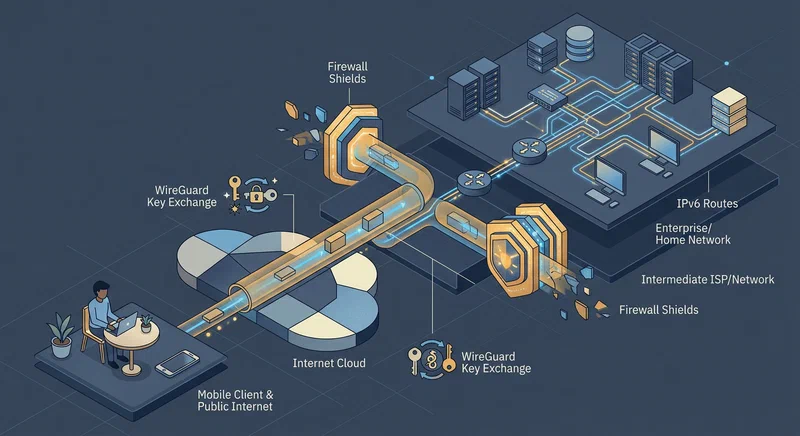
A private WireGuard VPN is the most practical way to reach your home lab, self-hosted apps, and development machines from anywhere without exposing services directly to the internet. Instead of opening many inbound ports, you publish one UDP endpoint and move trusted traffic through an encrypted tunnel. In 2026, that still gives you the best balance of speed, security, and operational simplicity.

This guide builds a production-ready setup from scratch on Ubuntu or Debian , then hardens it for real-world conditions: dynamic home IPs, IPv6, mobile clients behind carrier NAT, and restrictive networks that try to block VPN traffic. You will also see a GUI path (wg-easy ) for teams that prefer visual peer management over manual config files.

Setup a Private Local RAG Knowledge Base

Creating a private Retrieval-Augmented Generation (RAG) system requires a local vector database like Qdrant paired with a strong embedding model like BGE-M3 . Together with a locally-served LLM via Ollama , this configuration lets you index hundreds of documents and answer questions about them with AI - without a single byte of your data leaving your machine.

Why RAG? The Problem With Pure LLM Memory

Large language models are impressive but fundamentally limited as knowledge stores. They are trained on a frozen snapshot of data and have no awareness of anything that happened after their training cutoff, let alone your personal files, internal documents, or private notes. When you ask a model about your own data, it has no choice but to confabulate - and it does so confidently, which is the dangerous part. Even the most capable open-weight models like Llama 4.0 will invent plausible-sounding but entirely wrong answers when asked about content they have never seen.

Track Your Home's Energy Usage with Home Assistant

The average American household spends around $1,500 per year on electricity - and most of that money disappears without any clear understanding of where it goes. Your utility company’s smart meter might tell you how many kilowatt-hours you consumed yesterday, but it will not tell you that your aging gaming console is quietly draining 30W while it sits “off,” or that your electric water heater runs at the exact same time each morning when grid prices are at their daily peak. Home Assistant changes that equation entirely. By pairing the right monitoring hardware with the built-in Energy Dashboard, you can achieve per-device, per-circuit visibility that genuinely transforms how you consume electricity.

Building Multi-Step AI Agents with LangGraph

State-of-the-art AI agents are built using LangGraph to manage complex, cyclic workflows that require memory and self-correction. By structuring your agent as a stateful graph, you can move beyond simple linear prompts to create autonomous systems that reliably execute multi-turn tasks - ones that loop, branch based on tool output, recover from failures, and persist their progress across hours or even days of work.

This post covers LangGraph from its conceptual foundations through to production deployment. You will learn how to design a robust state schema, implement self-correcting retry logic, build multi-agent collaboration patterns, and serve your agent via a production-grade API - with working Python code throughout.

Fixing Wayland Screen Tearing on Linux Mint (2026)

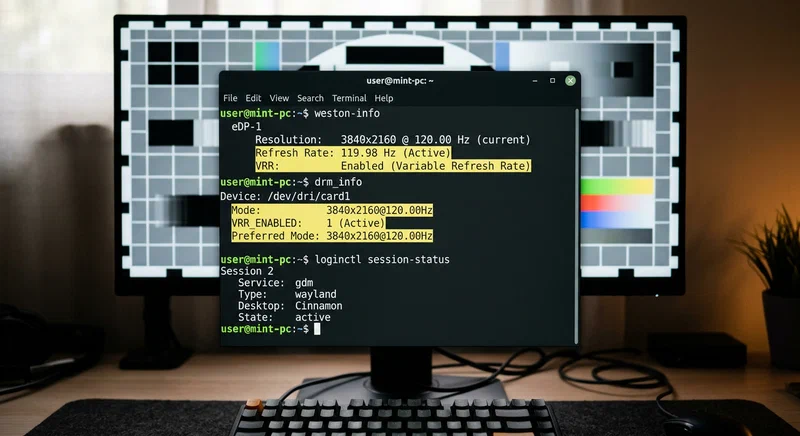
Screen tearing on Linux Mint in 2026 is less common than it was in the X11 era, but it is still possible on Wayland when the rendering pipeline is not synchronized end to end. Most guides oversimplify the issue and claim that moving to Wayland alone eliminates tearing forever. In practice, you still need the right kernel, the right driver path, sane compositor settings, and monitor settings that match what your GPU can actually deliver.

Build a DIY Smart Mirror with Home Assistant Integration

A DIY smart mirror is built using a two-way mirror panel, a monitor, and a Raspberry Pi running MagicMirror² software. Behind the one-way glass, the monitor displays information widgets that appear to float in the mirror’s reflection. Integrating it with Home Assistant transforms it from a novelty display into a genuinely useful home status panel - showing which lights are on, whether the front door is locked, and what your next calendar event is.