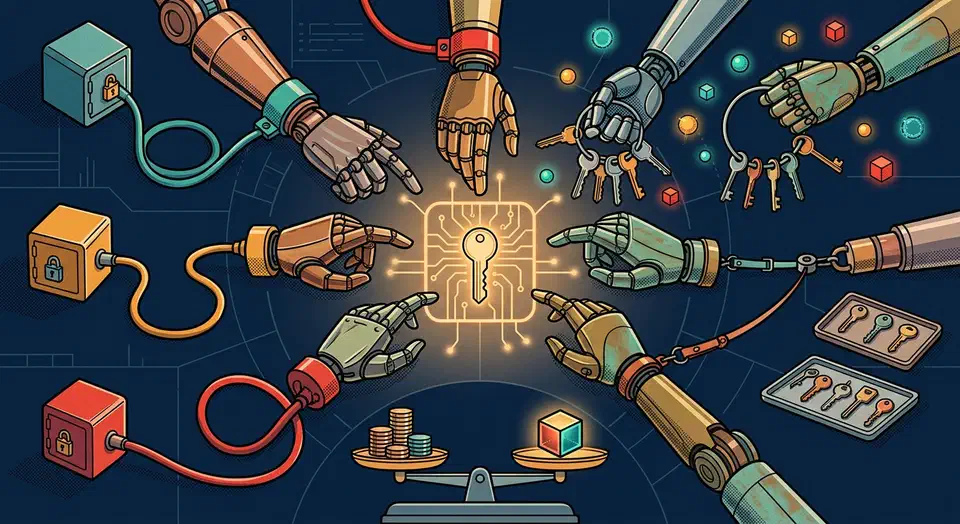
The best AI coding agent in 2026 comes down to two numbers most reviews skip. The first is real cost per completed task. The second is how locked in you are to one vendor’s models. Get those two right and the rest is preference. Get them wrong and you either overpay every month or hand a single vendor control of your roadmap. This compares seven agents on exactly those axes: Claude Code, Codex CLI, Gemini CLI, Cursor, OpenCode, Pi, and GitHub Copilot.
Agents
Claude Agent SDK: Build Custom AI Agents Without Reinventing the Orchestration Layer
The Claude Agent SDK is the Claude Code engine stripped down to a library. Same agent loop, same built-in tools, same context handling, but you call it from your own Python or TypeScript code instead of the CLI. If you’ve used Claude Code to read files, run shell commands, search codebases, and edit code, the SDK points that same machinery at any problem you want. No human needs to sit in the loop.
OpenClaw vs Hermes and Why Memory Kills Agent Loyalty
Hermes Agent , built by Nous Research, has taken about 30% of OpenClaw’s user base by fixing one failure: memory. The Kilo.ai synthesis of 1,300+ r/openclaw comments confirms the figure. OpenClaw still wins on multi-agent breadth and 100+ skills. The right answer depends on which failure mode hurts you more.
Key Takeaways
- About 30% of r/openclaw users have switched to Hermes Agent, mainly for memory reliability.
- Memory failures, not features, are the top reason people leave OpenClaw.
- Hermes ships with memory that works by default; OpenClaw needs heavy prompt-engineering to behave.
- OpenClaw still wins for multi-bot setups across Telegram, Slack, and Discord.
- A growing minority skip both and use OpenAI Codex business-tier instead.
Why r/openclaw Is Migrating to Hermes
The most-cited migration thread on the subreddit is the 167-comment OpenClaw vs Hermes thread . The top-voted answer to “is Hermes worth a look” reads as a clean defection notice. The poster ran OpenClaw for weeks on the same workload, then switched in an afternoon:
MCP vs. A2A: The Two Protocols Powering the Agentic Web
Model Context Protocol (MCP) and Agent-to-Agent Protocol (A2A) aren’t rivals. They solve different layers of the same problem. MCP sets how an AI agent connects to tools and data. A2A sets how agents talk to each other and pass off tasks. Together they form the base plumbing of the agentic web.
If you’re building past a single chatbot in 2026, you need to grasp both.
The Fragmentation Problem
Before these protocols, the AI tooling space was a mess of clashing integrations. Every major framework had its own way to plug into outside tools: LangChain , CrewAI , and AutoGen . Giving a LangChain agent access to the Slack API meant writing a LangChain-only tool wrapper. Wanting the same in a CrewAI workflow meant starting over. None of the adapters carried across.
Three Tiers of AI Pair Programming: From Autocomplete to Autonomous Overnight Agents
The most productive developers in 2026 don’t use a single AI tool. They run a three-tier stack. Tier 1 is inline completions for line-by-line speed. Tier 2 is parallel agent sprints that take on feature-sized work. Tier 3 is overnight batch agents that run 30 to 50 improvement cycles while you sleep. GitHub’s research shows AI pair programming makes developers 55% faster, but that gain comes mostly from Tier 1. The real win comes from running all three tiers at once, with clear rules about which task goes where.
Automating Gmail with Local AI Agents and Python
You can automate your Gmail inbox on your own machine. The Gmail API feeds messages into a private Python script. A local LLM then handles summaries, sorting, and draft replies. You get the smart inbox features that tools like Google’s Gemini sidebar or Microsoft Copilot for Outlook offer. None of your email content ever leaves your computer.
This guide walks through the full build. You’ll set up the Gmail API with minimal OAuth scopes. You’ll fetch and parse raw email data, then mask any PII with Microsoft Presidio before the model sees it. You’ll build a daily summarizer that ranks mail by urgency. You’ll also build a smart draft writer that learns from your sent mail, and you’ll wire the whole pipeline up with cron. By the end, you’ll have a working local email agent that runs on any mid-range Linux or macOS box with Ollama installed.
Botmonster Tech