 Botmonster Tech
You can run DeepSeek R1
’s distilled reasoning models locally on an RTX 5080 with 16 GB of VRAM using Ollama
or llama.cpp
with 4-bit quantization. The 14B distilled variant (Q4_K_M) fits comfortably in about 10 GB of VRAM and produces visible <think> reasoning traces that rival cloud API quality on math, coding, and logic tasks. For the full 671B Mixture of Experts model, you need multi-GPU setups or aggressive quantization, but the distilled models deliver 80-90% of the reasoning quality at a fraction of the resource cost.

Run DeepSeek R1 Locally: Reasoning Models on Consumer Hardware
Promptfoo: Catch LLM Regressions Before Production
Promptfoo
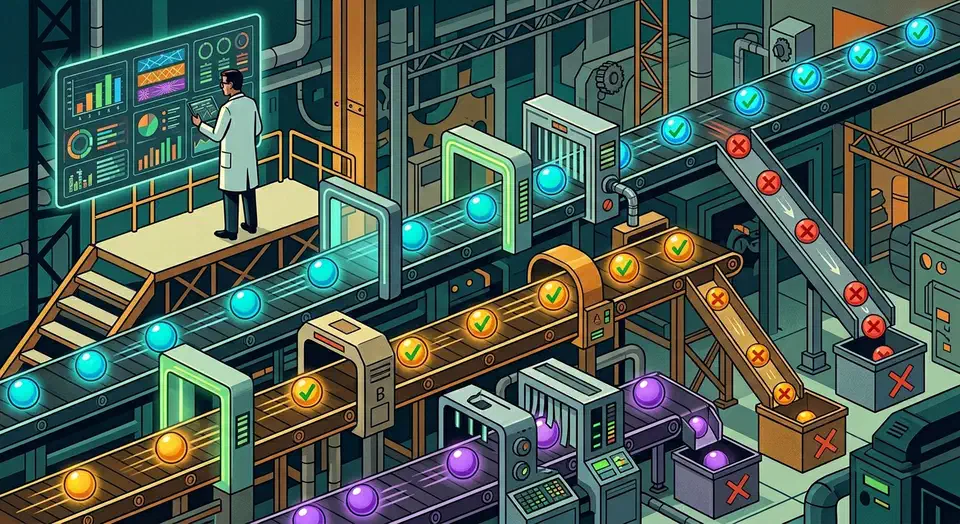
is an open-source CLI tool that runs your test cases against one or more LLM providers
at once. You write a YAML file with prompts, test cases, and checks, then run promptfoo eval to get a report with pass/fail rates, regressions, and side-by-side comparisons. It scores results three ways: simple text checks, LLM-as-judge grading, or your own scoring code. The point is to catch prompt regressions, broken model upgrades, and quality drops before users see them.

RAG vs. Long Context: Choosing the Best Approach for Your LLM
RAG and long context windows are not competing replacements. They are different tools built for different problems. If you are trying to choose between them, the short answer is: it depends on the size and nature of your data, your latency and cost constraints, and how much infrastructure complexity you are willing to maintain. The longer answer involves understanding what each approach actually does, where each one breaks down, and what teams running production LLM systems are doing in 2026 - which is usually some combination of both.

MCP vs. A2A: The Two Protocols Powering the Agentic Web
Model Context Protocol (MCP) and Agent-to-Agent Protocol (A2A) aren’t rivals. They solve different layers of the same problem. MCP sets how an AI agent connects to tools and data. A2A sets how agents talk to each other and pass off tasks. Together they form the base plumbing of the agentic web.
If you’re building past a single chatbot in 2026, you need to grasp both.
The Fragmentation Problem
Before these protocols, the AI tooling space was a mess of clashing integrations. Every major framework had its own way to plug into outside tools: LangChain , CrewAI , and AutoGen . Giving a LangChain agent access to the Slack API meant writing a LangChain-only tool wrapper. Wanting the same in a CrewAI workflow meant starting over. None of the adapters carried across.

Personal AI Research Assistant: Local Semantic Search
You can build a personal AI research assistant that ingests PDFs, web bookmarks, and notes into a local ChromaDB vector store. It answers questions with cited sources using Ollama and a local LLM like Llama 4 Scout. The system uses sentence-transformers to embed your documents into a searchable index. When you ask a question, it pulls relevant passages and writes an answer that cites the exact source and page. The whole stack runs offline on consumer hardware, so your research data stays private.
Phi-4 Mini vs. Gemma 3 vs. Qwen 2.5: Best SLM for Coding Tasks in 2026
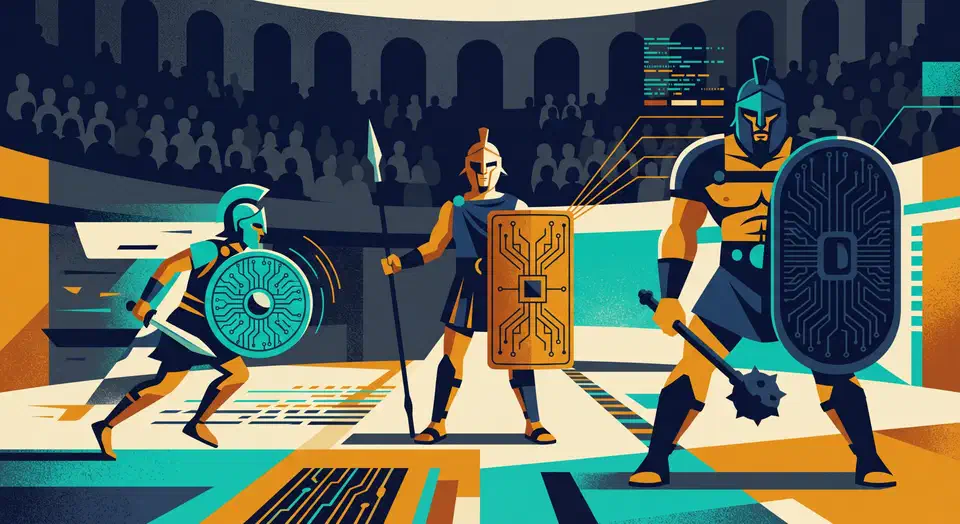
Qwen 2.5 Coder 7B is the most accurate of the three for Python and TypeScript completions. Phi-4 Mini (3.8B) uses the least VRAM and generates tokens nearly twice as fast, making it the right pick when memory headroom or latency matters more than raw accuracy. Gemma 3 4B sits in the middle - not the fastest, not the most accurate at code - but the most capable when you need one model for coding, commit messages, documentation, and error explanations. Below are the actual benchmark numbers, the full test methodology, and how to configure each model in VS Code or Neovim.