Botmonster Tech
AI Smart Home Linux Development Hardware jQuery Bootpag Image2SVG Tags
Botmonster Tech
AISmart HomeLinuxDevelopmentHardwarejQuery BootpagImage2SVGTags
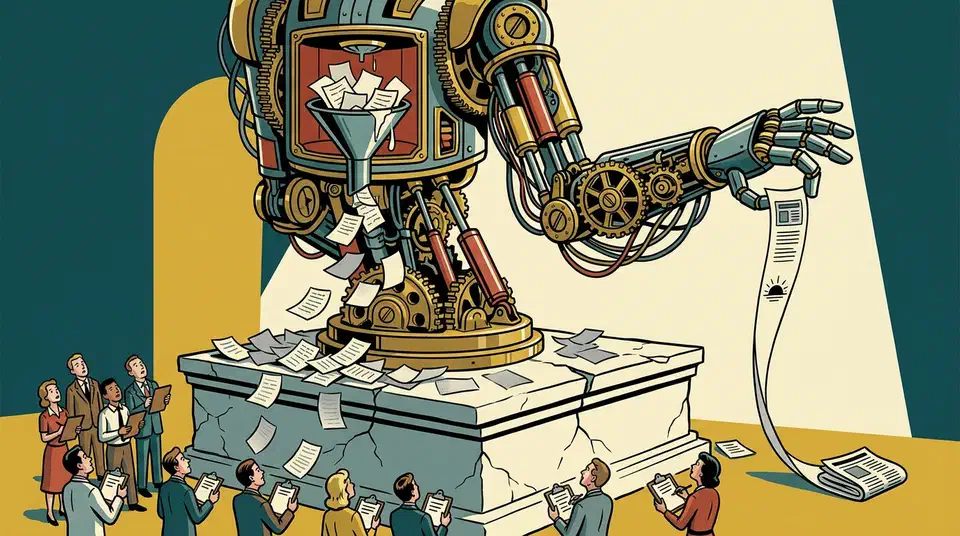
Towering brass clockwork robot on a cracked pedestal leaking forgotten paper notes from its memory chamber while handing down a tidy morning news briefing

1,000 OpenClaw Deploys Later

After publishing a 7-minute OpenClaw deploy video and watching roughly 1,000 isolated VMs spin up afterward, one r/LocalLLaMA cloud-infra operator concluded the only OpenClaw workflow that survives unsupervised execution is a daily news digest. Memory is the load-bearing failure mode, not a fixable bug. OpenClaw sits at 370K+ GitHub stars, but the working-workflow count has barely moved.

Key Takeaways

  • A cloud-infra operator watched roughly 1,000 OpenClaw deploys and found one reliable use case.
  • Memory unreliability is built into how the agent works, not a bug a patch can fix.
  • Daily news digests are the exception because they keep no state between runs.
  • The same digest can be built with a cron job and any LLM API in about ten lines.
  • OpenClaw’s founder admitted that recent releases were a “rough week”.

The 1,000-Deploy Post That Broke the Consensus

The contrarian thesis is anchored to one specific source: an r/LocalLLaMA post titled “OpenClaw has 250K GitHub stars. The only reliable use case I’ve found is daily news digests” , with 335 comments and 891 votes. The OP is not a casual skeptic. He runs cloud infrastructure where strangers spin up Linux VMs, published a deploy walkthrough that took off, and now has a dataset most reviewers do not have access to.

Cross-section of a translucent crystal brain threaded by red, gold, and teal attention ribbons resting on a doubly-stochastic matrix pedestal beside a guitar-tuning lab figure.

DeepSeek V4 Tech Report: 3 Tricks That Cut Compute 73%

DeepSeek V4 is a 1.6 trillion parameter open-weight Mixture-of-Experts model. It reads 1M tokens at once. It uses 27% of V3.2’s inference FLOPs and 10% of its KV cache. The DeepSeek V4 tech report credits three moves: hybrid CSA plus HCA attention, Manifold-Constrained Hyper-Connections, and the Muon optimizer in place of AdamW.

Key Takeaways

  • DeepSeek V4 is a free, open-weight AI that goes toe-to-toe with the top closed models from OpenAI, Anthropic, and Google.
  • It reads 1 million tokens in one prompt, enough for several full books or a long agent run without losing track.
  • It runs on roughly a quarter of the compute its previous version needed, making long-context AI affordable to operate.
  • A smaller team built it without access to top NVIDIA chips, proving clever engineering can rival raw GPU spend.
  • It scored a perfect 120 out of 120 on the 2025 Putnam math competition and beats Google’s Gemini 3.1 Pro at 1M-token recall.

DeepSeek V4 at a Glance

The official launch announcement on April 24, 2026 framed the release as “the era of cost-effective 1M context length.” It shipped two checkpoints under the MIT license. DeepSeek-V4-Pro runs at 1.6T total and 49B active parameters. DeepSeek-V4-Flash runs at 284B total and 13B active. Both models read 1M tokens at once. Both ship as open weights on Hugging Face . The routed expert weights use FP4 math, and most other weights use FP8.

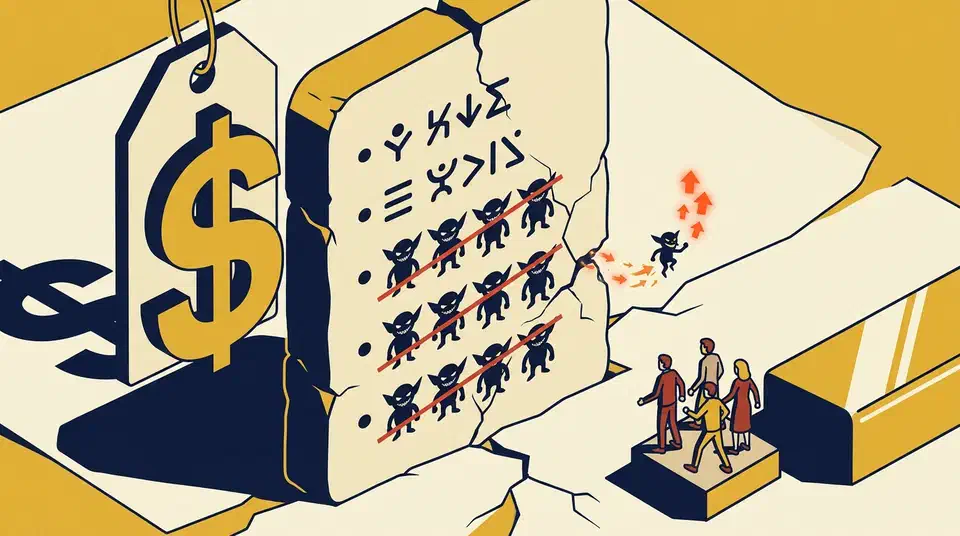
Cracked stone tablet engraved with a bulleted system prompt, four crossed-out goblin silhouettes repeated, a tiny goblin escaping with upvote-arrow sparks, a giant dollar-sign price tag, and figures refusing to step onto a glossier pedestal.

GPT 5.5 Reddit Reception: Goblins and the Cost Backlash

GPT-5.5 launched on April 23, 2026, and two weeks of Reddit reception split along three fault lines that no aggregator roundup captured cleanly. A leaked Codex system prompt forbidding “goblins, gremlins, raccoons, trolls, ogres, pigeons” went viral on r/ChatGPT (856 votes) and r/OpenAI (1.2K votes) before OpenAI’s own post-mortem dropped. Doubled output pricing at $30 per million tokens drew the loudest dissent on r/OpenAI’s launch thread , and a measurable 5.4 holdout faction emerged around hallucination regressions on factual recall workflows. This post is a Reddit-only community-reception snapshot bounded to the first 14 days.

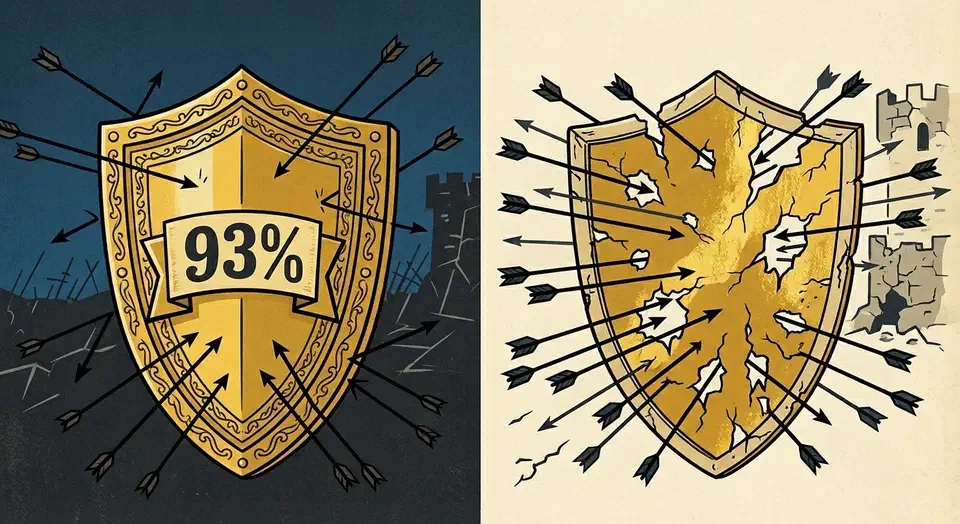
The 80% Coverage Trap: Why AI-Generated Tests Create a False Sense of Security

The 80% Coverage Trap: Why AI-Generated Tests Create a False Sense of Security

AI test generation tools make it trivially easy to hit 80% or even 90%+ line coverage. Point GitHub Copilot at a codebase, use the @Test directive, and watch it produce hundreds of test methods without a single line of manual effort. The number looks great on a dashboard. The problem is that line coverage only measures execution, not detection. A test suite can run every line of your code without asserting anything meaningful about whether that code is correct. In a documented 2026 experiment, an AI-generated suite scored 93.1% line coverage but only 58.6% on mutation testing - meaning over a third of realistic bugs would have slipped through undetected with CI showing green across the board.

Why AI is Killing the Internet: Model Collapse and the Knowledge Commons

Why AI is Killing the Internet: Model Collapse and the Knowledge Commons

The open web ran on a fragile premise: that people would share what they know, for free, in public. For about two decades that premise held. Developers posted answers on Stack Overflow . Students argued on Reddit. Journalists broke stories that Google indexed. The result was a vast, searchable knowledge commons. AI did not just consume that commons. It’s now wrecking the conditions that built it.

This isn’t a wild claim or a Luddite gripe. It’s an economic collapse, on the record, playing out in real time, with hard knock-on effects for AI model quality. The story is worth knowing whether you write code, publish content, do research, or just use the web to learn.

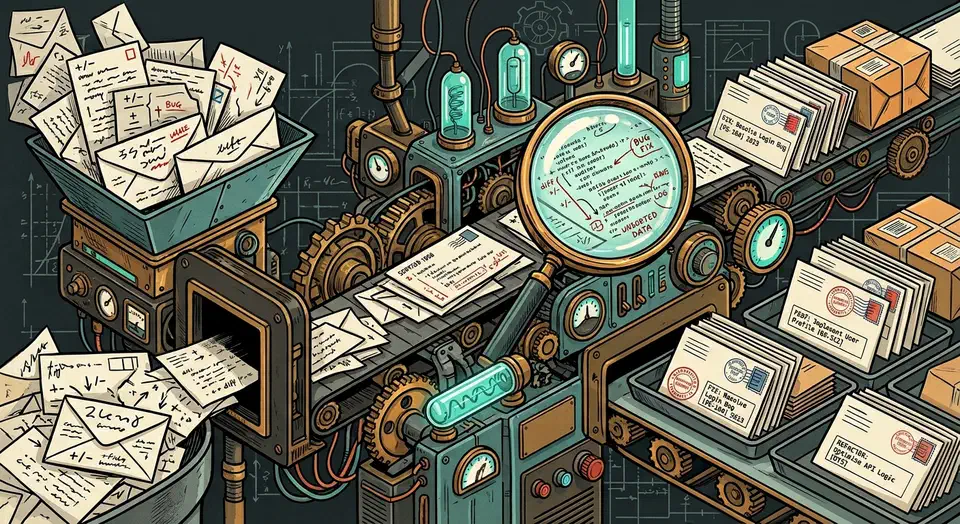
Generate Conventional Commits Locally with Ollama and Git Hooks

Generate Conventional Commits Locally with Ollama and Git Hooks

You can wire a local LLM into your Git workflow to automatically generate conventional commit messages from staged diffs by creating a prepare-commit-msg Git hook. The hook runs git diff --cached, sends the output to Ollama running a model like Llama 4 Scout or Qwen3, and writes the generated message into the commit message file for you to review before finalizing. The whole setup is roughly 30 lines of shell or Python, costs nothing to run, keeps your code completely local, and produces commit messages that follow Conventional Commits format - consistently better than the “fix stuff” messages most of us write when we just want to move on to the next task.

  • ◀︎
  • 1
  • 2
  • 3
  • 4
  • …
  • 13
  • ▶︎

Most Popular

What X and Reddit Users Are Saying about Claude Opus 4.7

What X and Reddit Users Are Saying about Claude Opus 4.7

How power users on X and Reddit reacted to Claude Opus 4.7: praise for agentic coding, token burn concerns, and teams' practical prompting habits.

Gemma 4 vs Qwen 3.5 vs Llama 4: Which Open Model Should You Actually Use? (2026)

Gemma 4 vs Qwen 3.5 vs Llama 4: Which Open Model Should You Actually Use? (2026)

A head-to-head comparison of Gemma 4, Qwen 3.5, and Llama 4 across benchmarks, licensing, inference speed, multimodal capabilities, and hardware requirements. Covers the full model families from edge to datacenter scale.

Qwen3.6-35B-A3B: Alibaba's Open-Weight Coding MoE

Qwen3.6-35B-A3B: Alibaba's Open-Weight Coding MoE

Alibaba's sparse MoE model: 35B total parameters, 3B active. Scores 73.4 on SWE-bench Verified, matches Claude Sonnet 4.5 vision performance.

MiniMax M2.7: Model That Almost Matches Claude Opus 4.6

MiniMax M2.7: Model That Almost Matches Claude Opus 4.6

MiniMax M2.7 review: 230B Mixture-of-Experts reasoning model with strong benchmarks, self-hosting options, and a tenth the cost of Claude Opus 4.6.

Running Gemma 4 26B MoE on 8GB VRAM: Three Strategies That Work

Running Gemma 4 26B MoE on 8GB VRAM: Three Strategies That Work

Google's Gemma 4 26B MoE activates only 3.8B parameters per token but still needs all 26B parameters loaded in memory. Here are practical approaches to run it on budget 8GB GPUs using aggressive quantization, GPU-CPU layer offloading, and multi-GPU tensor parallelism.

AI Coding Agents Are Insider Threats: Prompt Injection, MCP Exploits, and Supply Chain Attacks

AI Coding Agents Are Insider Threats: Prompt Injection, MCP Exploits, and Supply Chain Attacks

AI coding agents are vulnerable to prompt injection attacks that exploit MCP servers for remote code execution and data theft.

Like what you read?

Get new posts on Linux, AI, and self-hosting delivered to your inbox weekly.

Privacy Policy  ·  Terms of Service
2026 Botmonster