 Botmonster Tech
Claude Code doesn’t use MCP
as a plugin system. It is MCP. On March 31, 2026, Anthropic shipped a 59.8 MB source map by accident in npm package @anthropic-ai/claude-code v2.1.88. Developers got a rare look at how a real AI coding agent works. Every capability in Claude Code (file reads, bash, web fetches, Computer Use, IDE bridges) runs as a single permission-gated MCP tool call. There is no special internal API. Third-party MCP servers you connect get the same execution path, permission checks, and error handling as Anthropic’s own built-in tools.
Claude
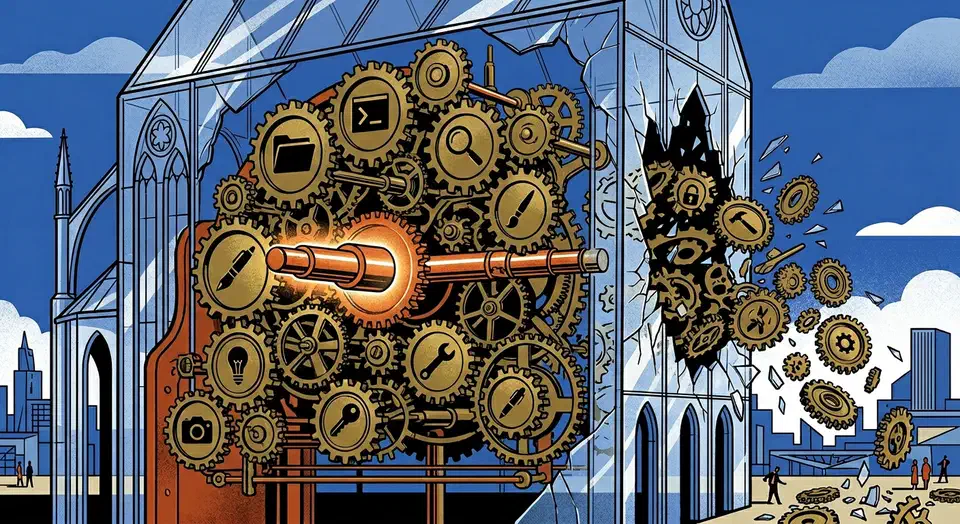
Claude Code Is Built Entirely on MCP - What the Source Leak Revealed

The Claude Code Source Leak: What 512,000 Lines of TypeScript Revealed About AI Agent Architecture
One missing line in a build config caused the worst source leak in AI tooling history. On March 31, 2026, Anthropic shipped version 2.1.88 of its @anthropic-ai/claude-code package with a 59.8 MB JavaScript source map inside. That map held the full client agent harness for Claude Code : 512,000 lines of readable TypeScript in 1,906 files. Mirrors of the code spread thousands of times in hours. A clean-room Python/Rust rewrite then became the fastest-growing repo in GitHub history. Anthropic’s legal response hit the wrong targets. The day got worse: a supply-chain attack hit the axios npm package, piling on for devs who rely on these tools.

Claude Code with MCP: Local Agent for Files, SQL, APIs
Claude Code combined with custom MCP (Model Context Protocol) servers creates a local AI coding agent that can read and write files, query databases, call APIs, and execute shell commands - all orchestrated by Claude through a standardized tool-use interface. You set up the Claude Code CLI, configure MCP servers in your project or user settings, and the agent automatically discovers and uses the tools you expose. The result is a development workflow where you describe tasks in natural language and Claude executes multi-step coding operations with full access to your project context.

MCP Server Development: Build Custom Tools for Claude and Local LLMs
The Model Context Protocol
gives LLMs a standard way to call external tools, read files, and query databases. You skip the rewrite each time you switch models. You can build a working MCP server in Python with the official mcp SDK in under 100 lines. It runs with Claude Desktop or Claude Code in minutes. This guide walks the full path, from a tiny first server to production.
What MCP Is and Why It Changes Tool Use
MCP is a JSON-RPC 2.0 protocol. It lets an LLM client (like Claude Desktop
, Claude Code, or Cursor) find and call tools exposed by a server process. The big shift from older function-calling is the discovery step. Instead of hard-coding tool defs into every prompt, the client sends a tools/list request when it connects. It gets back the full schema for everything the server exposes. Add a new tool, restart the server, and any client sees it on the next connect.

5 Open Source Repos That Make Claude Code Unstoppable
Five open source repositories dropped in March 2026 that expand what Claude Code can do. Karpathy’s AutoResearch runs overnight ML experiments without you. OpenSpace makes agent skills fix and improve themselves. CLI-Anything turns GUI software into agent-ready command-line tools. Claude Peers MCP lets many Claude Code sessions coordinate on one machine. And Google Workspace CLI opens Gmail, Drive, Calendar, and Sheets to agents. All five are free, open source, and plug right into Claude Code.

Evaluating AGENTS.md: Are Repository Context Files Actually Helpful?
Software teams keep adding AI coding agents
to their workflow. One popular trend: drop a repo-level context file, often named AGENTS.md or CLAUDE.md, to guide the agent. The idea sounds clean. Give the AI a map of the codebase and a few rules, and it should solve tasks faster.
But does it work? A new paper, “Evaluating AGENTS.md: Are Repository-Level Context Files Helpful for Coding Agents?” , says no. The results push back hard on the default advice.