 Botmonster Tech
GDB and LLDB are the two workhorses of compiled-language debugging. If you write C, C++, or Rust, knowing these tools saves you hours of staring at printf output. GDB 17.1 is the default debugger on Linux. LLDB 22.1 ships with the LLVM toolchain and is the default on macOS. Both handle Rust binaries through rustc’s DWARF debug info. This guide covers the commands and workflows you actually need: from your first breakpoint to a segfault from a core dump.
Cli

Git Worktrees: The Underused Feature for Multi-Branch Development
git worktree lets you check out multiple branches of the same repository simultaneously into separate directories - no stashing, no cloning, no context switching overhead. Each worktree shares the same .git object store, so you get independent working trees instantly without re-downloading any history. Run git worktree add ../my-repo-hotfix hotfix/urgent-fix and you have a fully functional working tree on a separate branch, ready to build and test while your feature branch stays untouched in the original directory.

Fix Your PipeWire Audio on Linux: Low-Latency Recording
PipeWire hits sub-10ms recording latency on Linux once you set the quantum (buffer size) to 64 or 128 samples at 48 kHz. You also need real-time scheduling for your user, through the rtkit service or an audio group with PAM limits. Most “PipeWire doesn’t work” complaints trace back to broken ALSA UCM profiles, Bluetooth codec fallbacks, or WirePlumber rules that quietly override your audio routing. This guide covers every layer of the stack, from PipeWire’s design down to ALSA period sizes, so you can stop guessing.
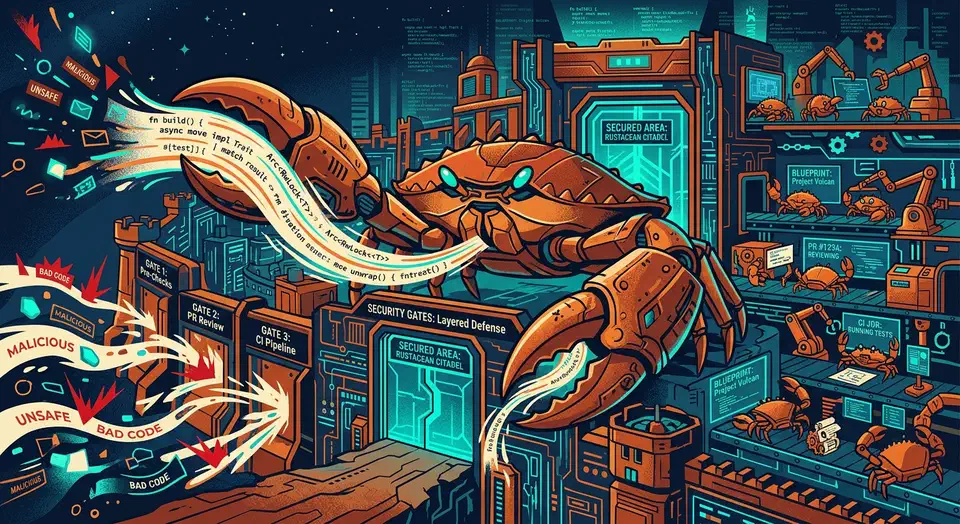
OpenAI Codex CLI: The Rust-Powered Terminal Agent Taking on Claude Code
OpenAI Codex CLI
is an open-source (Apache 2.0), Rust-built terminal coding agent. It has over 72,000 GitHub stars. It pairs GPT-5.4’s 272K default context window, which you can push to 1M tokens, with OS-level sandboxing. That sandbox runs on Apple Seatbelt on macOS and Landlock plus seccomp on Linux. Here is the key point: Codex CLI is the only major AI coding agent that enforces security at the kernel level, not through application-layer hooks. With codex exec for CI pipelines, MCP client and server support, and a GitHub Action for PR review, it is the most infrastructure-ready rival to Claude Code
in 2026.
Linux File Recovery: extundelete, PhotoRec, Btrfs snapshots
If you just ran rm on something important and you’re in a panic, stop touching that filesystem right now. Run mount -o remount,ro /dev/sdX to remount the partition read-only first. Every write to the disk after deletion cuts your odds of getting those files back. Here is the short answer. For ext4, try extundelete
or debugfs first, then PhotoRec
as a fallback. For Btrfs, roll back a snapshot if you have one, or use btrfs restore if you don’t. The right move depends on your case, so read on.
Build Powerful TUI Apps in Python with Textual and Rich
Terminal apps used to mean raw curses calls and a lot of pain. Today, Python’s Textual
and Rich
libraries have flipped that. In under 50 lines of Python you get a full-screen app with styled layouts, widgets, keyboard control, and live data. No web browser. No Electron. No JavaScript. This post walks through both libraries, shows how they fit together, and builds up to a full working example you can extend right away.