 Botmonster Tech
RAG and long context windows are not competing replacements. They are different tools built for different problems. If you are trying to choose between them, the short answer is: it depends on the size and nature of your data, your latency and cost constraints, and how much infrastructure complexity you are willing to maintain. The longer answer involves understanding what each approach actually does, where each one breaks down, and what teams running production LLM systems are doing in 2026 - which is usually some combination of both.
Llm

MCP vs. A2A: The Two Protocols Powering the Agentic Web
Model Context Protocol (MCP) and Agent-to-Agent Protocol (A2A) aren’t rivals. They solve different layers of the same problem. MCP sets how an AI agent connects to tools and data. A2A sets how agents talk to each other and pass off tasks. Together they form the base plumbing of the agentic web.
If you’re building past a single chatbot in 2026, you need to grasp both.
The Fragmentation Problem
Before these protocols, the AI tooling space was a mess of clashing integrations. Every major framework had its own way to plug into outside tools: LangChain , CrewAI , and AutoGen . Giving a LangChain agent access to the Slack API meant writing a LangChain-only tool wrapper. Wanting the same in a CrewAI workflow meant starting over. None of the adapters carried across.

AI-Powered Log Analysis: Find Anomalies in Server Logs with Local LLMs
A local LLM like Llama 3.3 70B or Qwen 2.5 32B running through Ollama can read your structured server logs faster than grep or awk. Pipe parsed log data through a prompt that asks the model to flag odd patterns, link error cascades, and guess at root causes. You get a useful incident summary in seconds. This fills the gap between plain text search and pricey tools like Datadog or Splunk . Best of all, no log data leaves your network.
What X and Reddit Users Are Saying about Claude Opus 4.7
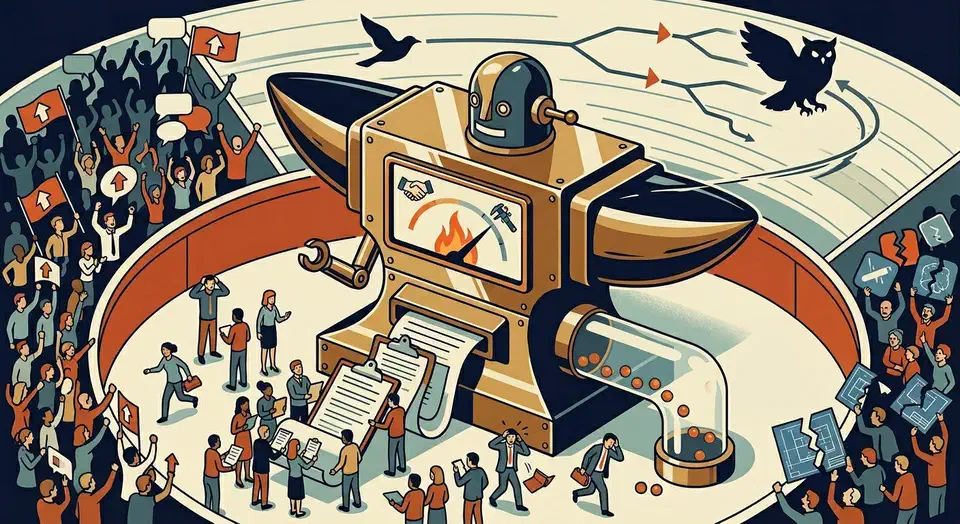
Claude Opus 4.7 landed on April 16, 2026, and after the first 48 hours on X and Reddit the verdict is net-positive but heavily qualified. Power users are calling it state-of-the-art for agentic coding, long refactors, and the viral new Claude Design tool. The loudest complaints cluster around runaway token burn (roughly 1.5-3x more expensive in practice than 4.6), an “ambiguity tax” where the model no longer silently rescues vague prompts, and confidently broken output on marathon runs. Users who prompt like they are writing a spec are getting enormous leverage out of it. Users who prompt the way they used to prompt 4.6 are burning through their usage caps before lunch.

Qwen3.6-35B-A3B: Alibaba's Open-Weight Coding MoE
Qwen3.6-35B-A3B is Alibaba Cloud’s Apache 2.0 sparse Mixture-of-Experts model released April 14, 2026. It carries 35 billion total parameters but activates only about 3 billion per token, and on agentic coding suites it beats Gemma 4-31B and matches Claude Sonnet 4.5 on most vision tasks. A 20.9GB Q4 quantization runs on a MacBook Pro M5, which is the reason this release has taken over half the AI timeline for the past week.
Structured Output from LLMs: JSON Schemas and the Instructor Library
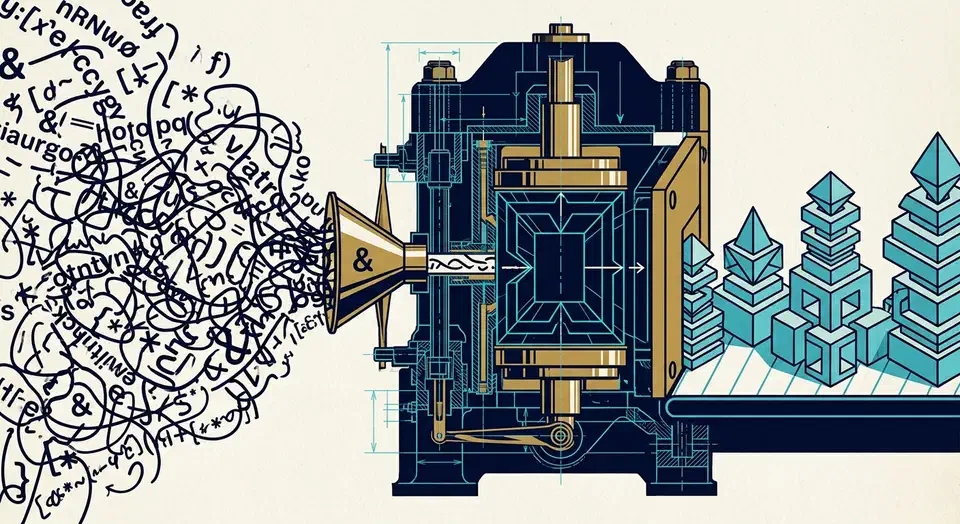
The Instructor
library (v1.7+) patches LLM client libraries to return validated Pydantic
models instead of raw text. It does this with JSON schema enforcement in the system prompt, auto retries on validation failure, and native structured output modes where the provider supports them. It works with OpenAI, Anthropic, Ollama
, and any OpenAI-compatible API. You define your output as a Python class and get back typed, validated data. No regex parsing, no json.loads() wrapped in try/except, no manual type casting.