LogoBotmonster Tech
AI Smart Home Self-Hosting Coding Web Dev Hardware Bootpag Image2SVG Tags

AI

Hands-on guides to LLMs, agents, prompt engineering, and the AI tools I run every day for real work, not demos.

  • ◀︎
  • 1
  • …
  • 13
  • 14
  • 15
  • 16
  • ▶︎
MCP Server Development: Build Custom Tools for Claude and Local LLMs

MCP Server Development: Build Custom Tools for Claude and Local LLMs

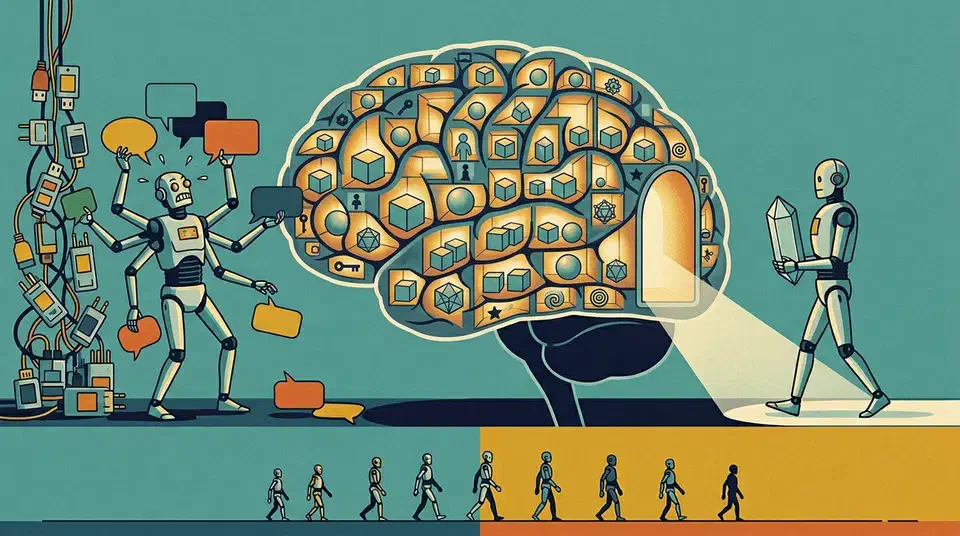
The Model Context Protocol gives LLMs a standard way to call external tools, read files, and query databases. You skip the rewrite each time you switch models. You can build a working MCP server in Python with the official mcp SDK in under 100 lines. It runs with Claude Desktop or Claude Code in minutes. This guide walks the full path, from a tiny first server to production.

What MCP Is and Why It Changes Tool Use

MCP is a JSON-RPC 2.0 protocol. It lets an LLM client (like Claude Desktop , Claude Code, or Cursor) find and call tools exposed by a server process. The big shift from older function-calling is the discovery step. Instead of hard-coding tool defs into every prompt, the client sends a tools/list request when it connects. It gets back the full schema for everything the server exposes. Add a new tool, restart the server, and any client sees it on the next connect.

5 Open Source Repos That Make Claude Code Unstoppable

5 Open Source Repos That Make Claude Code Unstoppable

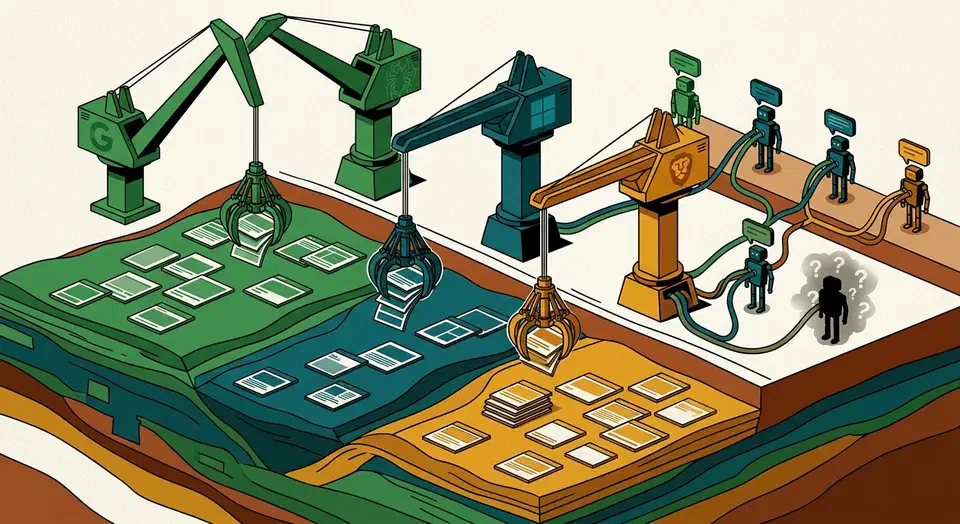
Five open source repositories dropped in March 2026 that expand what Claude Code can do. Karpathy’s AutoResearch runs overnight ML experiments without you. OpenSpace makes agent skills fix and improve themselves. CLI-Anything turns GUI software into agent-ready command-line tools. Claude Peers MCP lets many Claude Code sessions coordinate on one machine. And Google Workspace CLI opens Gmail, Drive, Calendar, and Sheets to agents. All five are free, open source, and plug right into Claude Code.

ControlNet for Stable Diffusion: Sketch-to-Image, Depth Control

ControlNet for Stable Diffusion: Sketch-to-Image, Depth Control

ControlNet lets you steer Stable Diffusion with spatial inputs: hand-drawn sketches, Canny edge maps, depth images, or OpenPose skeletons. The output then follows your layout, not your prompt alone. You feed a control image next to your text prompt. The model builds artwork that matches the structure of your input. It then fills in texture, lighting, and detail from the prompt. You get pixel-level control that no prompt tweak can match.

Production LLM Hallucinations: Taxonomy, Evals, and RAG Defenses

Production LLM Hallucinations: Taxonomy, Evals, and RAG Defenses

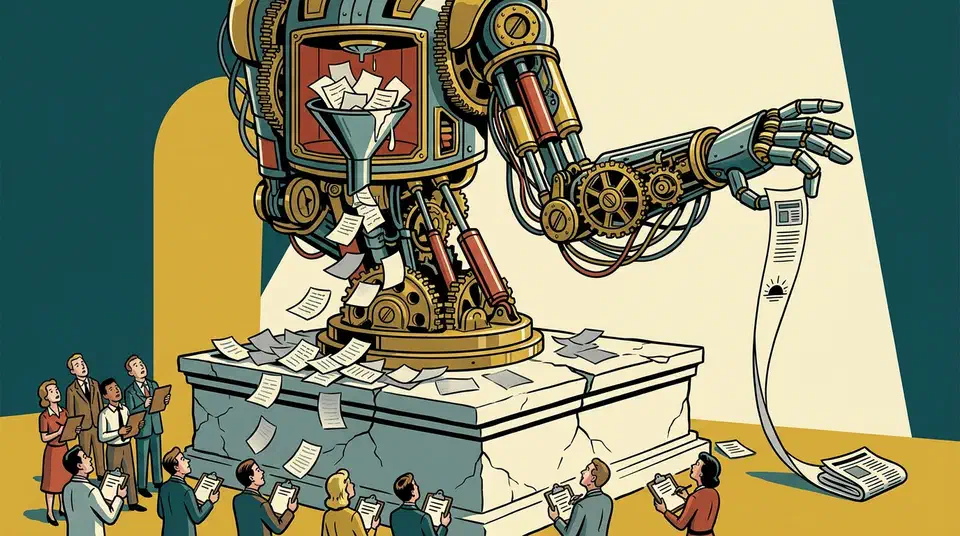
Fixing LLM hallucinations in production needs a layered defense. Use Chain-of-Verification at inference time. Ground the model in trusted data. Build eval suites that give you a hallucination rate you can track and gate in CI . No single trick fixes this. But pair prompt rules with retrieval-augmented grounding , self-checking, and validation layers, and you turn it into a problem you can measure and ship against.

What Is Hallucination? A Taxonomy for Developers

“Hallucination” has become an umbrella label for almost any unexpected LLM output. That fuzziness is dangerous in production. Each failure mode has a distinct cause and a distinct fix. Lump them together and you’ll apply the wrong remedy to the wrong problem. You’ll spend cycles on prompt tuning when the real issue is retrieval quality, or add RAG when the failure is instruction-following. Before you can fix hallucinations, you need a precise vocabulary for what you’re seeing.

Automating Gmail with Local AI Agents and Python

Automating Gmail with Local AI Agents and Python

You can automate your Gmail inbox on your own machine. The Gmail API feeds messages into a private Python script. A local LLM then handles summaries, sorting, and draft replies. You get the smart inbox features that tools like Google’s Gemini sidebar or Microsoft Copilot for Outlook offer. None of your email content ever leaves your computer.

This guide walks through the full build. You’ll set up the Gmail API with minimal OAuth scopes. You’ll fetch and parse raw email data, then mask any PII with Microsoft Presidio before the model sees it. You’ll build a daily summarizer that ranks mail by urgency. You’ll also build a smart draft writer that learns from your sent mail, and you’ll wire the whole pipeline up with cron. By the end, you’ll have a working local email agent that runs on any mid-range Linux or macOS box with Ollama installed.

Evaluating AGENTS.md: Are Repository Context Files Actually Helpful?

Evaluating AGENTS.md: Are Repository Context Files Actually Helpful?

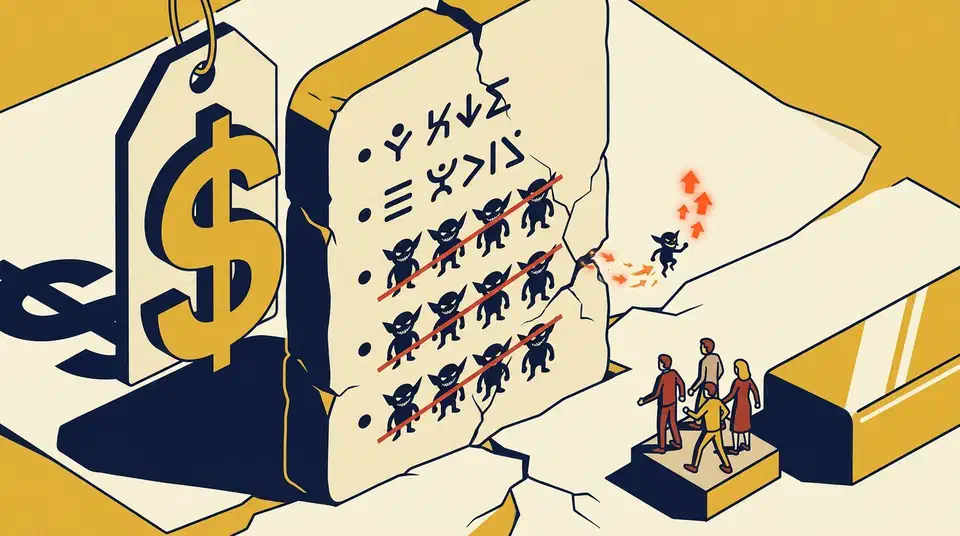
Software teams keep adding AI coding agents to their workflow. One popular trend: drop a repo-level context file, often named AGENTS.md or CLAUDE.md, to guide the agent. The idea sounds clean. Give the AI a map of the codebase and a few rules, and it should solve tasks faster.

But does it work? A new paper, “Evaluating AGENTS.md: Are Repository-Level Context Files Helpful for Coding Agents?” , says no. The results push back hard on the default advice.

  • ◀︎
  • 1
  • …
  • 13
  • 14
  • 15
  • 16
  • ▶︎

Most Popular

What X and Reddit Users Are Saying about Claude Opus 4.7

What X and Reddit Users Are Saying about Claude Opus 4.7

How power users on X and Reddit reacted to Claude Opus 4.7: praise for agentic coding, token burn concerns, and teams' practical prompting habits.

A glowing desktop graphics card streams data into a landscape painting on an easel beside VRAM and wattage gauges

Run FLUX 2 Locally in 2026: VRAM by GPU + ComfyUI Setup

Run FLUX 2 locally in ComfyUI. VRAM by GPU from 8GB to 24GB, GGUF builds, the variant that fits your card, cost versus cloud, and the files to grab.

Running Gemma 4 26B MoE on 8GB VRAM: Three Strategies That Work

Running Gemma 4 26B MoE on 8GB VRAM: Three Strategies That Work

Run Google Gemma 4 26B MoE with sparse activation on budget 8GB GPUs using aggressive quantization, GPU-CPU layer offloading, and tensor parallelism techniques.

Three roped climbers ascend a cliff whose contour lines form a topographic curve over stacked memory chips at the base.

Local Image Models in 2026: Qwen vs FLUX vs SDXL on VRAM

Compare the best local image generation models on text-in-image accuracy, prompt adherence, VRAM, speed, and license to find your quality-per-VRAM sweet spot.

AI Coding Benchmarks in 2026: Why the Leaderboard You Pick Decides the Winner

AI Coding Benchmarks in 2026: Why the Leaderboard You Pick Decides the Winner

AI coding benchmarks produce wildly different rankings. Which models win depends on which benchmark you choose and which agent framework wraps them.

RTX 5080 vs. RTX 5090: The Best GPU for Local AI Workloads in 2026

RTX 5080 vs. RTX 5090: The Best GPU for Local AI Workloads in 2026

Compare the RTX 5080 and 5090 for local AI in 2026: LLM inference benchmarks, image generation performance, power consumption, and a clear value verdict.

Like what you read?

Subscribe to the Botmonster newsletter and get Linux, AI, and self-hosting posts weekly.

Privacy Policy  ·  Terms of Service
2026 Botmonster