Botmonster Tech
AI Smart Home Linux Development Hardware jQuery Bootpag Image2SVG Tags
Botmonster Tech
AISmart HomeLinuxDevelopmentHardwarejQuery BootpagImage2SVGTags
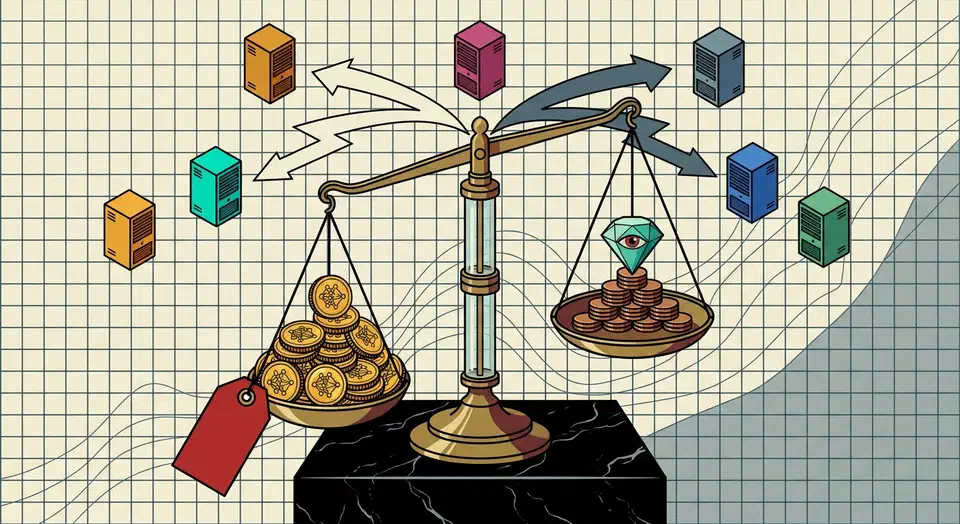
Brass alchemist scales weighing a heavy pile of gold coins with a red 1500 price tag against a small pyramid of bronze coins and a teal dragon-circuit gem, with five colored arrows pointing to isometric server towers

Ditching Claude Opus for GLM 5.1 in OpenClaw at $18/Mo

After Anthropic’s third-party tool restrictions priced agentic users off Claude Opus 4.6, the cheapest working OpenClaw stack is Z.ai’s $18/mo GLM 5 Turbo plan, with Ollama-cloud’s $20/mo GLM 5.1 and MiniMax’s $40/mo highspeed tier as the next two rungs. Kimi 2.6 stays API-only because local deployment needs roughly 750 GB of RAM.

Key Takeaways

  • Z.ai’s $18/mo plan running GLM 5 Turbo is the cheapest OpenClaw backend that actually works.
  • MiniMax highspeed at $40/mo handles heavier workloads without the four-figure surprise bills.
  • Kimi 2.6 needs around 750 GB of RAM to self-host, so almost everyone runs it through the API.
  • Keep Claude on the planner role; route scheduled jobs to the cheap backends.
  • China-hosted models trade dollars for privacy on iMessage, contacts, and email skills.

Why $1,500/mo Opus Bills Pushed Users to GLM

The pressure here is simple. The moment Anthropic’s third-party tool restrictions kicked in, OpenClaw users who had been running on the Claude Pro CLI got nudged onto pay-per-token API access. At Opus 4.6 list pricing of $15 per million input tokens and $75 per million output tokens, agentic loops add up fast. The OP of the r/openclaw PSA thread tracked his own bill at roughly $1,500/mo before he switched. That figure is the reference point most cost-comparison threads on the sub now cite.

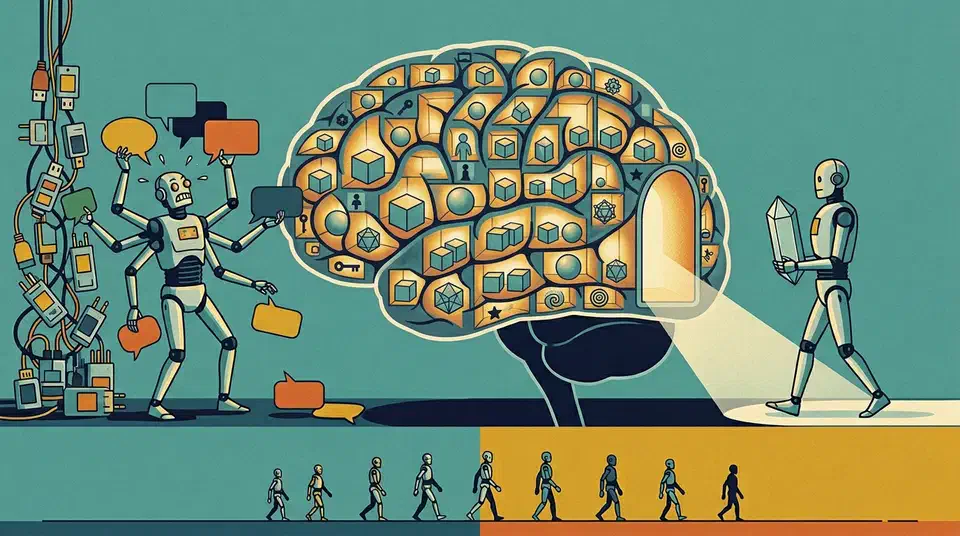
Allegorical illustration of a translucent brain memory vault with a chaotic multi-armed robot dropping speech bubbles on the left and a calm robot carrying a memory shard on the right

OpenClaw vs Hermes and Why Memory Kills Agent Loyalty

Hermes Agent , built by Nous Research, has taken roughly 30% of OpenClaw’s user base by solving one failure mode: memory. The Kilo.ai synthesis of 1,300+ r/openclaw comments confirms the figure. OpenClaw still wins on multi-agent breadth and 100+ skills, so the right answer depends on which failure mode hurts you more.

Key Takeaways

  • About 30% of r/openclaw users have switched to Hermes Agent, mainly for memory reliability.
  • Memory failures, not features, are the top reason people leave OpenClaw.
  • Hermes ships with memory that works by default; OpenClaw needs heavy prompt-engineering to behave.
  • OpenClaw still wins for multi-bot setups across Telegram, Slack, and Discord.
  • A growing minority skip both and use OpenAI Codex business-tier instead.

Why r/openclaw Is Migrating to Hermes

The most-cited migration thread on the subreddit is the 167-comment OpenClaw vs Hermes thread , and the top-voted answer to “is Hermes worth a look” reads as a clean defection notice. The poster had run OpenClaw for weeks against the same workload and switched in an afternoon:

Editorial infographic of an engineer at a control panel splitting glowing data flow between a sealed OAuth gate and an open brass pipe feeding a glowing terminal monolith

OpenClaw on Your $20 Claude Sub After Anthropic Banned It

OpenClaw’s bundled claude-cli backend is officially sanctioned by Anthropic, while OAuth-token extraction tools stay blocked. The carve-out works because shelling out to claude -p preserves prompt caching, so a $20 Pro or $200 Max sub routes through OpenClaw without four-figure API bills. The catch: a roughly 5-hour cap that cron jobs exhaust in minutes.

Key Takeaways

  • OpenClaw’s CLI backend is allowed by Anthropic; the older OAuth-token tools are not.
  • The reason it is allowed: it preserves Anthropic’s prompt caching exactly like Claude Code does.
  • Pro and Max plans cap usage near 5 hours per window, so cron jobs need a cheaper backup.
  • Use Claude for planning and chat, route automated tasks to GLM, MiniMax, or Codex.
  • Setup is three commands and one config edit on any Mac or Linux host running Claude Code.

What Changed in Anthropic’s Third-Party Tool Policy?

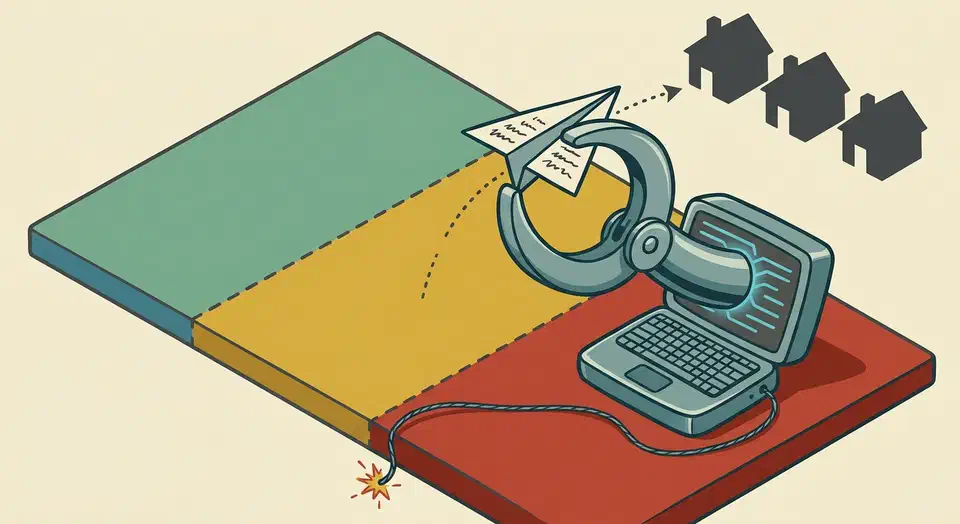
Most users found out about the policy change when their Anthropic bill jumped, not from a press release. Heavy agentic workflows that previously billed against a flat Pro or Max subscription suddenly tracked toward $1,500 a month on Opus 4.6 once Anthropic forced third-party orchestrators onto the pay-per-token API. The original concern was narrower than the community read it as. Anthropic’s target was a specific class of tool that extracts the OAuth token from a local Claude Code install and calls the Anthropic API directly under that identity. That pattern bypasses Anthropic’s prompt caching and pushes load to the API tier without the caching benefit Anthropic gets when Claude Code itself runs the request.

Towering brass clockwork robot on a cracked pedestal leaking forgotten paper notes from its memory chamber while handing down a tidy morning news briefing

1,000 OpenClaw Deploys Later

After publishing a 7-minute OpenClaw deploy video and watching roughly 1,000 isolated VMs spin up afterward, one r/LocalLLaMA cloud-infra operator concluded the only OpenClaw workflow that survives unsupervised execution is a daily news digest. Memory is the load-bearing failure mode, not a fixable bug. OpenClaw sits at 370K+ GitHub stars, but the working-workflow count has barely moved.

Key Takeaways

  • A cloud-infra operator watched roughly 1,000 OpenClaw deploys and found one reliable use case.
  • Memory unreliability is built into how the agent works, not a bug a patch can fix.
  • Daily news digests are the exception because they keep no state between runs.
  • The same digest can be built with a cron job and any LLM API in about ten lines.
  • OpenClaw’s founder admitted that recent releases were a “rough week”.

The 1,000-Deploy Post That Broke the Consensus

The contrarian thesis is anchored to one specific source: an r/LocalLLaMA post titled “OpenClaw has 250K GitHub stars. The only reliable use case I’ve found is daily news digests” , with 335 comments and 891 votes. The OP is not a casual skeptic. He runs cloud infrastructure where strangers spin up Linux VMs, published a deploy walkthrough that took off, and now has a dataset most reviewers do not have access to.

Self-Driving Business: Integrating OpenClaw with Google Workspace CLI

Self-Driving Business: Integrating OpenClaw with Google Workspace CLI

By combining OpenClaw (an open-source autonomous AI agent) with Google’s Workspace CLI and the Model Context Protocol, you can build a self-driving business layer that monitors Gmail, manages Google Drive, and updates Calendar - all without manual intervention. The setup requires configuring OAuth credentials in Google Cloud Console, installing the GWS CLI via npm, and exposing the Workspace tools to OpenClaw via an MCP server - giving your AI agent structured, programmatic access to the entire Google productivity stack.

Most Popular

Gemma 4 vs Qwen 3.5 vs Llama 4: Which Open Model Should You Actually Use? (2026)

Gemma 4 vs Qwen 3.5 vs Llama 4: Which Open Model Should You Actually Use? (2026)

A head-to-head comparison of Gemma 4, Qwen 3.5, and Llama 4 across benchmarks, licensing, inference speed, multimodal capabilities, and hardware requirements. Covers the full model families from edge to datacenter scale.

5 Open Source Repos That Make Claude Code Unstoppable

5 Open Source Repos That Make Claude Code Unstoppable

Five GitHub repositories released in March 2026 push Claude Code into new territory. From autonomous ML experiments running overnight to multi-agent communication and full Google Workspace access, these open source tools solve real workflow gaps that Claude Code cannot handle alone.

Cross-section of a translucent crystal brain threaded by red, gold, and teal attention ribbons resting on a doubly-stochastic matrix pedestal beside a guitar-tuning lab figure.

DeepSeek V4 Tech Report: 3 Tricks That Cut Compute 73%

DeepSeek V4 ships 1.6T parameters and 1M context using only 27% of V3.2's inference FLOPs. Inside the hybrid attention, mHC residuals, and Muon optimizer.

Cracked stone tablet engraved with a bulleted system prompt, four crossed-out goblin silhouettes repeated, a tiny goblin escaping with upvote-arrow sparks, a giant dollar-sign price tag, and figures refusing to step onto a glossier pedestal.

GPT 5.5 Reddit Reception: Goblins and the Cost Backlash

GPT-5.5 Reddit reception: leaked system prompt, doubled pricing controversy, and the persistent debate over 5.4 holdouts.

What X and Reddit Users Are Saying about Claude Opus 4.7

What X and Reddit Users Are Saying about Claude Opus 4.7

How power users on X and Reddit reacted to Claude Opus 4.7: praise for agentic coding, token burn concerns, and teams' practical prompting habits.

Qwen3.6-35B-A3B: Alibaba's Open-Weight Coding MoE

Qwen3.6-35B-A3B: Alibaba's Open-Weight Coding MoE

Alibaba's sparse MoE model: 35B total parameters, 3B active. Scores 73.4 on SWE-bench Verified, matches Claude Sonnet 4.5 vision performance.

Alacritty vs. Kitty: Best High-Performance Linux Terminal

Alacritty vs. Kitty: Best High-Performance Linux Terminal

Compare Alacritty and Kitty terminal emulators: performance benchmarks, latency, memory use, startup time, and which fits your Linux workflow best.

Like what you read?

Get new posts on Linux, AI, and self-hosting delivered to your inbox weekly.

Privacy Policy  ·  Terms of Service
2026 Botmonster