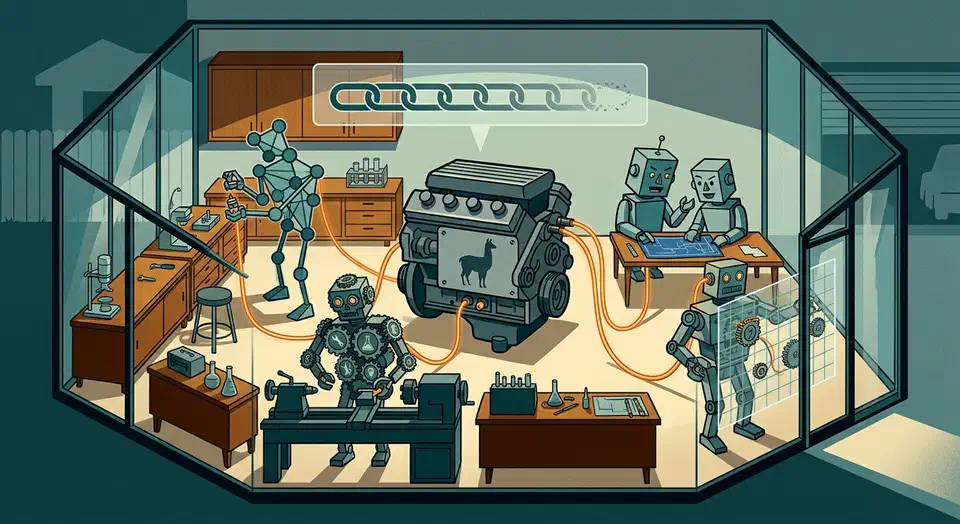
A private voice assistant that runs on your own hardware is practical in 2026. No Amazon, no Google, no cloud. With Whisper v3 for speech-to-text, a quantized Llama model for intent, and Piper for natural speech, you can build a voice-controlled setup on a Raspberry Pi 5 that never sends one audio sample to the internet. This guide walks the full stack, from wake word to Home Assistant , with a focus on low latency so it feels like a real assistant.
DIY NAS Comparison: Raspberry Pi 5 vs. Intel N100
The Intel N100 is the superior choice for a DIY NAS in 2026 if you plan to run Plex or Jellyfin, need ZFS reliability, or want to expand beyond two drives. But the Raspberry Pi 5 remains the champion for low-power, always-on file storage where idle electricity cost is the primary concern. The right answer depends almost entirely on what you actually want the box to do.
Why Build a DIY NAS in 2026? The Case Against Synology
Synology and QNAP have spent the last few years making themselves harder to recommend. Synology introduced drive compatibility restrictions that reject non-Synology-branded drives in their newer units - drives that work identically to approved alternatives. Their DSM operating system has evolved from a convenient management layer into a proprietary platform with aggressive upselling for cloud services you didn’t ask for. A comparable Synology DS423+ costs around $500 without any drives included, while a comparable DIY N100 build with 4 SATA ports runs under $200.
Implement Dark Mode in Vanilla CSS (Zero JavaScript)
You can implement a robust dark mode using only the prefers-color-scheme media query and CSS Custom Properties
(variables). This “CSS-first” approach delivers a completely flash-free experience for users while keeping your site’s codebase clean, lightweight, and JavaScript-independent.
Why Avoid JavaScript for Dark Mode
Most dark mode tutorials reach for JavaScript to toggle a class on <body>. It is the intuitive solution - add a button, read a preference from localStorage, apply a class - and it works well enough in demos. But in production, on real hardware, across real network conditions, this approach has critical failure modes that are worth understanding before you commit to it.
Self-Host Blog Comments with Remark42 (Privacy-First)
Most blogs reach for Disqus on day one because it takes about five minutes to set up. What you don’t see at sign-up is the deal you’re making: Disqus is free because it monetizes your readers. Every person who loads your comment section gets tracked, profiled, and served ads - not because they agreed to it, but because that’s the business model behind the embed script you pasted into your template.
Writing Custom Python Integrations for Home Assistant (HACS)
A custom Home Assistant integration is a Python wrapper for your hardware’s API, packaged as a HACS component. You get full entity control and automation support for unsupported or legacy devices. No fork of core HA. No wait for an official integration.
That said, custom integrations carry real upkeep. Before you reach for Python, check if a simpler path already exists.
When to Write a Custom Integration
Home Assistant ships with over 3,000 built-in integrations. Before you write a line of Python, visit home-assistant.io/integrations and search the HACS default store . Odds are good your device is already covered, or a community add-on exists.
Automate Smart Blinds and Adaptive Lighting for Better Sleep
Your home’s lights are one of the best levers for better sleep, and you can set most of it on autopilot. Pair motorized blinds driven by Home Assistant solar elevation data with the Adaptive Lighting HACS integration. The combined setup shifts light and blind positions through the day, in step with your body clock. The result: a gentler wake-up, a calmer wind-down, and better sleep.
The Science of Circadian Lighting
The human circadian system is keenly sensitive to light. The intrinsically photosensitive retinal ganglion cells (ipRGCs) in the eye react strongly to short-wavelength blue light in the 470 to 490 nm range. Cool bluish light, typically in the 5000K to 6500K color range, blocks melatonin and tells the brain it’s daytime. Warm light in the 2200K to 2700K range mostly falls outside that band and won’t trigger the same response, so it’s safe (and even helpful) for evening use.
Botmonster Tech