 Botmonster Tech
Gemini CLI is Google’s open-source terminal AI agent. It offers a free tier with 1,000 requests per day and a 1M token context window. While its code quality trails Claude Code, it provides zero-cost access for developers. It’s now the most-starred AI coding CLI on GitHub. Update: Google discontinued the free, Pro, and Ultra tiers on June 18, 2026 and moved users to a closed-source successor, so read the Antigravity CLI migration guide for what changed and how to keep the old CLI running.
Ai-Agents

Self-Driving Business: Integrating OpenClaw with Google Workspace CLI
By combining OpenClaw (an open-source autonomous AI agent) with Google’s Workspace CLI and the Model Context Protocol, you can build a self-driving business layer that monitors Gmail, manages Google Drive, and updates Calendar - all without manual intervention. The setup requires configuring OAuth credentials in Google Cloud Console, installing the GWS CLI via npm, and exposing the Workspace tools to OpenClaw via an MCP server - giving your AI agent structured, programmatic access to the entire Google productivity stack.

AI Coding Agents Are Insider Threats: Prompt Injection, MCP Exploits, and Supply Chain Attacks
Your AI coding agent has the same file access, shell rights, and database keys you do. A review of 78 studies from January 2026 (arXiv:2601.17548 ) tested every big coding agent. The list ran every major agentic coding assistant . All fell to prompt injection. Adaptive attacks landed more than 85% of the time. This isn’t theory. CVE-2026-23744 gave attackers remote code execution on MCPJam Inspector at CVSS 9.8. A booby-trapped PDF tripped a physical pump through a Claude MCP link at a plant. Attackers hit GitHub’s MCP server to exfiltrate private repository data via malicious issues . And 47 firms fell to a poisoned plugin ecosystem that hid for six months.

Claude Code Skills Ecosystem: 1,340+ Installable Agent Skills for AI Coding Assistants
The Claude Code
skills ecosystem passed 1,340 installable skills in early 2026, and the number keeps climbing. These skills use the universal SKILL.md format
: folders of structured instructions that teach AI coding tools to do special tasks. They work across Claude Code, Cursor, Codex CLI, and Gemini CLI without changes. Official skills have shipped from teams at Anthropic, Trail of Bits, Vercel, Stripe, Cloudflare, and dozens of solo devs. Install takes one npx command.

Three Tiers of AI Pair Programming: From Autocomplete to Autonomous Overnight Agents
The most productive developers in 2026 don’t use a single AI tool. They run a three-tier stack. Tier 1 is inline completions for line-by-line speed. Tier 2 is parallel agent sprints that take on feature-sized work. Tier 3 is overnight batch agents that run 30 to 50 improvement cycles while you sleep. GitHub’s research shows AI pair programming makes developers 55% faster, but that gain comes mostly from Tier 1. The real win comes from running all three tiers at once, with clear rules about which task goes where.
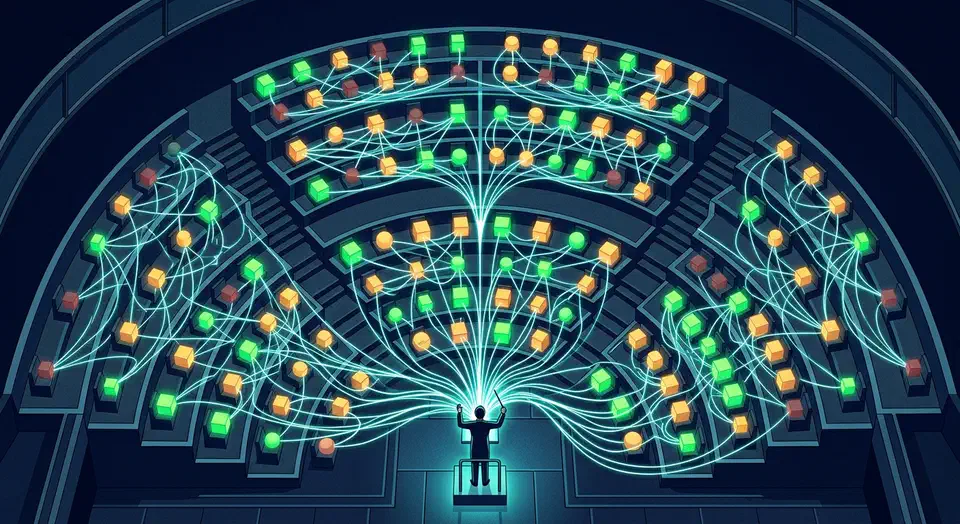
Running Multiple AI Coding Agents in Parallel: Patterns That Actually Work
Three focused AI coding agents beat one broad agent working three times as long. Addy Osmani showed this at O’Reilly AI CodeCon , and the finding captures both the upside and the catch of multi-agent work. The speed gains are real. They only show up when you solve the coordination problem. Without file isolation, iteration caps, and review gates, parallel agents make a mess of merge conflicts and duplicated work.