 Botmonster Tech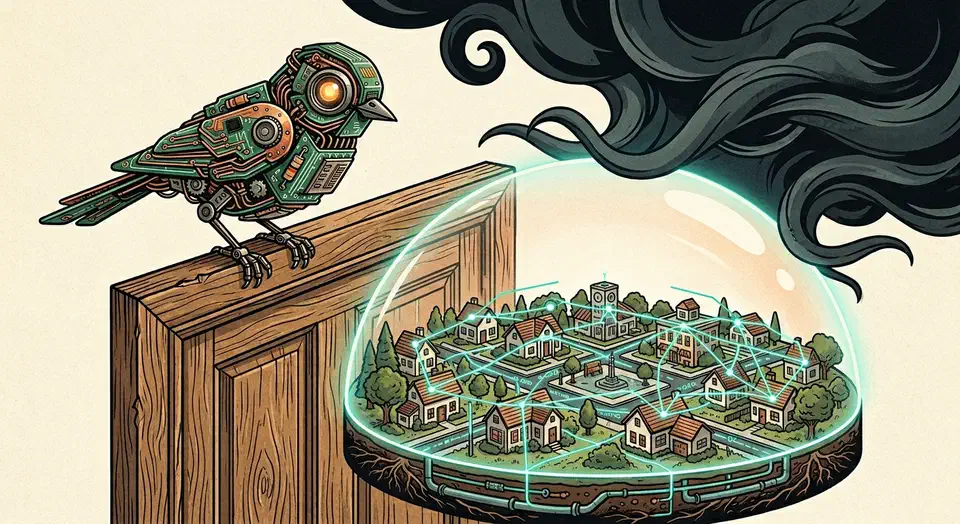
Yes, you can build a full smart video doorbell for under $25. The parts list: an ESP32-CAM board, a PIR motion sensor, a push button, and ESPHome firmware. It streams MJPEG video to Home Assistant , pushes a snapshot to your phone on button press, and saves motion clips locally. No cloud. No video leaves your network. The build takes about two hours, and every future update flashes over Wi-Fi.
Embedded
Soldering Irons Tested: Pinecil, Hakko FX-888D, TS101
For most hobbyist PCB work, the Pinecil V2 at around $26 is the best value soldering iron thanks to its USB-C PD and QC3.0 power flexibility, RISC-V open-source firmware (IronOS ), and sub-10-second heat-up time. But the Hakko FX-888D (now succeeded by the FX-888DX at around $130-150) remains the superior benchtop station for marathon soldering sessions due to its thermal recovery and ceramic heater. The Miniware TS101 at roughly $50-70 splits the difference as a portable iron with an OLED display and dual power input that handles everything from SMD rework to through-hole joints with interchangeable TS-series tips.

The State of Consumer SBCs in 2026: Trends, Trials, and the RISC-V Frontier
The consumer SBC market in 2026 is not dead. It is just no longer what it was sold as. Raspberry Pi, Orange Pi, Rock Pi, and the rest of the single-board computer crowd now ship 70-80% of their units to industrial customers. Think factory automation, digital signage, point-of-sale terminals, and medical devices. The $35 computer that was meant to put a hackable Linux machine in every teenager’s bedroom is now more likely bolted inside a mall vending machine.

Upgrade Your 3D Printer with Klipper: A Complete Setup Guide
Klipper is a 3D printer firmware that moves motion planning off the printer’s microcontroller. The work runs on a Raspberry Pi or similar single-board computer instead. You get faster print speeds (300-500mm/s on a tuned Voron), pressure advance for cleaner corners, input shaping to kill ringing artifacts, and live config changes with no re-flashing. Klipper paired with a Mainsail or Fluidd web UI on a Raspberry Pi 5 is now the default stack for serious 3D printing.

ESP32, RP2040, STM32: MQTT Beyond ESPHome
You can wire any microcontroller into Home Assistant over MQTT . Publish sensor data to discovery topics and subscribe to command topics. You get full firmware control without ESPHome’s abstraction layer. The trick works on any chip: ESP32, RP2040, STM32, or a Raspberry Pi Pico W. It’s the right pick when your device needs custom protocols, bare-metal timing, or firmware features ESPHome can’t reach.
This post covers when raw MQTT makes sense, the discovery protocol that auto-registers devices, firmware examples on the ESP32 and RP2040, two-way control patterns, and security hardening.

Why Small Language Models (SLMs) are Better for Edge Devices
Small Language Models, sub-4B parameter models built to run on local hardware, now handle most of the edge AI work that used to need the cloud. Phi-4 , Gemma 3 , and Llama 3.2-1B run offline on Raspberry Pi boards, phones, and industrial PLCs. The economics, latency, and privacy story all point the same way: edge first.
What Counts as a Small Language Model
In 2023, “small” meant under 13B parameters. Today, three tiers matter for edge work.