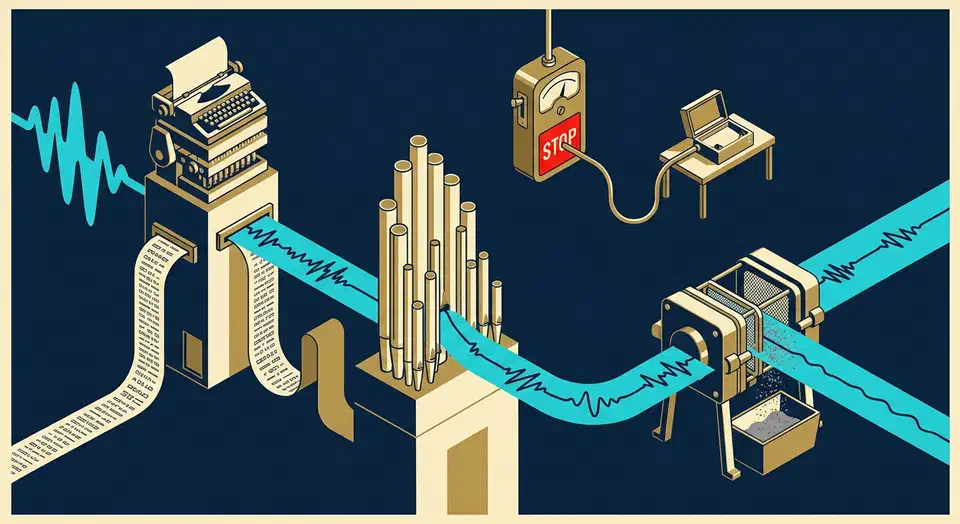
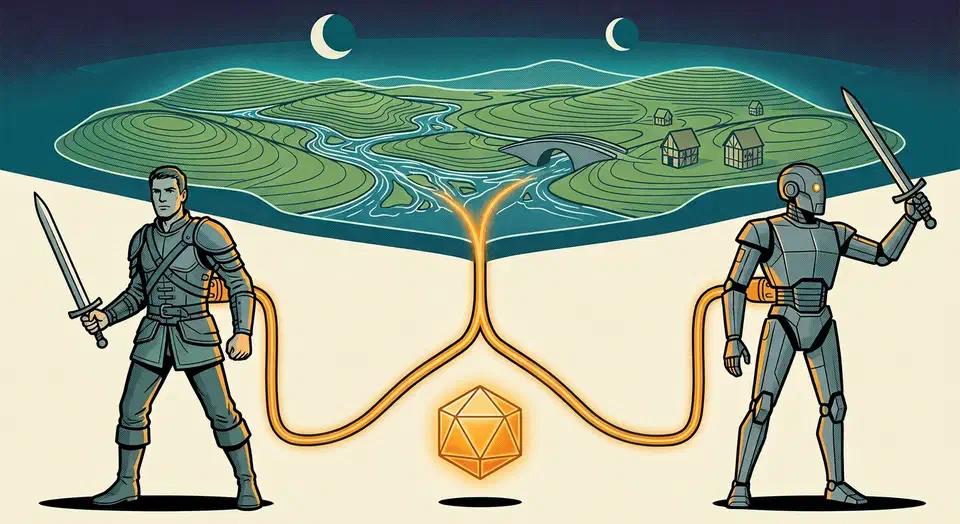
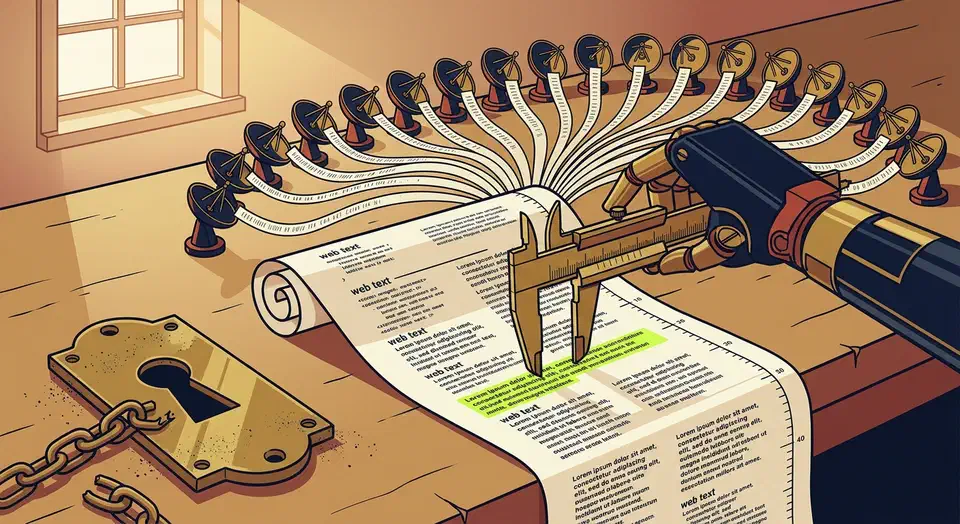
On February 23, 2026, Anthropic published a blog post titled “How AI Helps Break the Cost Barrier to COBOL Modernization” . It shipped with a Code Modernization Playbook . By market close, IBM’s stock had fallen 13.2% to $223.35 per share. That was IBM’s worst single day since October 2000. More than $31 billion in market cap vanished. Accenture fell 6.5%. Cognizant dropped 6%. One blog post had shaken the whole legacy migration sector.
OpenClaw on Your $20 Claude Sub After Anthropic Banned It
OpenClaw’s bundled claude-cli backend is officially sanctioned by Anthropic, while OAuth-token extraction tools stay blocked. The carve-out works because shelling out to claude -p preserves prompt caching, so a $20 Pro or $200 Max sub routes through OpenClaw without four-figure API bills. The catch: a roughly 5-hour cap that cron jobs exhaust in minutes.
Key Takeaways
- OpenClaw’s CLI backend is allowed by Anthropic; the older OAuth-token tools are not.
- The reason it is allowed: it preserves Anthropic’s prompt caching exactly like Claude Code does.
- Pro and Max plans cap usage near 5 hours per window, so cron jobs need a cheaper backup.
- Use Claude for planning and chat, route automated tasks to GLM, MiniMax, or Codex.
- Setup is three commands and one config edit on any Mac or Linux host running Claude Code.
What Changed in Anthropic’s Third-Party Tool Policy?
Most users found out about the policy change when their Anthropic bill jumped, not from a press release. Heavy agentic workflows that previously billed against a flat Pro or Max subscription suddenly tracked toward $1,500 a month on Opus 4.6 once Anthropic forced third-party orchestrators onto the pay-per-token API. The original concern was narrower than the community read it as. Anthropic’s target was a specific class of tool that extracts the OAuth token from a local Claude Code install and calls the Anthropic API directly under that identity. That pattern bypasses Anthropic’s prompt caching and pushes load to the API tier without the caching benefit Anthropic gets when Claude Code itself runs the request.
1,000 OpenClaw Deploys Later
After publishing a 7-minute OpenClaw deploy video and watching roughly 1,000 isolated VMs spin up afterward, one r/LocalLLaMA cloud-infra operator concluded the only OpenClaw workflow that survives unsupervised execution is a daily news digest. Memory is the load-bearing failure mode, not a fixable bug. OpenClaw sits at 370K+ GitHub stars, but the working-workflow count has barely moved.
Key Takeaways
- A cloud-infra operator watched roughly 1,000 OpenClaw deploys and found one reliable use case.
- Memory unreliability is built into how the agent works, not a bug a patch can fix.
- Daily news digests are the exception because they keep no state between runs.
- The same digest can be built with a cron job and any LLM API in about ten lines.
- OpenClaw’s founder admitted that recent releases were a “rough week”.
The 1,000-Deploy Post That Broke the Consensus
The contrarian thesis is anchored to one specific source: an r/LocalLLaMA post titled “OpenClaw has 250K GitHub stars. The only reliable use case I’ve found is daily news digests” , with 335 comments and 891 votes. The OP is not a casual skeptic. He runs cloud infrastructure where strangers spin up Linux VMs, published a deploy walkthrough that took off, and now has a dataset most reviewers do not have access to.
DeepSeek V4 Tech Report: 3 Tricks That Cut Compute 73%
DeepSeek V4 is a 1.6 trillion parameter open-weight Mixture-of-Experts model. It reads 1M tokens at once. It uses 27% of V3.2’s inference FLOPs and 10% of its KV cache. The DeepSeek V4 tech report credits three moves: hybrid CSA plus HCA attention, Manifold-Constrained Hyper-Connections, and the Muon optimizer in place of AdamW.
Key Takeaways
- DeepSeek V4 is a free, open-weight AI that goes toe-to-toe with the top closed models from OpenAI, Anthropic, and Google.
- It reads 1 million tokens in one prompt, enough for several full books or a long agent run without losing track.
- It runs on roughly a quarter of the compute its previous version needed, making long-context AI affordable to operate.
- A smaller team built it without access to top NVIDIA chips, proving clever engineering can rival raw GPU spend.
- It scored a perfect 120 out of 120 on the 2025 Putnam math competition and beats Google’s Gemini 3.1 Pro at 1M-token recall.
DeepSeek V4 at a Glance
The official launch announcement on April 24, 2026 framed the release as “the era of cost-effective 1M context length.” It shipped two checkpoints under the MIT license. DeepSeek-V4-Pro runs at 1.6T total and 49B active parameters. DeepSeek-V4-Flash runs at 284B total and 13B active. Both models read 1M tokens at once. Both ship as open weights on Hugging Face . The routed expert weights use FP4 math, and most other weights use FP8.
GPT 5.5 Reddit Reception: Goblins and the Cost Backlash
GPT-5.5 launched on April 23, 2026, and two weeks of Reddit reception split along three fault lines that no aggregator roundup captured cleanly. A leaked Codex system prompt forbidding “goblins, gremlins, raccoons, trolls, ogres, pigeons” went viral on r/ChatGPT (856 votes) and r/OpenAI (1.2K votes) before OpenAI’s own post-mortem dropped. Doubled output pricing at $30 per million tokens drew the loudest dissent on r/OpenAI’s launch thread , and a measurable 5.4 holdout faction emerged around hallucination regressions on factual recall workflows. This post is a Reddit-only community-reception snapshot bounded to the first 14 days.
The 80% Coverage Trap: Why AI-Generated Tests Create a False Sense of Security
AI test generation tools make it trivially easy to hit 80% or even 90%+ line coverage. Point GitHub Copilot
at a codebase, use the @Test directive, and watch it produce hundreds of test methods without a single line of manual effort. The number looks great on a dashboard. The problem is that line coverage only measures execution, not detection. A test suite can run every line of your code without asserting anything meaningful about whether that code is correct. In a documented 2026 experiment, an AI-generated suite scored 93.1% line coverage but only 58.6% on mutation testing - meaning over a third of realistic bugs would have slipped through undetected with CI showing green across the board.
Botmonster Tech