 Botmonster Tech
If you want better output from Claude Code , piling on more MCP servers and plugins is rarely the answer. Pairing it with the right CLI tools and skills is. By combining purpose-built integrations like Supabase CLI, Playwright, and GitHub CLI with structured orchestration frameworks like GSD, you can build a development stack where Claude Code handles code generation, entire deployment pipelines, research workflows, and browser automation - without constant hand-holding.
Claude Code Agent Teams: Orchestrating Multiple AI Sessions on One Project
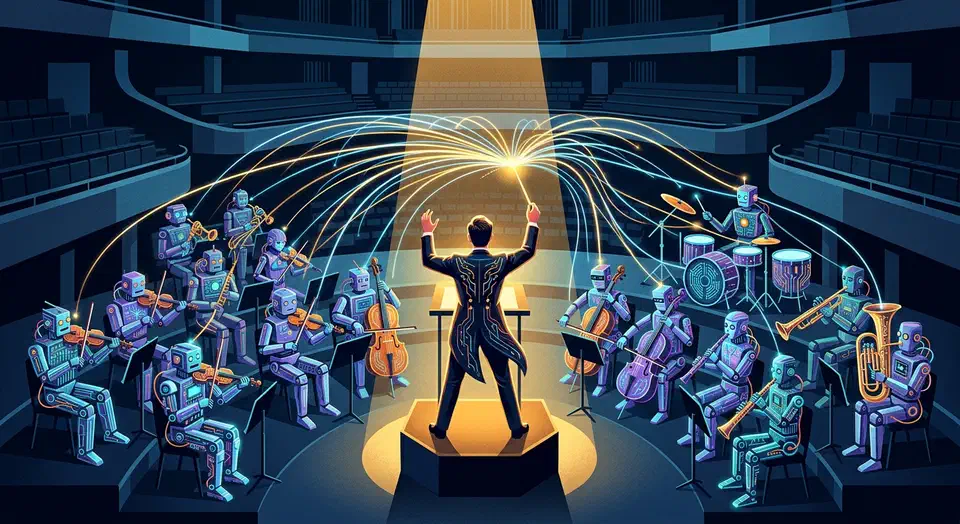
Claude Code Agent Teams is an experimental feature - available since v2.1.32 (February 2026) - that lets you run 2-16 Claude Code sessions coordinated by a single team lead. Each teammate operates in its own context window with full tool access, while communicating through a shared task list and direct peer-to-peer messaging. You enable it with one config change, describe the team you want in natural language, and Claude handles spawning, assignment, and coordination. The feature works best for parallelizable work like multi-file refactors, cross-layer feature builds, and research-and-review workflows, but it costs 3-7x more tokens than a single session and has no session resume capability.

CLAUDE.md Productivity Stack: Skills, Git Worktrees, and Hooks for Parallel Development
The single most important file in any Claude Code project is CLAUDE.md - a persistent instruction set that loads every session and shapes how the agent reads, writes, and verifies code. But CLAUDE.md alone is not what separates productive setups from fragile ones. The real productivity stack in 2026 combines CLAUDE.md conventions with on-demand skills, deterministic hooks, and git worktree isolation for running 10-15 parallel sessions against a single repository. Each session is scoped to one task, operating in its own branch, turning a solo developer into a small engineering team .
Code Interpreter with Ollama and Docker: Unlimited, Private
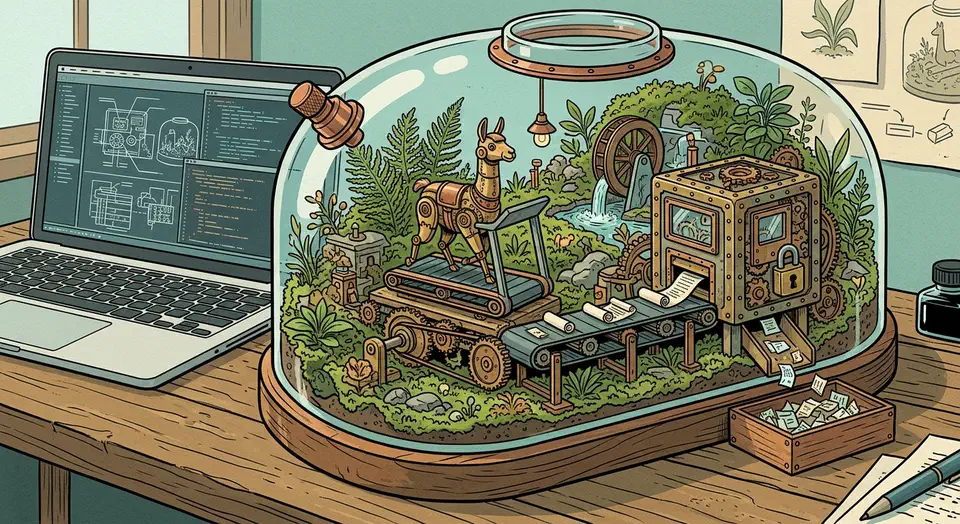
You can build a fully local, sandboxed code interpreter agent by pairing Ollama (running a reasoning model like Llama 4 Scout or DeepSeek R1) with a Docker container that executes the generated Python code. The agent sends a user prompt to the local LLM, which produces Python code; that code gets injected into a locked-down Docker container with no network access and strict resource limits; the stdout/stderr output is captured and fed back to the LLM for reflection and iteration. The entire loop runs on your machine with zero cloud API calls, giving you a private, free, ChatGPT Code Interpreter-style experience.

Agentic RAG with LangGraph: 25% Better Accuracy, Fewer Calls
Agentic RAG replaces the standard “retrieve-then-generate” pattern. The LLM gets tool-use powers to decide when to retrieve, which sources to query, how to rewrite queries, and whether the result is enough. Instead of fetching docs on every query, the model acts as an orchestrator. It runs targeted searches across vector stores, SQL databases, and web sources, then checks its own answers. This pattern lifts answer accuracy by 15-25% on multi-hop benchmarks and cuts wasted retrieval calls by about 35%.
Claude Code Is Built Entirely on MCP - What the Source Leak Revealed
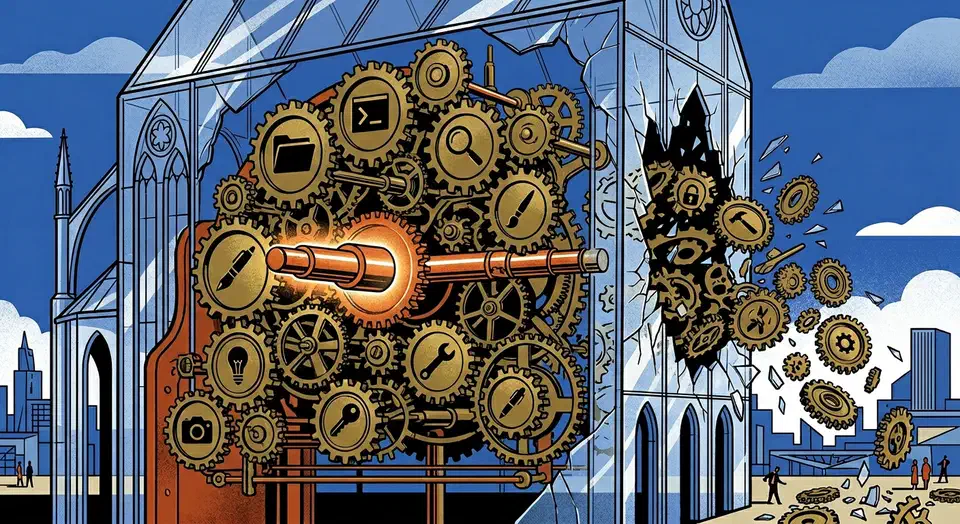
Claude Code doesn’t use MCP
as a plugin system. It is MCP. On March 31, 2026, Anthropic shipped a 59.8 MB source map by accident in npm package @anthropic-ai/claude-code v2.1.88. Developers got a rare look at how a real AI coding agent works. Every capability in Claude Code (file reads, bash, web fetches, Computer Use, IDE bridges) runs as a single permission-gated MCP tool call. There is no special internal API. Third-party MCP servers you connect get the same execution path, permission checks, and error handling as Anthropic’s own built-in tools.