 Botmonster Tech
Your AI coding agent has the same file access, shell rights, and database keys you do. A review of 78 studies from January 2026 (arXiv:2601.17548 ) tested every big coding agent. The list ran every major agentic coding assistant . All fell to prompt injection. Adaptive attacks landed more than 85% of the time. This isn’t theory. CVE-2026-23744 gave attackers remote code execution on MCPJam Inspector at CVSS 9.8. A booby-trapped PDF tripped a physical pump through a Claude MCP link at a plant. Attackers hit GitHub’s MCP server to exfiltrate private repository data via malicious issues . And 47 firms fell to a poisoned plugin ecosystem that hid for six months.
Ai

Self-Hosted AI Search: Combine SearXNG and a Local RAG Pipeline
You can build a private AI search engine modeled on Perplexity
. You combine SearXNG
with a local language model running through Ollama
. Here is the stack. SearXNG pulls results from many search engines at once. A Python scraper fetches and cleans the actual page content. The LLM then turns everything into a cited answer with inline references like [1], [2]. No API keys, no telemetry, no query logging to third-party AI services. A machine with 12 GB VRAM runs the whole pipeline, and most queries come back in 5-15 seconds.

Three Tiers of AI Pair Programming: From Autocomplete to Autonomous Overnight Agents
The most productive developers in 2026 don’t use a single AI tool. They run a three-tier stack. Tier 1 is inline completions for line-by-line speed. Tier 2 is parallel agent sprints that take on feature-sized work. Tier 3 is overnight batch agents that run 30 to 50 improvement cycles while you sleep. GitHub’s research shows AI pair programming makes developers 55% faster, but that gain comes mostly from Tier 1. The real win comes from running all three tiers at once, with clear rules about which task goes where.
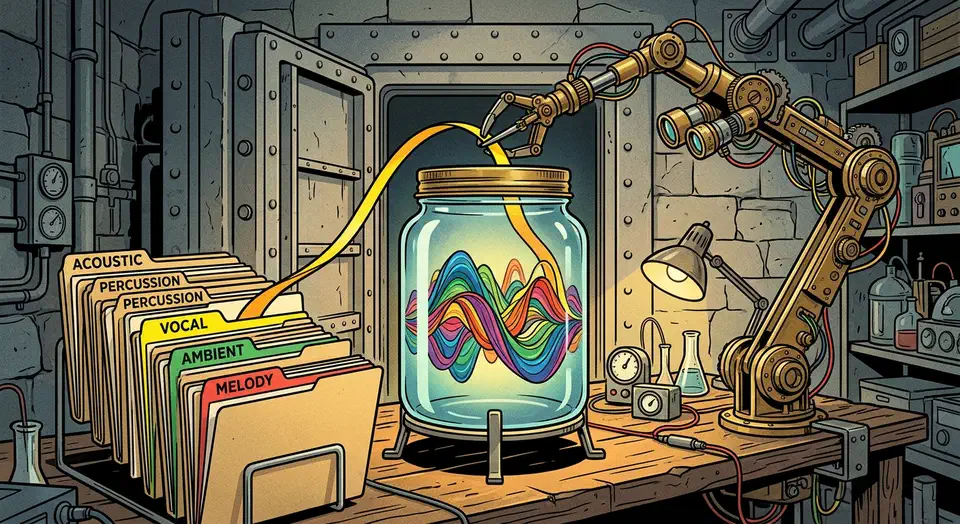
Local Meeting Transcriber: Whisper, Ollama, Structured Notes
You can build a fully local meeting transcriber on Linux. Capture system audio with PipeWire. Transcribe with Faster-Whisper on your GPU. Pipe the transcript to a local LLM through Ollama for structured summaries with names, decisions, and action items. The pipeline runs on 16GB of RAM and a mid-range NVIDIA GPU, and produces notes within seconds of the call ending. No data leaves your network.
Commercial services like Otter.ai and Fireflies.ai route your audio through their servers. If your meetings cover sensitive topics like product plans, HR, or legal reviews, that’s a non-starter. A local pipeline gives you the same structured output, and nothing leaves your building.

Route Ollama, vLLM, OpenAI through one LiteLLM API
You can unify access to Ollama, vLLM, cloud providers like OpenAI, Anthropic, and Google, plus custom model servers behind one OpenAI-compatible endpoint using LiteLLM Proxy
. LiteLLM is a reverse proxy. It maps the standard /v1/chat/completions request to each provider’s native API. From one YAML file it handles auth, model routing, load balancing, fallbacks, rate limits, and spend tracking. Your app calls one endpoint with one key, and LiteLLM picks the right backend. You can swap models, add providers, or run A/B tests without touching app code.

Running Multiple AI Coding Agents in Parallel: Patterns That Actually Work
Three focused AI coding agents beat one broad agent working three times as long. Addy Osmani showed this at O’Reilly AI CodeCon , and the finding captures both the upside and the catch of multi-agent work. The speed gains are real. They only show up when you solve the coordination problem. Without file isolation, iteration caps, and review gates, parallel agents make a mess of merge conflicts and duplicated work.