LogoBotmonster Tech
AI Smart Home Self-Hosting Coding Web Dev Hardware Bootpag Image2SVG Tags

Privacy

  • ◀︎
  • 1
  • 2
  • 3
  • 4
  • ▶︎
Self-Host Blog Comments with Remark42 (Privacy-First)

Self-Host Blog Comments with Remark42 (Privacy-First)

Most blogs reach for Disqus on day one. It takes about five minutes to set up. What you don’t see at sign-up is the deal you’re making. Disqus is free because it monetizes your readers. Every person who loads your comment section gets tracked, profiled, and served ads. They never agreed to it. That’s just the business model behind the embed script you pasted into your template.

Remark42 changes the equation. It is a self-hosted, open-source comment engine built in Go. It ships as a single Docker image. It collects only the data needed to run a comment section, and nothing more. This guide walks through the whole setup. You’ll deploy Remark42 behind Nginx with HTTPS, wire it into a Hugo site, set up moderation, and keep your data safe with automated backups.

Automating Gmail with Local AI Agents and Python

Automating Gmail with Local AI Agents and Python

You can automate your Gmail inbox on your own machine. The Gmail API feeds messages into a private Python script. A local LLM then handles summaries, sorting, and draft replies. You get the smart inbox features that tools like Google’s Gemini sidebar or Microsoft Copilot for Outlook offer. None of your email content ever leaves your computer.

This guide walks through the full build. You’ll set up the Gmail API with minimal OAuth scopes. You’ll fetch and parse raw email data, then mask any PII with Microsoft Presidio before the model sees it. You’ll build a daily summarizer that ranks mail by urgency. You’ll also build a smart draft writer that learns from your sent mail, and you’ll wire the whole pipeline up with cron. By the end, you’ll have a working local email agent that runs on any mid-range Linux or macOS box with Ollama installed.

Setup Local Voice Control with Willow for Home Assistant

Setup Local Voice Control with Willow for Home Assistant

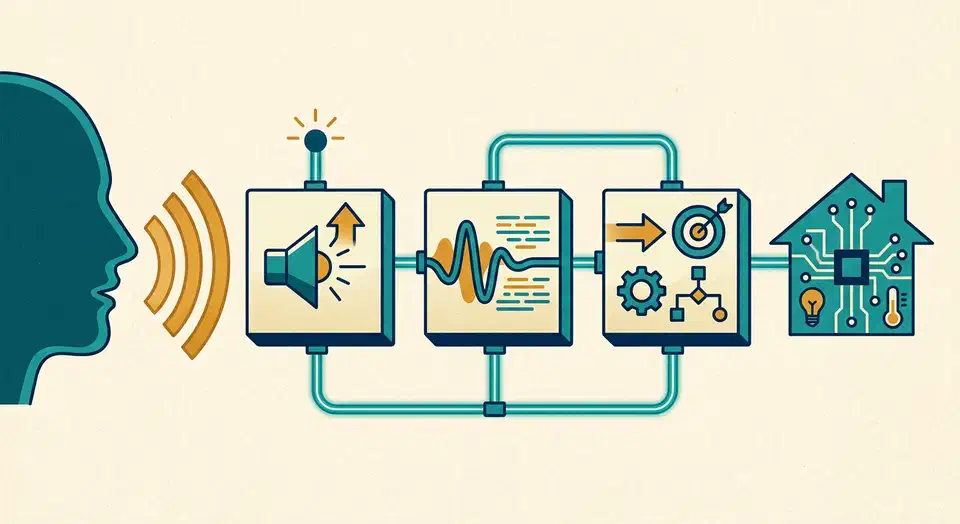
Willow gives you sub-second local voice control for Home Assistant without sending your audio to the cloud. With an ESP32-S3 Box, you can build a private smart speaker that matches the speed of commercial assistants. Every spoken word stays inside your own network. This guide walks through the full setup: hardware, server deployment, firmware flashing, pipeline config, and the fixes for the most common problems.

Why Local Voice Control Is Worth It in 2026

Say “Hey Alexa” or “OK Google” and an audio clip travels from your home to a data center. There it gets transcribed by a third-party model, passes through an intent classifier, triggers an action, and returns a response. The whole trip usually takes under two seconds. That pipeline is impressive engineering. It is also a steady stream of your household’s spoken data flowing to Amazon and Google servers, where it is logged, reviewed by contractors, and used to train future models.

Local AI Security Cameras: Frigate with Google Coral TPU

Local AI Security Cameras: Frigate with Google Coral TPU

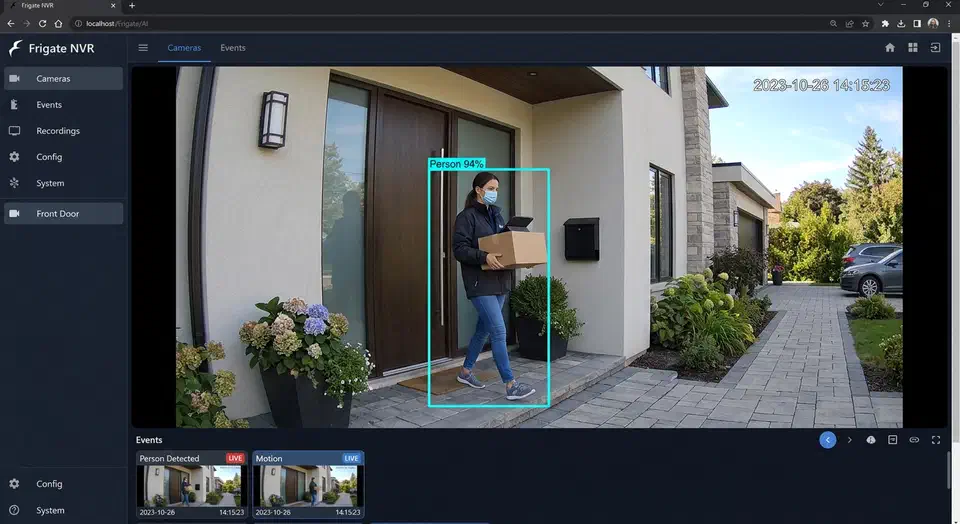
Cloud security camera fees have quietly become one of the priciest bills in the smart home. At $10 to $30 per camera each month, a full setup runs $500 to $1,000 a year. You pay that to have your own footage handled on someone else’s servers. Frigate NVR changes the math. Paired with a Google Coral TPU , it runs real-time AI person and object detection across many 4K streams. Inference times stay in the single-digit milliseconds. It all runs on hardware you own, on a network that never phones home.

Setup a Private WireGuard VPN for Secure Remote Access

Setup a Private WireGuard VPN for Secure Remote Access

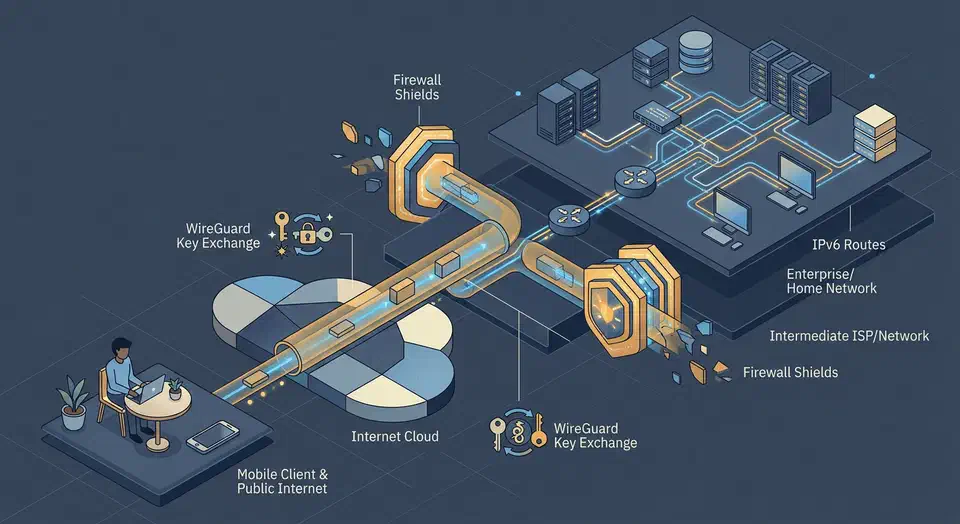
A private WireGuard VPN is the simplest way to reach your home lab, self-hosted apps, and dev machines from anywhere. You don’t expose services directly to the internet. Instead of opening many inbound ports, you publish one UDP endpoint and move trusted traffic through an encrypted tunnel. In 2026, that still gives you the best mix of speed, security, and simple upkeep.

This guide builds a setup from scratch on Ubuntu or Debian . Then it hardens that setup for the real world: home IPs that change, IPv6, mobile clients behind carrier NAT, and networks that try to block VPN traffic. You’ll also see a GUI path, wg-easy , for teams that would rather click than edit config files.

Underground vault library with glowing holographic books arranged in vector space and a robot librarian retrieving relevant volumes

Setup a Private Local RAG Knowledge Base

To build a private Retrieval-Augmented Generation (RAG) system, pair a local vector database like Qdrant with an embedding model like BGE-M3 . Add a local LLM through Ollama , and you can index hundreds of documents and ask questions about them. Your data stays on your machine.

Why RAG? The Problem With Pure LLM Memory

Large language models sound smart, but they are poor knowledge stores. They learn from old training data and know nothing about files you created later or keep private. Ask about your own data, and the model will often guess. Even strong open weight models like Llama 4.0 can invent plausible but wrong answers about content they never saw. For a deeper breakdown of why LLM hallucinations happen and how to measure them, the issue goes beyond missing context.

  • ◀︎
  • 1
  • 2
  • 3
  • 4
  • ▶︎

Most Popular

Gemma 4 vs Qwen 3.5 vs Llama 4: Which Open Model Should You Actually Use? (2026)

Gemma 4 vs Qwen 3.5 vs Llama 4: Which Open Model Should You Actually Use? (2026)

Gemma 4, Qwen 3.5, and Llama 4 compared on benchmarks, licensing, speed, and hardware so you can pick the right open model fast.

5 Open Source Repos That Make Claude Code Unstoppable

5 Open Source Repos That Make Claude Code Unstoppable

Five March 2026 repos extend Claude Code with autonomous ML, self-healing skills, GUI automation, multi-agent coordination, and Google Workspace access.

Cross-section of a translucent crystal brain threaded by red, gold, and teal attention ribbons resting on a doubly-stochastic matrix pedestal beside a guitar-tuning lab figure.

DeepSeek V4 Tech Report: 3 Tricks That Cut Compute 73%

DeepSeek V4 ships 1.6T parameters and 1M context using only 27% of V3.2's inference FLOPs. Inside the hybrid attention, mHC residuals, and Muon optimizer.

Cracked stone tablet engraved with a bulleted system prompt, four crossed-out goblin silhouettes repeated, a tiny goblin escaping with upvote-arrow sparks, a giant dollar-sign price tag, and figures refusing to step onto a glossier pedestal.

GPT 5.5 Reddit Reception: Goblins and the Cost Backlash

GPT-5.5 Reddit reception: viral goblin prompt leak, doubled pricing backlash, and 5.4 holdouts citing hallucination regressions in factual recall workflows.

What X and Reddit Users Are Saying about Claude Opus 4.7

What X and Reddit Users Are Saying about Claude Opus 4.7

How power users on X and Reddit reacted to Claude Opus 4.7: praise for agentic coding, token burn concerns, and teams' practical prompting habits.

Qwen3.6-35B-A3B: Alibaba's Open-Weight Coding MoE

Qwen3.6-35B-A3B: Alibaba's Open-Weight Coding MoE

Alibaba's sparse Mixture-of-Experts: 35B total parameters, 3B active per token. Q4 quantization runs on MacBook Pro M5, matches Claude Sonnet performance.

Alacritty vs. Kitty: Best High-Performance Linux Terminal

Alacritty vs. Kitty: Best High-Performance Linux Terminal

Alacritty vs Kitty in 2026: emoji and Unicode rendering, real benchmarks, latency, memory, maintainer reputation, and the right terminal for your workflow.

Like what you read?

Get new posts on Linux, AI, and self-hosting delivered to your inbox weekly.

Privacy Policy  ·  Terms of Service
2026 Botmonster